Canada’s deficit in processed food trade reached $6.3 billion in 2011, according to a report from the Canadian Agri-Food Policy Institute.
The deficit in value-added processed foods has existed for about 20 years, but has ballooned from less than $1 billion in 2004 to the current figure. That increase is partially the result of stalled growth in Canada’s own processed foods exports, which had typically defrayed the deficit’s growth.
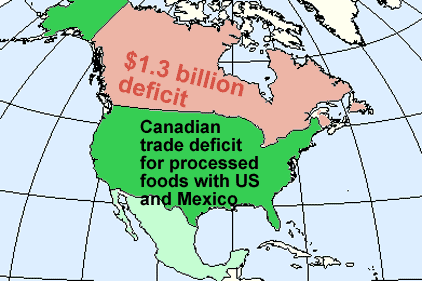
The new trends extend from trade with the US and Mexico, where Canada has seen a $2.2 billion surplus in 2004 dwindle to a $1.3 billion deficit in 2011, to all other countries, where a $3.2 billion deficit has increased to $5 billion over that same period.
Food processing is one of Canada’s largest manufacturing sectors, and the recipient of a significant share of Canada’s agricultural output. The deficits associated with processed foods contrast with Canada’s positive trade balances in all other categories of agricultural production, namely commodities.
The report concludes that more research into the causes of the shift in trade balance is necessary, and notes changes in the processed food trade balance mirrors changes in the US-Canada exchange rate.