Columns

From the frying pan into the fryer

Are allergens an issue for fried foods? Experts discussed these and other topics at the 5th International Symposium on Deep-Fat Frying.

Richard F. Stier
Despite the latest health news about fried foods, trans fats and obesity, Americans hunger for the crispy, greasy and sometimes salty flavor of deep-fried foods, often frying up everything from vegetables to Thanksgiving turkeys.


Deep-fat frying is used throughout the world as means of cooking not only because it tastes good but also due to its efficient means of heat transfer. It cooks foods quickly-another appeal in a world often crushed for time. Yet, how healthy-and safe-is the frying process?

In Germany in the early 1970s, experts examined a number of foodservice and restaurant operations throughout the country. Their research underscored the fact that the quality of the frying oil had a direct effect on the quality of the food being fried. In response, the German Society for Fat Science (also known as DGF) organized a symposium to address the issue in 1973. During this and subsequent symposiums, the DGF considered ways by which oil quality could be determined.

At the 3rd International Symposium on Deep-Fat Frying in 2000, DGF delegates published eight recommendations for safe frying. Among them was the suggestion that two tests-one for total polar materials and one for polymeric triglycerides-be performed to evaluate frying oil. The group further concluded that there were no health concerns associated with the consumption of frying fats and oils that were not abused under normal frying conditions.

Studies on fried foods continued with Swedish scientists announcing in 2002 that many foods, including fried foods, contained acrylamides, a known mutagen. A wave of research followed, focusing on six key areas: occurrence in foods and analytical methodology; mechanism(s) of formation; methods for potential reduction/mitigation; exposure and biomarkers; toxicological and metabolic consequences; and risk communication. Scientists have determined that certain foods contain acrylamides but modification of the production process can reduce these levels. Whether or not the compound is a dietary concern is still unknown.
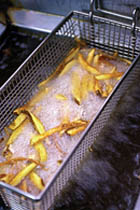


At the recent 5th International Symposium on Deep-Fat Frying held in San Francisco, delegates discussed the relationship between acrylamide and frying as well as the latest hot topic in frying-allergens. In some foodservice operations, multiple foods (such as shrimp, fish, potatoes and jalapeno poppers) may be fried in a single fryer. These products could include wheat, shellfish, fin fish, dairy and possibly egg, soy and even peanuts. Each of those allergens could potentially be transferred from the foods into the oil and then onto another food.

To determine the relationship between fried foods and allergens, scientists are currently researching answers to the following questions:

  • Does frying alter potential food allergens?
  • Does frying different foods that contain different potential allergens in one fryer pose a health risk?
  • Can potential allergens from fried foods be transferred to other foods?
  • Does frying in cold-pressed oils pose a potential health risk?
  • Does oil filtration or treatment remove potential allergens from the cooking oil?

Ultimately, the safety of fried foods remains to be seen. Like so many things in food processing, it is probably dependent on the type of operation, the products fried, the type of fryer and even the type of oil. Yet, these are questions that our industry must answer as the pressure to push the envelope on food safety continues.

Did you enjoy this article? Click here to subscribe to Food Engineering Magazine.

Richard-stiers
Richard Stier is a consulting food scientist who has helped food processors develop safety, quality and sanitation programs. He believes in emphasizing the importance of how these programs can help companies increase profits. Stier holds degrees in food science from Rutgers University and the University of California at Davis. He is a Contributing Editor for Food Engineering. Email: rickstier4@aol.com

Recent Articles by Richard Stier, Contributing Editor

You must login or register in order to post a comment.

Multimedia

Videos

Image Galleries

Food Automation & Manufacturing Conference and Expo 2013

Images from Food Automation & Manufacturing Conference and Expo in Naples, Florida, April 14-17, 2013.

Podcasts

Burns & McDonnell Global Reporting Initiative (GRI)-certified corporate sustainability reporting (CSR) specialists discuss:

  • What is a CSR?
  • What is the GRI and the Food Processing Sector Supplement?
  • Why are companies producing CSRs?
  • What are latest CSR trends?
More Podcasts

Plant sanitation

What is the largest barrier to modernizing plant sanitation in your operation?
View Results Poll Archive

THE MAGAZINE

Food Engineering Magazine

fe may 2013 cover

2013 May

Check out Food Engineering’s May 2013 issue, featuring stories on Food Packaging, Lift Trucks and Food Safety.
Table Of Contents Subscribe

THE FOOD ENGINEERING STORE

Food-Authentication-Flyer-(.gif
Food Authentication Using Bioorganic Molecules

This text provides critical tools and data needed to augment routine food analysis and enhance food safety by aiding in the detection of counterfeit, and potentially deleterious, foods.

More Products

Clear Seas Research

Clear Seas ResearchWith access to over one million professionals and more than 60 industry-specific publications,Clear Seas Research offers relevant insights from those who know your industry best. Let us customize a market research solution that exceeds your marketing goals.

Food Master

Food MasterFood Master 2013 is now available!

Where the buying process begins in the food and beverage manufacturing market. 

Visit www.foodmaster.com to learn more.

STAY CONNECTED

facebook_40.pngtwitter_40px.pngyoutube_40px.pnglinkedin_40px.png