A second look for induction seals

Child-sized servings of strawberry yogurt feature an induction seal shaped like a leaf to complete the fruit effect. For single-occasion beverages and foods, a seal can eliminate several grams of shipping weight per container.
When concerns about product tampering spiked after September 2001, induction-sealer suppliers thought they might win more food and beverage business. A few companies did add seals, but most packagers decided the inconvenience of prying off a seal outweighed the added protection.
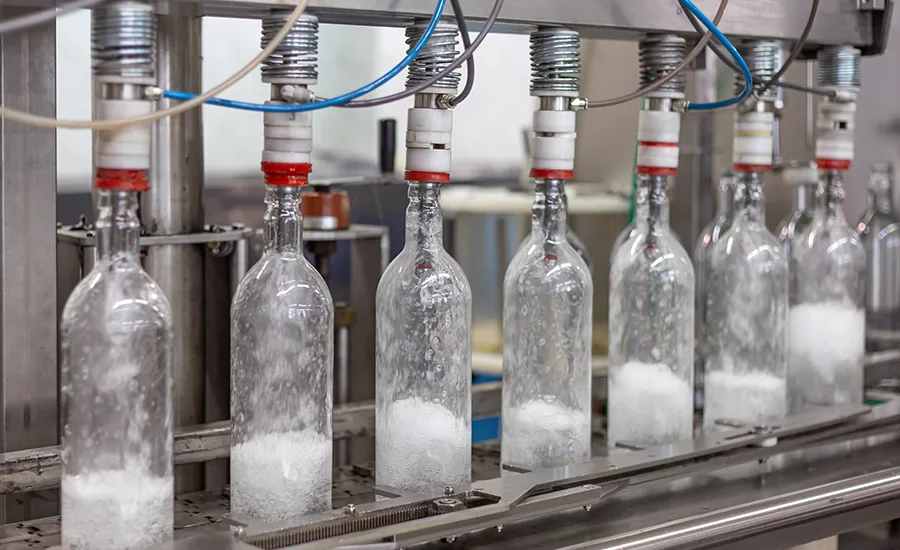
Environmental consciousness may do what tampering paranoia couldn’t. Bottles in particular have hit the wall in material reduction, with the threaded neck one of the last remaining areas to reduce plastic content, points out Mark Gill, director of Watford, UK-based Relco UK Ltd. Working with Portola Packaging Inc., Batavia, IL, Relco engineered a system that places a snap-on overcap to a low-profile neck after an induction seal is applied. Conversion to servo drives should shorten the 0.8 second cycle time to cut the seal with a ceramic punch tool and seal it to the mouth.
A threaded neck and screw-on cap is a waste, he says, particularly for single-serve bottles. A Mexican water bottler will realize $3.7 million in annual savings from fewer materials, a less expensive cap and reduced shipping weight due to a switch to induction sealing, he claims.
Seal removal no longer compromises sales, adds Gill. “If you explain to people why you’ve done it, you can overcome reservations,” he says.
Some clients occasionally omit caps entirely. Nestlé uses an oversized seal shaped like a leaf to add a flourish to strawberry yogurt in a strawberry-shaped container. However, if a product will be consumed over time, a cap is necessary, as is the case with Kraft mayonnaise, which uses Relco’s sealer at its Champaign, IL plant.
For more information:
Mark Gill, Relco UK Ltd., 44-1 923 241 231, mark.gill@relco.co.uk
Looking for a reprint of this article?
From high-res PDFs to custom plaques, order your copy today!