2026 Plant of the Year
Recipe for Growth: How CJ Schwan’s Powers Pizza Production with People and Automation
April 14, 2026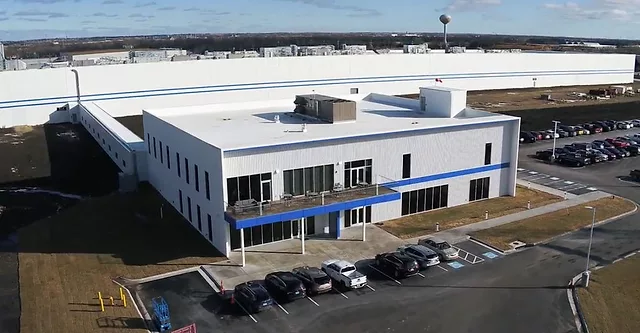
2026 Plant of the Year
Recipe for Growth: How CJ Schwan’s Powers Pizza Production with People and Automation
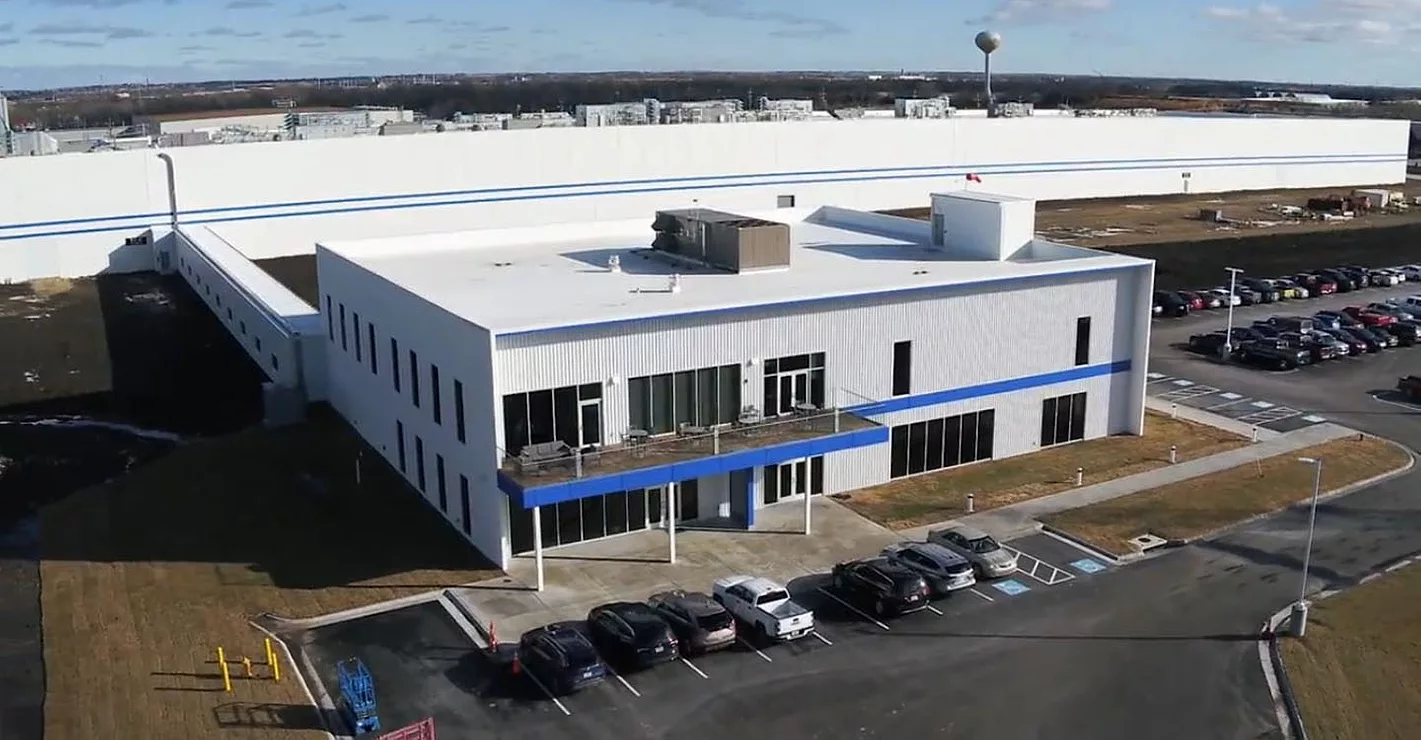
April 14, 2026CJ Schwan’s new 400,000-sq.-ft. manufacturing facility in Salina, Kansas can produce more than 100 million pizzas annually.

While CJ Schwan’s was originally known for ice cream, pizza manufacturing has been baked into the company’s legacy for more than half a century.
CJ Schwan’s, now a subsidiary of South Korea-based CJ Foods, expanded into the frozen pizza category in 1970 when Marvin Schwan, Schwan’s founder, placed a simple ad in the Wall Street Journal that read "Wanted: Frozen Pizza Manufacturer." The company acquired an 18,000-sq.-ft. production facility in Salina, Kansas, as well as the Tony’s pizza brand.
Since then, CJ Schwan’s has become a pizza powerhouse, delivering products under the Red Baron, Tony’s, Freschetta and Big Daddy’s brands to retail and foodservice customers across the U.S. In 2022, the Red Baron brand surpassed $1 billion in annual revenue and continues to grow, now occupying more than 20% of the $7.4 billion frozen pizza market*.
Alongside this growth, the legacy Salina plant has undergone 80 additions, reaching an operational footprint of 550,000 sq. ft. — making it one of the largest pizza plants in the world in size and production volume. Still, it wasn’t enough.
CJ Schwan’s needed more capacity to keep up with demand. The company aimed to design and build the "factory of the future," resulting in a new 400,000-sq.-ft., highly automated manufacturing facility capable of producing more than 100 million pizzas annually, as well as a 140,000-sq.-ft. distribution center that brings total manufacturing and distribution space to 1 million sq. ft.
With the multiyear project’s emphasis on automation and cross-functional collaboration, CJ Schwan’s new manufacturing facility and distribution center are FOOD ENGINEERING’s 2026 Plant of the Year.
Plant and Process Design
Through the Salina legacy plant, which continues to operate today, CJ Schwan’s has gained more than 50 years of pizza-making expertise. However, with dozens of expansions and largely manual operations, the plant also offered CJ Schwan’s inspiration for improvement.
"Because we were able to start from scratch, we were able to design and build the new facility exactly how we wanted it," says Fred Silhan, plant director. "So you will see a lot more automation and efficient design."
Looking for a reprint of this article?
From high-res PDFs to custom plaques, order your copy today!
CJ Schwan’s gathered feedback from all departments about needs and desires for the new facility, in addition to working with Burns & McDonnell on plant and process design. Burns & McDonnell hosted three supplier summits to determine project scope and select machinery.
This was critical to ensure operations, engineering and the equipment vendors were on the same page while assembling and integrating the linear, multi-stage production line.
"Being able to look holistically, they could better understand what the intent was, which carried over and had a lot of value in startup," Silhan says. "It wasn’t just an individual cell someone needed to worry about, it was the handoffs — what you’re receiving, what you’re handing off, what variables you’re going to have."
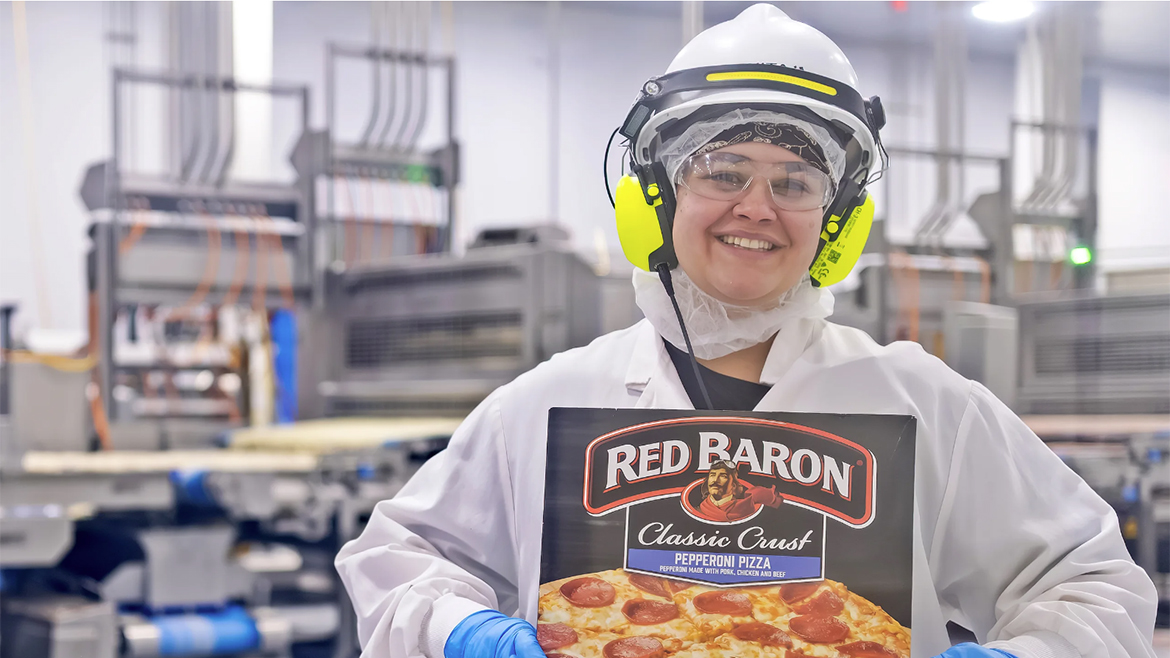
Machine operator Bonita Loisranoi holds up a Red Baron Classic Crust pizza. CJ Schwan’s also manufactures under the Tony’s, Freschetta and Big Daddy’s brands. Photo courtesy of CJ Schwan’s
Silhan also points to the need for adaptability, particularly when dealing with ingredients grown and produced under varying conditions.
"Food is unique compared to other manufacturing environments because everything is constantly variable," he says. "Raw materials are truly raw materials. Things don’t grow the same from year to year, the barometric pressure is different from day to day, so we have to constantly be flexible to address that."
Engineering on the new production facility began in 2019, with construction overlapping the design phase in 2020. This coincided with the COVID-19 pandemic, further complicating an already complex project. However, CJ Schwan’s took the opportunity to incorporate social distancing measures into the facility design.
Specifically, each stage of production is walled off in case an illness is identified and employees need to be notified or quarantined. These areas also feature wide entrances and touchless hand-washing to allow employees to keep their distance. The factory also has separate employee and visitor entrances.
These measures aren’t just valuable in a pandemic, says John Crocker, senior director of manufacturing for the Salina campus.
"The cellular structure that we have makes for safe manufacturing of food no matter if we have a pandemic going on or not," he says. "That being built into the design led to creating a great environment for safe quality food as well."
During construction, workers wore proximity detectors, which also allowed for contract tracing.
"It was not only taken into account with design but we were also taking it into account during construction to make sure we kept everybody safe," Silhan says.
The first sellable pizza came off the line in March 2023, and CJ Schwan’s hosted a ribbon-cutting ceremony later that spring.
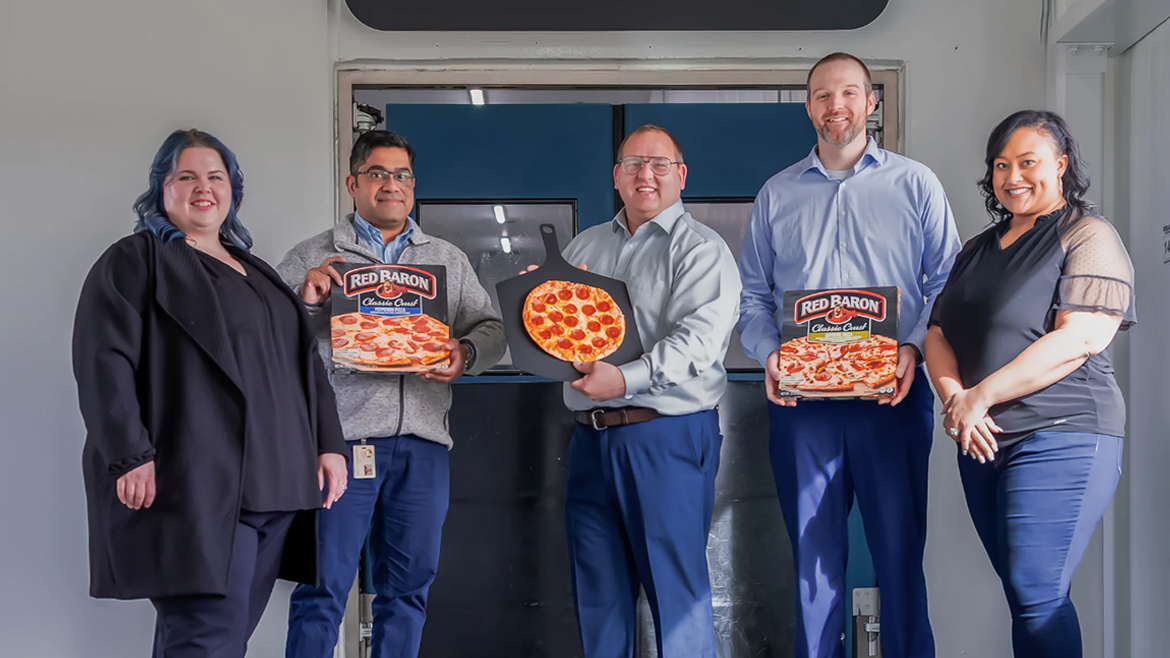
Aubrey Novotny, left, director of product development; Amit Save, director of continuous improvement; Fred Silhan, plant director; John Crocker, senior director of manufacturing; and Jasmine Ingram, HR manager, pose in front of CJ Schwan’s new manufacturing facility. Photo courtesy of CJ Schwan’s
Product Development
While all departments weighed in on what they needed and wanted to see in the facility, the project presented a momentous opportunity for research and development.
Not only could CJ Schwan’s enhance the processes it has used to make pizza for 50 years, but the company could also plan for future innovation, says Aubrey Novotny, product development director.
"From the beginning, it was really about articulating what things we wanted to optimize and then what those changes would mean for both the process and then the product," she says.
The Salina campus has its own pilot plant, so CJ Schwan’s shipped in equipment for testing and visited supplier facilities when necessary. Maintaining product consistency while tightening process parameters was critical, especially as the pizzas move from one stage to another, Novotny says. The team focused on details such as baking oil, ingredient dosing and baking surface composition.
"We have seen improvements in quality, but what I would hit on even more, is that we were very confident that we were delivering a product that the consumer was expecting," Novotny says. "The experience they have come to expect from us for five decades is what they’re getting from us at new facility. That was really important to us."
Novotny also points to the difficulty of planning for future product introductions, but CJ Schwan’s built space into the facility in case there is a need to expand.
"We designed space into this facility so that if and when we need to think about doing things differently — to bring a new type of product introduction or innovation in this space in any way — we have built in that plan for the future," she says.
Site Work
CJ Schwan’s faced significant site challenges before construction began. On the land, which once belonged to the Salina Airport Authority, were 140,000 sq. ft. of abandoned buildings that needed demolition. However, the company recovered 10,000 tons of concrete and reused it in the new construction.
"To be able to recycle that — to have not just the cost savings but also the environmental impact around it — is something that’s pretty cool to be a part of," Crocker says.
The area, previously prone to flooding, required rerouting a 200-acre watershed with the installation of 2,000 feet of double-box culvert along the perimeter. Creating a 6-acre retention pond south of the facility addressed drainage concerns and allows for controlled discharge.
Additionally, CJ Schwan’s worked with local utilities to update and relocate electrical transformers near the plant.
"The better management of the water with the retention pond and the improvements made to the area not only allowed us to construct but improved the area for our neighbors and the surrounding community," Silhan says.
Production Automation
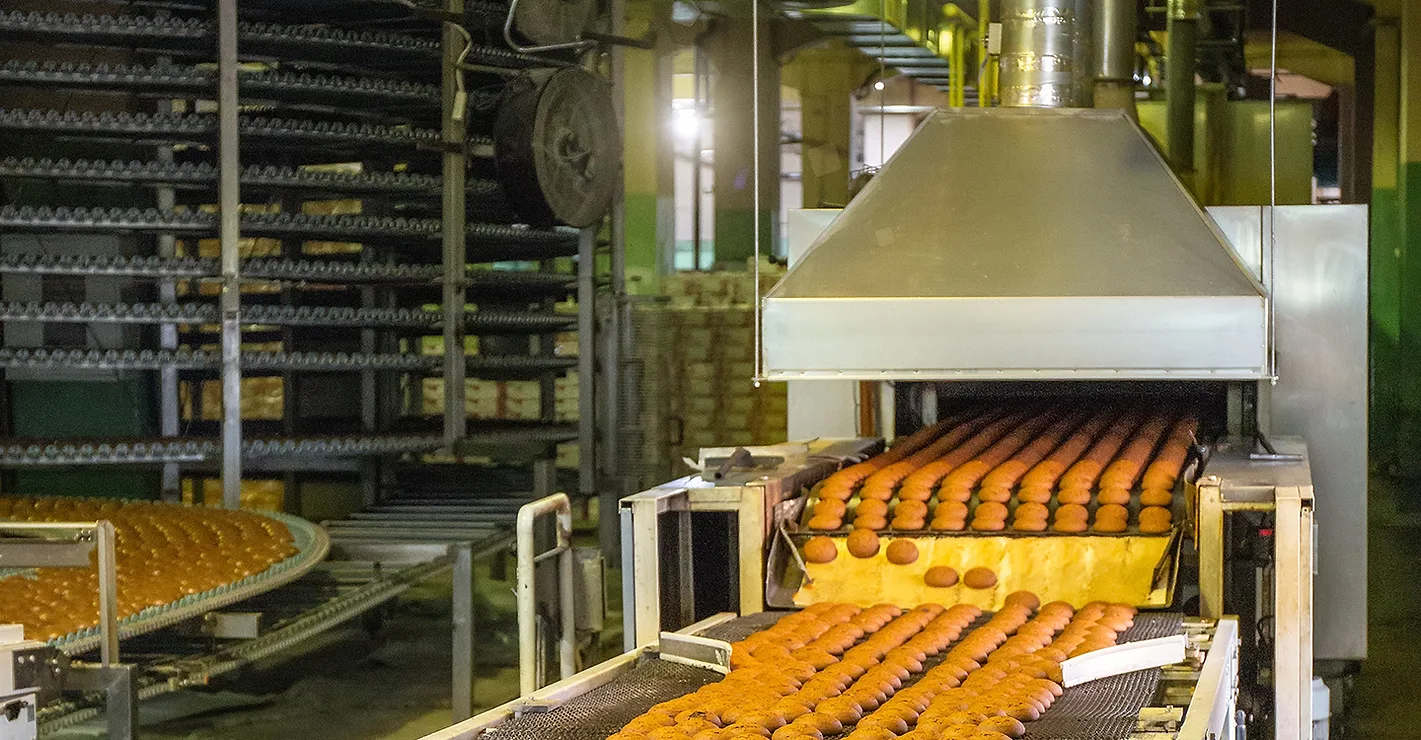
The entire pizza production process features cutting-edge automation. From metered ingredient dosing to robots that count, move and stack baking pans, the line requires minimal manual operation. All aspects of making the food were designed with years of testing and development by CJ Schwan’s R&D engineering team, supported by leadimg equipment vendors.
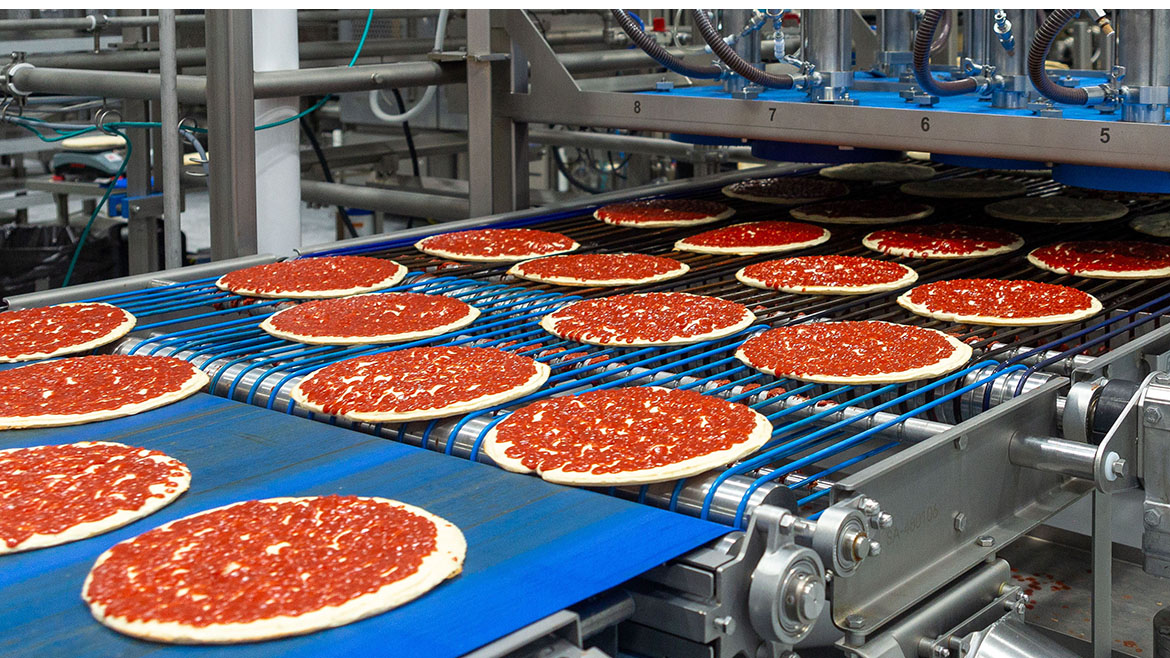
After pizza crusts are baked and cooled, they are covered with sauce and other toppings, including cheese, meat, and vegetables. Photo courtesy of CJ Schwan’s
Amit Save, continuous improvement director for the Salina campus, says the packaging stage is much more automated in the new facility. And while automation creates efficiencies, CJ Schwan’s built extra capacity into the line — particularly in palletization and film wrapping — to help avoid downtime.
Additionally, CJ Schwan’s implemented an end-to-end supervisory control and data acquisition (SCADA) system that provides visibility and control of all automated processes. Supported by a full-site IT and OT wireless network, the SCADA system delivers real-time data that employees can view on individual mobile devices, alongside equipment manuals and training documents.
"It doesn’t matter if you are a bakery employee, a toppings employee or a packaging employee, you have to have an understanding and knowledge of all the operations throughout the line," Save says. "Our automation team made a conscious effort to bring all of those systems together in one system."
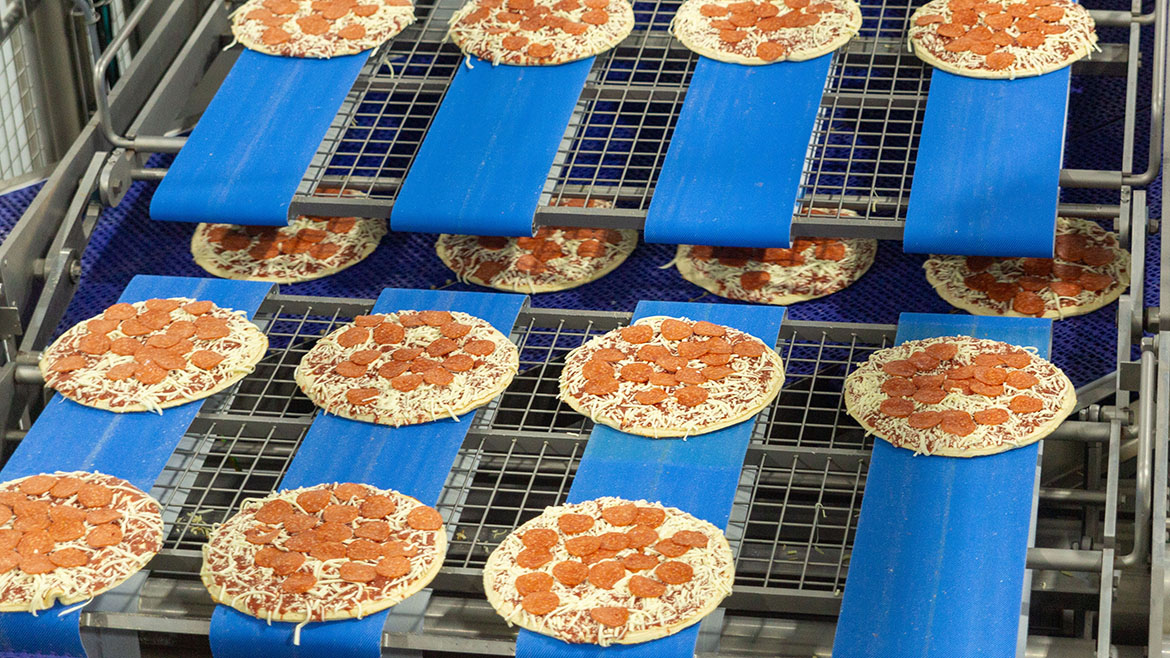
The new CJ Schwan’s pizza plant can produce more than 100 million pizzas annually. Photo courtesy of CJ Schwan’s
Employees also can use the mobile devices to communicate with anyone on the Salina campus, making it faster to troubleshoot problems and easier to record maintenance strategies.
"It’s given us just so many more opportunities to understand what happened much better than we used to be able to and make sure we put in the proper fixes," Silhan says.
Distribution Center
Though the Salina campus’ focus is pizza, CJ Schwan’s also produces frozen desserts, as well as Asian-inspired products under the bibigo brand. The company needed more room not only to store the pizza manufactured in Salina, but it also wanted to create a central hub to hold, mix and distribute other CJ Schwan’s offerings made at other production facilities.
Salina, situated 90 miles north of Wichita and 170 miles east of Kansas City, presented the perfect location, says Chad Tullis, director of distribution.
"It’s geographically favorable," he says. "This is where the majority of the activity is, so it was just a really good setup."
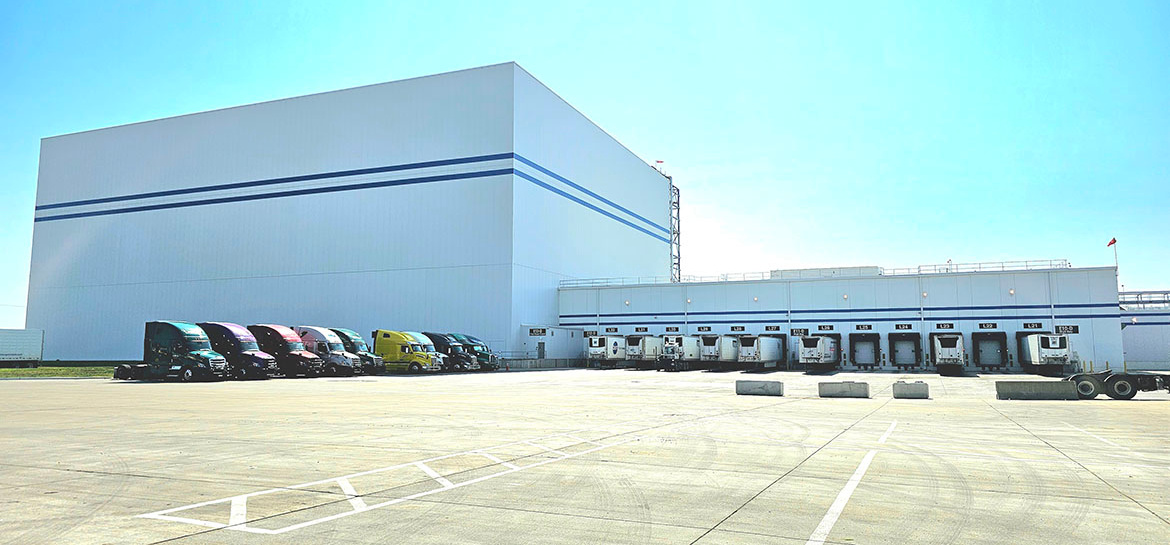
CJ Schwan’s new, 140,000-sq.-ft. distribution center is the tallest building in Salina at 144 ft. Photo courtesy of CJ Schwan’s
Work on the 140,000-sq.-ft. distribution center began in 2023 and wrapped in 2025. It connects to a 105,000-sq.-ft. distribution center built in 2006, bringing total distribution space to 245,000 sq. ft.
The tallest building in Salina at 144 ft., the new distribution center features 12 loading docks and a 38,000-pallet-position racking system with three automated pallet cranes. At any time, the distribution center will manage millions of pizzas.
CJ Schwan’s also operates several battery-powered automated guided vehicles (AGVs) in the new distribution center, eliminating forklift and pedestrian contact. While employees were apprehensive to work around the AGVs at first, their concerns dissipated once they realized how consistently the AGVs travel their predetermined paths and automatically stop when anyone is too close, says Dwayne Peoples, senior manager of operations and distribution.
"When we first brought them in, we were nervous," he says. "We had extra safety precautions around it and were really paying attention to the people’s reaction to them. That lasted for probably two weeks, and then we saw people walking in parallel with them, understanding their path. It’s been a comfort."
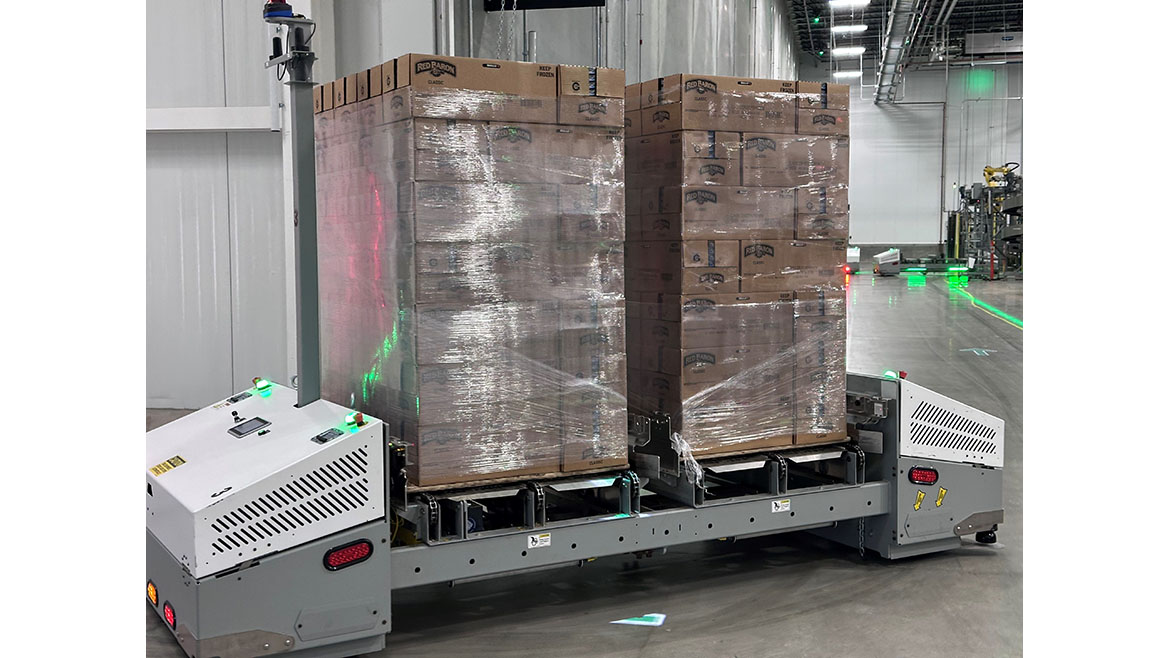
The new distribution center operates automated guided vehicles (AGVs), eliminating employee and forklift contact. Photo courtesy of CJ Schwan’s
The distribution center’s high level of automation also presents opportunities for employees to take on technical positions — which is attractive, especially when the sub-freezing environment makes it difficult to staff.
"We had a lot of discussions on what the progression looks like, because we are hiring higher-skilled labor," Peoples says. "To see that an hourly employee could move up to a supervisor manager level all in the same department was key to me."
Workforce and Culture
Increased automation requires significant employee training, but CJ Schwan’s employees were just as involved in developing training materials as they are learning from them, says Madeline Garretson, senior director of human resources for pizza specialty platform.
Early adopters on the CJ Schwan’s team worked with OEMs and then used that experience to write training documents for new staff or employees who joined the project later. Those documents are available on the mobile communication devices all employees carry.
"That really empowers that team," Garretson says. "They’re the ones creating the documents and the training, so they know that they’re getting trained the right way by the experts — not just what a manual says but what the machine says."
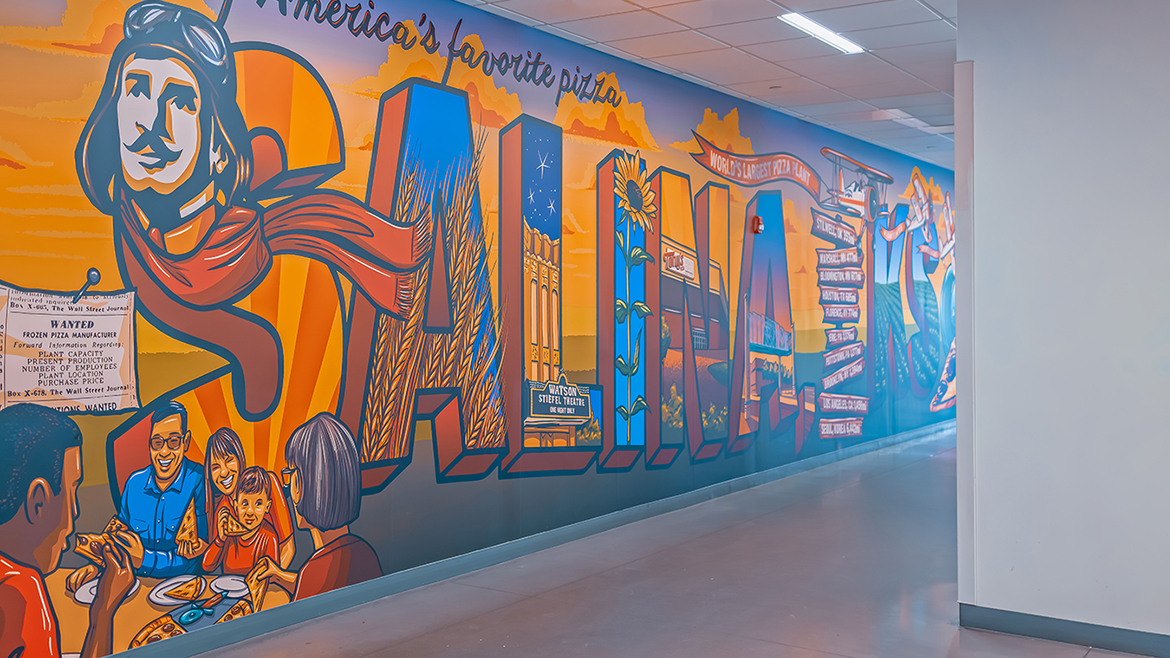
A mural in the new manufacturing facility highlights CJ Schwan’s history of pizza manufacturing in Salina, Kansas. Photo courtesy of CJ Schwan’s
Continuous training is also crucial. CJ Schwan’s has a skills matrix that allows employees to see which specific skills are needed to ascend to higher levels and pay rates. The company also schedules regular training sessions so employees can gain those skills.
"That’s a challenging thing to do because you have to dedicate time away from the line or (take) someone off the line to train, but it’s so important that we stay rigorous in that so we can continue growing our talent and keep giving new skills and ability," Garretson says.
While the automation means roles are different across the new and existing facilities, Garretson says it’s cohesive across the plants with pay ranges based on skill. In fact, the legacy plant plays a critical role in teaching new employees the company’s culture and its expectations for safety and quality.
"What I’m really proud of, especially through the startup, was maintaining the culture in the existing facility while building a brand-new facility," Garretson says. "We were really able to break down the walls so it wasn’t the existing plant versus the (new) plant — it was how we are a campus together."
What’s Next
CJ Schwan’s continues to grow the new facility by adding more items, hitting new production records and optimizing operations. And, if they choose, there is plenty space on the 77-acre Salina campus to expand the footprint of the new facility.
In the meantime, CJ Schwan’s is enjoying the fruits of its labor as team.
"I always say this to my kids — there’s a job, and there’s a career," Save says. "This is not a job for us. When we started working on this plant and this project in itself — and even when we were working at (the existing plant) — it was never a job for us. It’s a career for us. It’s a career for a lot of people who work on the floor. There’s a lot of pride in it."
*Circana, total U.S. multi-outlet sales with C-store, 52 weeks ending Feb. 22, 2026.