FOOD ENGINEERING’s 49th Annual Plant Construction Survey
February 17, 2026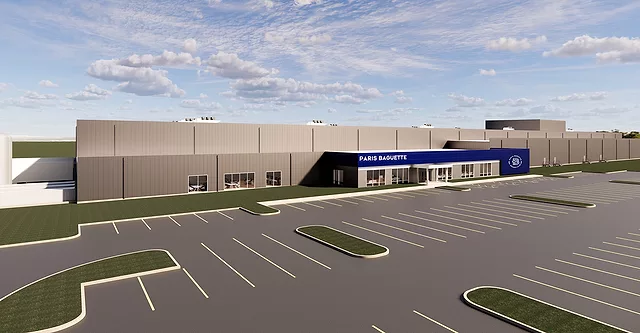
FOOD ENGINEERING’s 49th Annual Plant Construction Survey
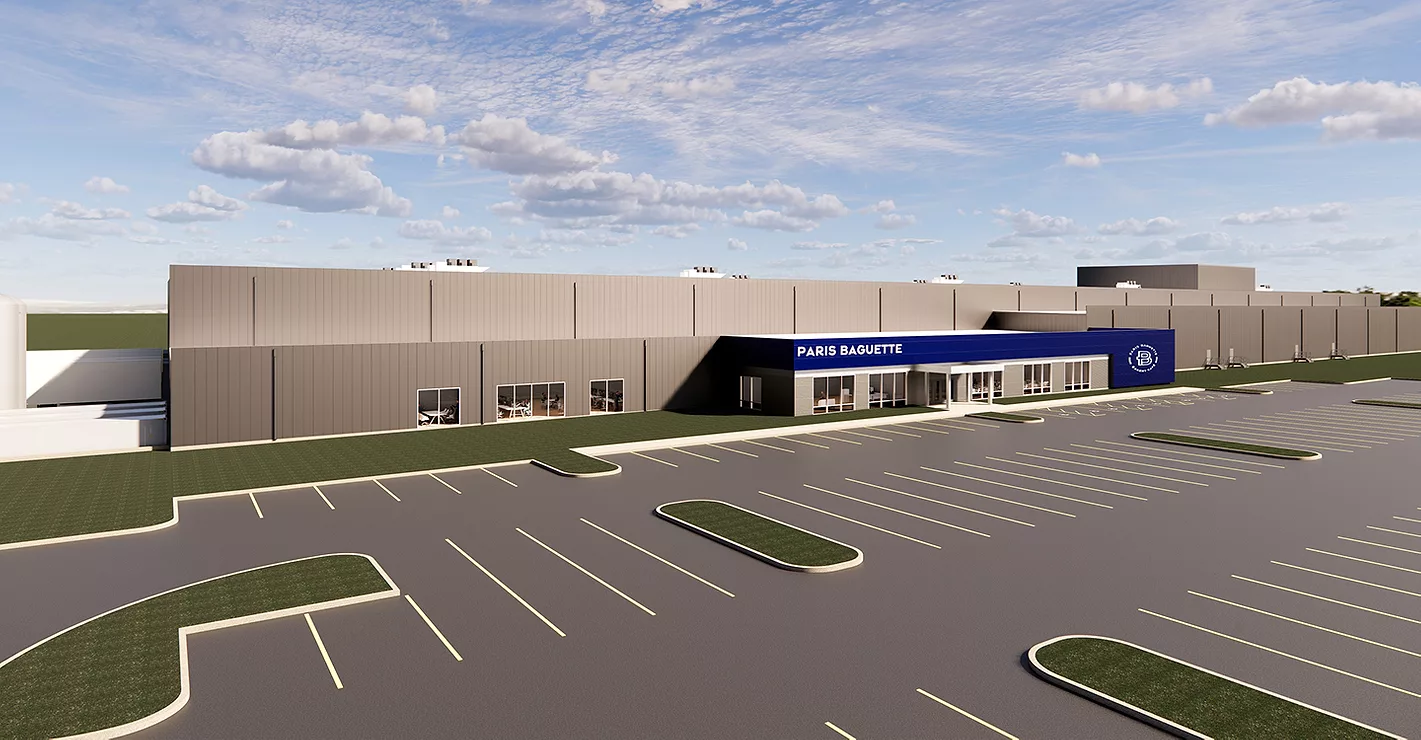
February 17, 2026South Korea-based Paris Baguette is opening its first U.S. manufacturing plant in Texas to improve product quality and reduce reliance on frozen dough from Korea and China.

Construction activity in the food and beverage sector has remained steady or slowed, but architecture, engineering and construction (AEC) professionals responding to FOOD ENGINEERING’s 49th Annual Plant Construction Survey say manufacturers are continuing to invest in their operations.
However, these manufacturers are approaching expansion and optimization projects with careful consideration, especially as tariff pressures and other economic concerns persist.
“Tariffs are not stopping projects, but they are changing how projects are planned,” says Derek Bickerton, senior vice president, food and beverage, Stellar. “We are helping owners rethink how equipment is shipped, how contracts allocate risk and when long-lead items need to be ordered early. At the same time, many owners are taking longer to give the initial green light, yet the expected completion date remains unchanged. This creates the feeling of even more compressed schedules than usual.”
Jonathan Crabtree, lead for the national food and beverage construction practice at Burns & McDonnell, agrees, also pointing to meticulous planning across project areas.
“While new development remains strong, many companies are balancing expansion with modernization of existing assets to improve efficiency and manage costs,” Crabtree says. “Front-end planning has become more disciplined as a result, with owners taking a more cautious approach to evaluating cost exposure tied to materials, equipment sourcing and energy pricing. Tariffs and broader economic uncertainty are adding complexity to these decisions, contributing to more deliberate project timing and region-specific strategies as companies navigate an increasingly dynamic market.”
With these conditions, food and beverage manufacturers seek designs that allow them to maximize cost efficiency and support future growth.
“Companies are prioritizing designs that accommodate advanced technologies, energy efficiency and resilient supply chains, while modular and retrofit solutions are gaining traction to manage cost and speed,” says Carmen Brown, project manager, Black & Veatch.
Recent policy changes — particularly around use of synthetic, petroleum-based food dyes — have also inspired new projects, says Justin Hamilton, vice president of industrial and manufacturing for McCownGordon.
Looking for a reprint of this article?
From high-res PDFs to custom plaques, order your copy today!
“The race is on to identify natural alternatives, source those alternatives and retool the manufacturing process to incorporate this change,” Hamilton says. “This is leading to new projects for the both the suppliers and users of natural coloring.”
Site Selection
Access to labor, reliable utilities, straightforward transportation pathways, and state and local economic incentives have long driven site selection for new facilities.
Nevertheless, supply chain pressures and real estate availability are altering how food and beverage manufacturers prioritize site requirements.
“In a significant shift, some businesses are selecting locations with more complex transportation logistics in exchange for greater long-term stability in labor availability and material access,” says Jeremy Klysen, business development manager, Burns & McDonnell. “This approach is forcing a broader rethinking of traditional supply chain models. At the same time, the increasingly competitive siting environment is leading owners to more closely assess whether greenfield development is justified or if expanding an existing facility offers a more practical and strategic path forward.”
Max Mather, client development director for Hixson Architecture, Engineering & Process, also points to how supply chain concerns influence site selection.
“In recent years, supply chain resilience has become another key consideration, prompting companies to locate distribution centers closer to end markets or major logistics corridors,” Mather says. “This shift reflects a broader strategic emphasis on minimizing transportation costs and enhancing responsiveness to client needs.
While labor is an important factor in site selection, automation advancement continues to transform the type and quality of employees that manufacturers seek, says Chris Packer, senior engineer manager for Black & Veatch.
“Looking forward, the expanding use of automation in food manufacturing is poised to make skilled labor availability one of the most decisive site selection criteria,” Packer says. “The pace of automation is outpacing the availability of technicians, engineers and operators required to design, install, operate and maintain these systems. As a result, manufacturers may place greater emphasis on regions with strong technical education pipelines, workforce development programs and community investment in skilled trades. In many cases, the long-term viability of a site may hinge not just on today’s labor market, but on the region’s ability to sustainably produce and support a technologically capable workforce.”
Alternatively, other manufacturers are choosing to stay and expand, since they’ve already built relationships and established avenues for meeting their needs.
“Many owners are choosing to renovate or expand existing facilities because these locations already have established workforces and utility capacity in place,” says Ronald L. Rens, president, Gleeson Constructors & Engineers, LLC. “Business climate, tax incentives and local government support also play an important role, particularly when communities view food production as a positive economic addition.”
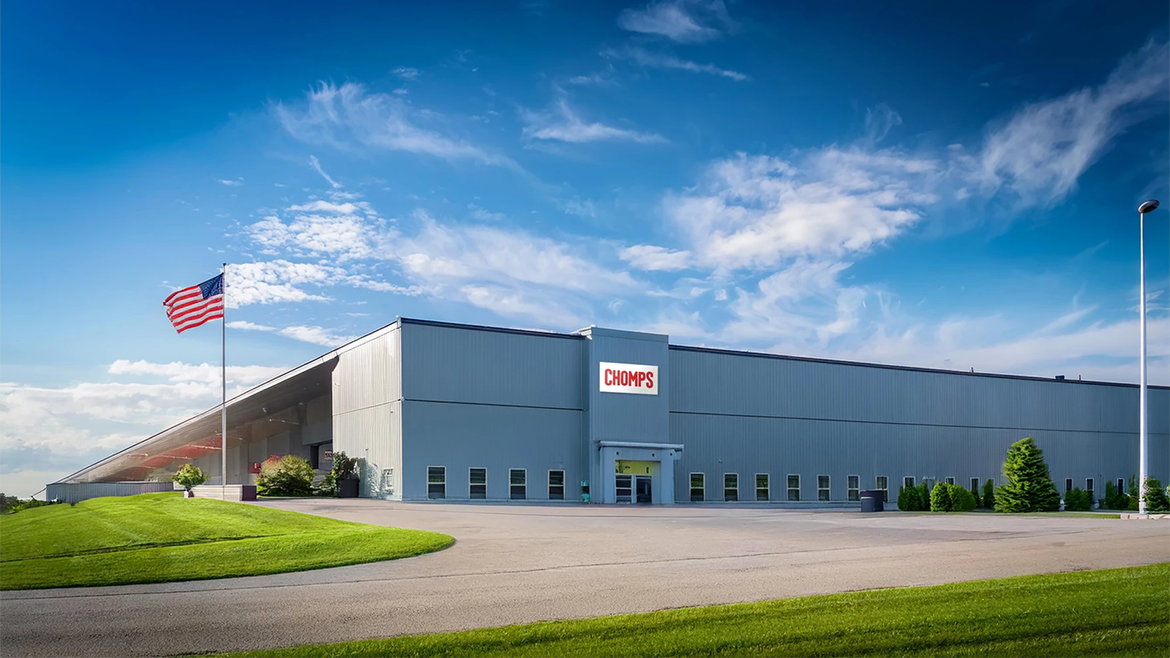
Regionally, manufacturers are increasingly selecting sites in the Midwest and Southeast, says McCownGordon’s Hamilton. For example, America’s Heartland Packaging and Chomps have both opened meat processing plants in Missouri, and Red Bull has broken ground on a manufacturing and distribution facility in North Carolina.
“Manufacturers are choosing to spend capital in these regions as construction and plant labor is more readily available,” Hamilton says. “This also translates to slightly lower construction labor costs.”
Cold Storage
AEC professionals say construction continues in the cold storage sector, but it’s leveling off from pandemic highs. However, automation implementation remains critical to address labor concerns and improve efficiency and food safety.
Rens says Gleeson is seeing fewer speculative cold storage products, especially in “some regions where the market appears somewhat saturated.”
“Most current cold storage projects are being developed for specific customers or products rather than as public warehouses,” Rens says. “This targeted approach allows for greater use of automation, as the product profile and handling requirements are known and consistent.”
Dave Campbell, leader in automated warehouse and distribution facility design at Burns & McDonnell, also points to the extreme environment of cold storage facilities, which operate at temperatures ranging from -20°F to -30°F. This can lead to high employee turnover, labor shortages and elevated safety risks.
“To meet these pressures, companies are deploying automation systems engineered specifically for cold environments,” Campbell says. “Cold-durable solutions for palletizing, depalletizing, picking and sorting are increasingly common for frozen and delicate products. High-density automated storage and retrieval systems, paired with autonomous mobile robots, are enabling 30% to 70% increases in storage capacity, faster product retrieval and continuous, semi-autonomous or lights-out operations in freezer zones. These technologies significantly reduce the need for human labor in harsh conditions while improving operational consistency.”
Matthew Lantzy, senior project director for CRB, also points to the rise of “lights-out” warehouses — highly automated facilities that require limited human presence and reduced energy consumption.
“Mid- to larger-sized companies, given current labor impacts, are now considering further automation, allowing for the ability to upgrade or move toward ‘plant of the future,’” Lantzy says. “The idea of ‘dark’ facilities has become more prevalent in the last year or so. Building green, operating smartly and packaging sustainably has been and will remain very important to companies in the F&B space.”
Conversations around sustainability in the cold storage sector also involve refrigerant selection. While important for environmental concerns, Carmen Brown, project manager for Black & Veatch, notes refrigerants also have implications on “worker safety and long-term risk assessment.”
“Natural refrigerants, lowGWP systems and advanced energyefficient insulation and controls continue gaining traction,” Brown says. “Smart climatemanagement systems and improved building envelopes are helping reduce both emissions and operating costs.”
Automation
All AEC professionals cite automation and artificial intelligence (AI) as drivers for improving efficiency, flexibility and safety, particularly in areas where tasks are high-volume, difficult or repetitive. These areas include some processing functions, boxing, palletizing, warehousing and logistics.
However, Burns & McDonnell’s Klysen says manufacturers’ perspective on automation has expanded beyond labor concerns to “increasingly prioritizing business resiliency and operational continuity.”
“The emphasis has shifted toward identifying the right level of automation that maximizes uptime, supports consistent throughput and enhances flexibility without introducing unnecessary complexity or operational burden,” Klysen says.
Determining the right level of automation — without seeing a slate of tangible benefits at the outset of the optimization or expansion — can be a barrier for decision makers, says Carrie Woehler, solutions lead, industrial/manufacturing, Black & Veatch.
“ROI can be difficult to define upfront — particularly for clients for whom automation is ‘new territory,’” Woehler says. “The shortage of skilled technicians and engineers capable of supporting advanced systems further complicates adoption.”
Gleeson’s Rens also points to a shortage in technicians who can maintain automation equipment. He also notes automation implementation is an individualized endeavor.
“In many cases, clients do see a positive return on investment through improved efficiency, safety and reduced labor dependency,” Rens says. “However, automation is not a one-size-fits-all solution. There are situations where the technology may not yet justify the cost, and owners must carefully evaluate reliability, maintenance needs and contingency plans if automated systems go down.”
Stellar’s Bickerton notes manufacturers are increasingly interested in digital twin technology to assess ideas before expending the time and capital to make them reality.
“We see owners lean heavily into digital twin tools and ask more questions about AI than ever before,” Bickerton says. “The goal is simple: they want clarity earlier in the process and to test ideas virtually before making big decisions in the field.”





.webp?height=200&t=1723655590&width=200 "ALDI Reg ional Headquarters & Distribution Center")