Lower foodborne illness rate no accident
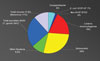
The latest CDC data on deaths attributed to foodborne transmission of known pathogens shows Salmonella as the biggest killer (28% of total deaths) followed by Listeria at 19%. Norovirus accounted for most of the deaths caused by viruses. Source: CDC. (Scallan E, Hoekstra RM, Angulo FJ, Tauxe RV, Widdowson M-A, Roy SL, et al.)
The American Meat Institute was encouraged by the findings of two new papers released by the Centers for Disease Control (CDC), which estimate lower numbers for foodborne illness occur annually than previously thought. CDC reported that annual FoodNet Surveillance monitoring of nine pathogens has shown a 20 percent annual decline in laboratory-confirmed illnesses.
According to the new CDC numbers, 9.4 million illnesses, 55,961 hospitalizations and 1,351 deaths per year are caused by known foodborne pathogens. The data represent the first comprehensive analysis released by CDC since a 1999 paper published by Dr. Paul Mead estimated that known foodborne pathogens caused 14 million illnesses, 60,000 hospitalizations and 1,800 deaths.
According to the new estimates, the most illness-causing pathogens are Norovirus (58 percent), nontyphoidal Salmonella spp (11 percent), C. perfringens (10 percent) and Campylobacter (9 percent). The leading causes of death by pathogen are nontyphoidal Salmonella spp (28 percent), T. gondii (24 percent), Listeria monocytogenes (19 percent) and Norovirus (11 percent). The paper does not attribute foodborne illnesses to their food sources.
CDC said that unspecified agents also cause 38.4 million foodborne illnesses, 71,878 hospitalizations and 1,686 deaths annually. CDC defines unspecified agents as a “group of less understood agents,” which could include mushroom and marine biotoxins and little-known bacterial pathogens.
“The new data tell us that our food safety strategies have been working, and we need to sustain our research efforts,” says James H. Hodges, AMI Foundation president. “Even one foodborne illness linked to meat and poultry products is cause for concern, and we will not be satisfied until our food supply is even safer."
Looking for a reprint of this article?
From high-res PDFs to custom plaques, order your copy today!