TECH FLASH
Kraft Foods measures its sustainability efforts
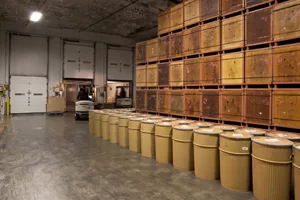
Kraft Foods’ below-ground warehouse in Springfield, MO uses 65 percent less electricity than similar above-ground facilities. Source: Kraft Foods.
Kraft Foods reported results of a survey that measured the processor’s impact on climate change, land and water use. The multi-year footprinting project was accomplished in partnership with Quantis Inc. (www.quantis-intl.com) and reviewed and analyzed by World Wildlife Fund (WWF) and academics at the University of Minnesota’s Institute on the Environment.
“Having the ‘big picture’ of our total footprint—from farm to fork—validates the focus of our sustainability efforts, particularly advancing sustainable agriculture,” says Roger Zellner, sustainability director for research, development & quality, Kraft Foods. “Experts say climate change, land and water use may be among the biggest challenges in feeding a world of 9 billion people in 2050. As we continue our sustainability journey, we now have more insight into where we can make the greatest difference.”
“This study shows that in order to make meaningful change and conserve nature’s valuable resources, companies need to work with their suppliers to reduce the impact of producing raw materials,” says Dave McLaughlin, vice president of agriculture at World Wildlife Fund. “This means forging long-term partnerships based on shared objectives, creating a transformational supply chain, a key strategy of WWF’s market transformation initiative.”
The bulk of Kraft Foods’ environmental footprint originates on the farms that grow ingredients for the company’s products. While the company does not own farms, the survey supports the work of its sustainable agriculture efforts on key commodities to improve crop yields, reduce environmental impacts and improve the lives of many of the farm workers and their families. In addition, the processor continues to build upon previous success around energy, CO2, water, waste and packaging reductions.
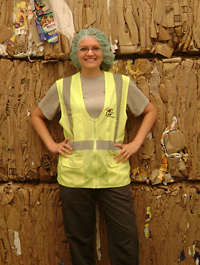
|
| Kraft Foods’ New Ulm, MN plant reduced waste by 40 percent over the past four years. Source: Kraft Foods. |
Last May, Kraft Foods announced expanded sustainability goals and highlighted progress against its six sustainability focus areas. The company’s new goals now include the Cadbury and LU businesses acquired since 2007. And the processor has added transportation and agricultural commodities to what it will be measuring.
From a 2010 base, and by the end of 2015, the company plans to:
• Increase sustainable sourcing of agricultural commodities by 25 percent
• Reduce energy use in manufacturing plants by 15 percent
• Reduce energy-related CO2 emissions in manufacturing plants by 15 percent
• Reduce water consumption in manufacturing plants by 15 percent
• Reduce waste at manufacturing plants by 15 percent
• Eliminate 50,000 metric tons (100 million lbs.) of packaging material
• Reduce 80 million km (50 million miles) from its transportation network.
From 2005 through 2010, energy use was down 16 percent; CO2 emissions decreased 18 percent; incoming water decreased 30 percent; net waste dropped 42 percent; packaging decreased 100,000 metric tons (200 million lbs.); and 96 million km (60 million road miles) were removed from its transportation/distribution network.
The study further revealed some interesting facts:
• More than 90 percent of the carbon footprint is outside the processor’s plants and offices, and nearly 60 percent is from farm commodities.
• About 12 percent of the carbon footprint is from transportation and distribution of products from stores to consumers’ homes.
• About 5 percent of the carbon footprint is from consumers, mostly in food preparation.
• More than 80 percent of the land impact is from agriculture. In comparison, the impact from manufacturing facilities and offices is negligible.
• About 70 percent of the water footprint is from growing raw materials (including agricultural commodities used to make food products), while only 10 percent comes from manufacturing facilities/offices.
• Another 10 percent of the carbon footprint comes from consumer use, mostly from food preparation.
Looking for a reprint of this article?
From high-res PDFs to custom plaques, order your copy today!