Manufacturing News

Beverage processors make the switch to ‘greener' bottles


Coca-Cola and NAYA Waters are leading the way in cutting petroleum out of PET plastics in beverage bottles. Sources: The Coca-Cola Co., NAYA

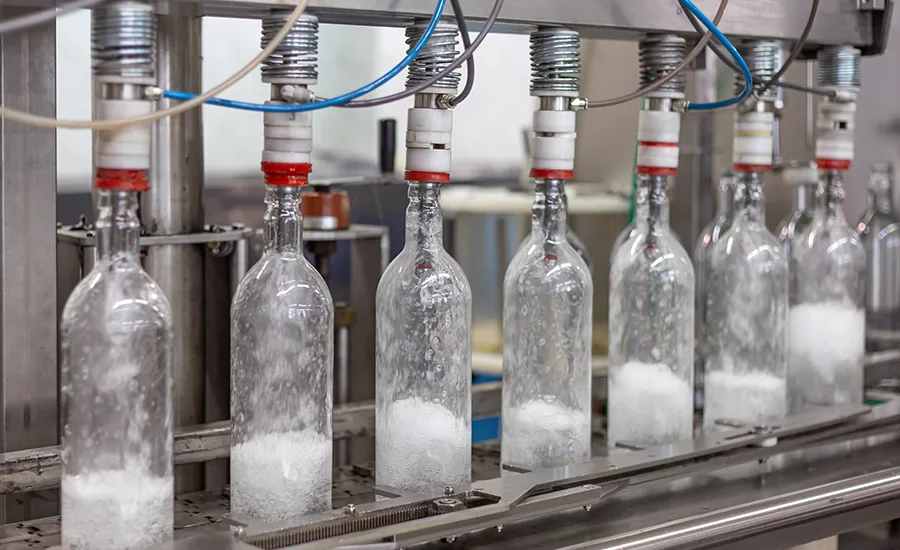
Two beverage companies are doing their part to decrease the amount of petroleum used in the making of their bottles-one by substituting a portion of plant-based resin for petroleum-based polyethylene terephthalate (PET) and the other by using completely recycled material, called rPET. The manufacturers are The Coca-Cola Company and NAYA (Les Eaux Naya Inc.) of Mirabel, QC, Canada.

“We are taking a major step along our sustainable packaging journey as The Coca-Cola Company becomes the first-to-market with a recyclable PET plastic bottle made partially from plants,” said Muhtar Kent, Coca-Cola chairman and CEO. “From Coke brands in Copenhagen to DASANI water in the Western United States, we are starting to roll out the first generation of the bottle of the future.”

Coca-Cola’s PlantBottle uses up to 30% plant-based resins, but varies according to how much recycled materials are used in the composition. In Denmark, the combined plant-based and recycled content makes up 65% of the material, with 50% coming from recycled material and 15% from the plant-based substance. The company’s vision is to eventually achieve a bottle made from 100% plant-waste material while remaining completely recyclable.

“We’re proud to be the first major spring water brand to introduce 100% recycled plastic bottles, which is a victory for the environment,” said Daniel Cotte, president of NAYA Waters. Not only are the bottles made of 100% recycled materials, they’re also completely recyclable. Approved by Health Canada, the rPET bottles meet the same rigorous safety standards as virgin plastic bottles. The bottles, which had been under development for seven years, are made from plastic previously used as packaging.

While turning a used plastic bottle into a clean, reusable bottle requires energy and emits carbon, using 100% rPET compared to virgin plastic significantly reduces both. Specifically, NAYA reduces the full lifecycle carbon footprint of its 1.5 liter bottle by 30% when using rPET versus the same bottle made with virgin plastic.

Did you enjoy this article? Click here to subscribe to Food Engineering Magazine.

You must login or register in order to post a comment.

Multimedia

Videos

Image Galleries

Food Automation & Manufacturing Conference and Expo 2013

Images from Food Automation & Manufacturing Conference and Expo in Naples, Florida, April 14-17, 2013.

Podcasts

The Food Defense Strategy Exchange (FDSE) is a forum for food defense professionals to interact and share their knowledge and experiences. At the most recent FDSE, a poll of attendees revealed that approximately two-thirds were either re-evaluating their existing food defense plan, or implementing new food defense plans. In this podcast, Don Hsieh, Director of Commercial and Industrial Marketing at Tyco Integrated Security, discusses this topic and other findings from the exchange, and offers some best practices to proactively protect a company’s brand from food adulteration.

More Podcasts

Alternative Energy Systems

Has your operation designed/built any systems for alternative energy or recovering energy/water? What systems?
View Results Poll Archive

THE MAGAZINE

Food Engineering Magazine

FE 2013 June

2013 June

Check out Food Engineering’s June 2013 issue, featuring the results of the 36th Annual Plant Construction Survey

Table Of Contents Subscribe

THE FOOD ENGINEERING STORE

Food-Authentication-Flyer-(.gif
Food Authentication Using Bioorganic Molecules

This text provides critical tools and data needed to augment routine food analysis and enhance food safety by aiding in the detection of counterfeit, and potentially deleterious, foods.

More Products

Clear Seas Research

Clear Seas ResearchWith access to over one million professionals and more than 60 industry-specific publications,Clear Seas Research offers relevant insights from those who know your industry best. Let us customize a market research solution that exceeds your marketing goals.

Food Master

Food MasterFood Master 2013 is now available!

Where the buying process begins in the food and beverage manufacturing market. 

Visit www.foodmaster.com to learn more.

STAY CONNECTED

facebook_40.pngtwitter_40px.pngyoutube_40px.pnglinkedin_40px.png