Petroleum vs. corn
The battle over green cred is pitting PLA-based plastic against conventional PET resins mixed with additives that cause the plastic to decompose when landfilled.

Good-for-Mother-Earth chatter will get a lot noisier this year as bottled water suppliers trumpet new packaging that breaks down when placed in a landfill.
Polylactic acid (PLA) resins from corn starch set the pace in bioplastics in the last decade, and that segment is projected to grow more than 15 percent a year through 2014, according to Datamonitor Group. Some of that growth will come at the expense of petroleum-based plastics. Polyethylene terephthalate is particularly vulnerable, given its wide use in beverage containers. Research by Morgan Stanley concluded one in four people are cutting back on purchases of bottled water in favor of tap water because of the landfill issues associated with PET and other plastics. With three-quarters of beverage containers ending up in landfills, a growing number of people are distancing themselves from trash that will remain hundreds of years after they themselves are gone.
Additives that allow microbes to break down plastic have been available for 20 years, according to Danny Clark, president of Mesa, AZ-based Enso Plastics, though issues such as the opacity they cause in clear plastic has retarded commercial uses. Enso itself has advanced in fits and starts, says Clark, but after several reformulations, his Bio Bottle finally saw the light of retailers’ shelves in January. Pacific Water International, a Chilliwack, Canada water bottler, debuted 500ml and 1-liter Bio Bottles under its Redleaf brand in western states and throughout Canada. “Our greatest challenge is one of education,” according to company COO Dave Hillis. “We have to ensure consumers understand the dramatic difference between biodegradable and recyclable. Adding to the confusion are the so-called “plant bottles,” a reference to PLA.
Another biodegradable PET container called EcoPure from Albuquerque, NM’s Bio-Tec Environmental is not far behind. The company’s additive is being used in preforms manufactured by Casey Container Corp. The Scottsdale, AZ manufacturer is ramping up production to fill advance orders for 38 million preforms containing the additive.
Heat, light and moisture determine how quickly the plastic will degrade, and critics say there is no evidence PET and other plastics will completely break down. But fundamentals of chemistry suggest degradation will occur, says Enso’s Clark. “With these additives, when material is put in a microbial environment, the microbes secrete enzymes that break down the polymer,” he explains. Normally, microbes are unable to ingest the fossilized hydrocarbon that composes petroleum, but the additives overcome the barrier. “Your package will have the same shelf life and protection as you would without the barrier,” adds Clark, but once it is in a landfill, nature and microscopic bacteria will go to work.
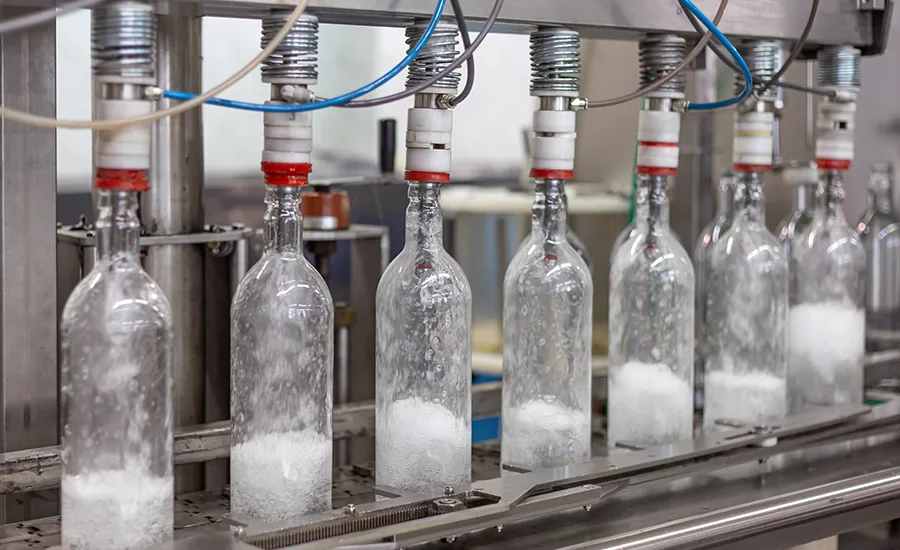
Canadian water bottler Pacific Water International is the first to commercialize the Bio Bottle, a PET container with an additive that accelerates decomposition. Source: Pacific Water International.
Good-for-Mother-Earth chatter will get a lot noisier this year as bottled water suppliers trumpet new packaging that breaks down when placed in a landfill.
Polylactic acid (PLA) resins from corn starch set the pace in bioplastics in the last decade, and that segment is projected to grow more than 15 percent a year through 2014, according to Datamonitor Group. Some of that growth will come at the expense of petroleum-based plastics. Polyethylene terephthalate is particularly vulnerable, given its wide use in beverage containers. Research by Morgan Stanley concluded one in four people are cutting back on purchases of bottled water in favor of tap water because of the landfill issues associated with PET and other plastics. With three-quarters of beverage containers ending up in landfills, a growing number of people are distancing themselves from trash that will remain hundreds of years after they themselves are gone.
Additives that allow microbes to break down plastic have been available for 20 years, according to Danny Clark, president of Mesa, AZ-based Enso Plastics, though issues such as the opacity they cause in clear plastic has retarded commercial uses. Enso itself has advanced in fits and starts, says Clark, but after several reformulations, his Bio Bottle finally saw the light of retailers’ shelves in January. Pacific Water International, a Chilliwack, Canada water bottler, debuted 500ml and 1-liter Bio Bottles under its Redleaf brand in western states and throughout Canada. “Our greatest challenge is one of education,” according to company COO Dave Hillis. “We have to ensure consumers understand the dramatic difference between biodegradable and recyclable. Adding to the confusion are the so-called “plant bottles,” a reference to PLA.
Another biodegradable PET container called EcoPure from Albuquerque, NM’s Bio-Tec Environmental is not far behind. The company’s additive is being used in preforms manufactured by Casey Container Corp. The Scottsdale, AZ manufacturer is ramping up production to fill advance orders for 38 million preforms containing the additive.
Heat, light and moisture determine how quickly the plastic will degrade, and critics say there is no evidence PET and other plastics will completely break down. But fundamentals of chemistry suggest degradation will occur, says Enso’s Clark. “With these additives, when material is put in a microbial environment, the microbes secrete enzymes that break down the polymer,” he explains. Normally, microbes are unable to ingest the fossilized hydrocarbon that composes petroleum, but the additives overcome the barrier. “Your package will have the same shelf life and protection as you would without the barrier,” adds Clark, but once it is in a landfill, nature and microscopic bacteria will go to work.
Looking for a reprint of this article?
From high-res PDFs to custom plaques, order your copy today!