How CV Sciences ensures hemp product quality
California company offers range of products under the +PlusCBD brand.

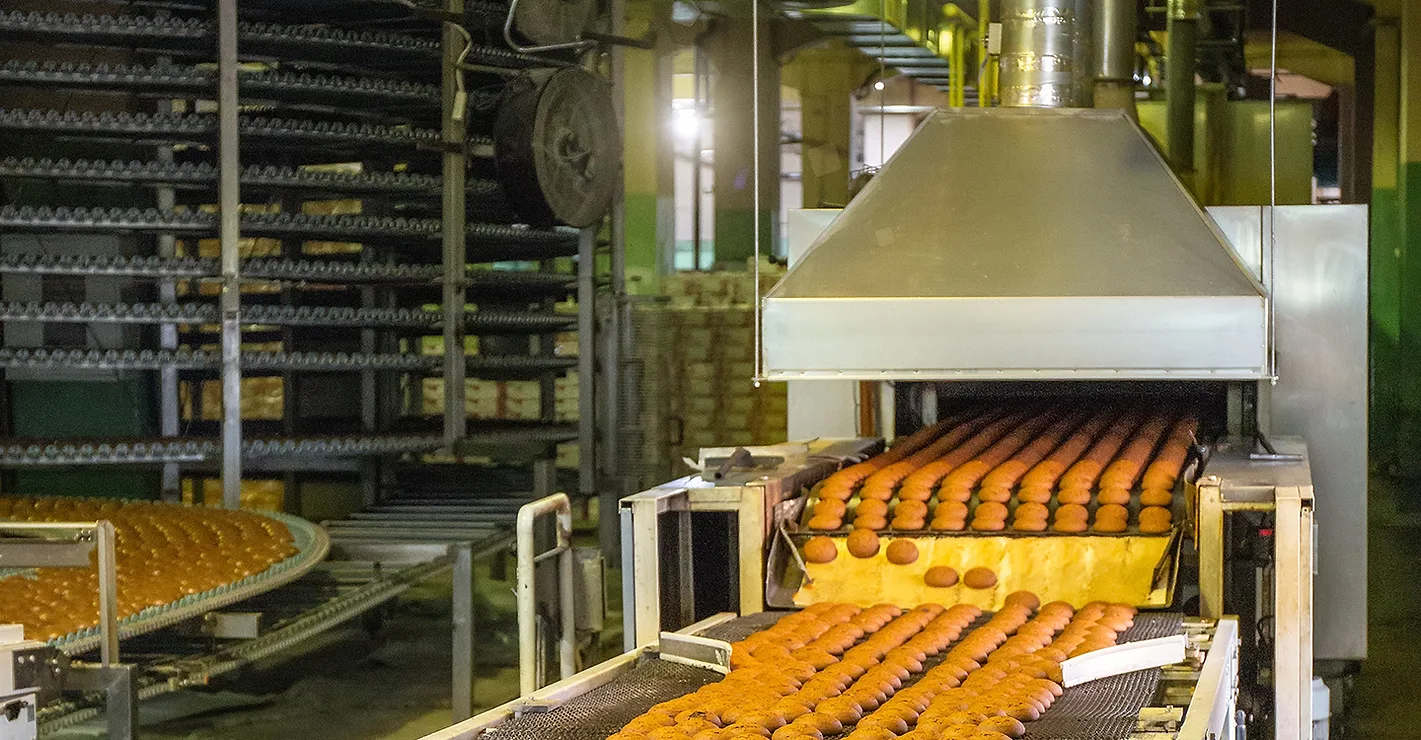
Photo from CV Sciences.
Since the passage of the 2018 Farm Bill, manufacturers have introduced hemp products designed to meet a variety of consumer needs.
CV Sciences, which offers gummies, softgels, oils and topicals under the +PlusCBD brand, undergoes a strict process to ensure its ingredients and finished products will safely and effectively serve their customers.
Cannabis Products Insider recently spoke with Andrew Dorf, VP of sales, and Vandana Kothari, director of quality, about CV Sciences’ approach to developing hemp-based ingestible products and its process for ensuring product quality.
CPI: What was the inspiration behind the +PlusCBD brand?
AD: With the discovery of dynamic health supporting compounds found in the hemp plant, along with considering the state of health care at the time and the known desire for consumers to seek alternative health support, CV Sciences took a chance and launched the +PlusCBD brand almost 10 years ago. Since that time, the +PlusCBD products have evolved to meet modern consumer needs and continues to lead the category in innovation, quality and safety.
CPI: How does CV Sciences approach sourcing hemp for its +PlusCBD products? What does the company look for?
AD: CV Sciences takes great pride in sourcing quality hemp for its +PlusCBD products. When we started our company back in 2012, we originally sourced our materials from pristine farmland in the Netherlands since domestic sources were unavailable at the time. Since the passage of the 2018 Farm Bill, fast forward five years later, the market is wide open with various qualities of domestic hemp now available. CV Sciences now can exclusively source our raw materials domestically, but we have chosen to take a hybrid approach. We continue to use our high quality, full-spectrum oils sourced from Europe, but now source similar quality domestic cultivars to blend the best available oils into our various formulas. Having our benchmark oil that we have been sourcing for the last 10 years gives us the guidance we need to ensure our domestic sources can meet the same rigorous quality standards as our oil that made us the No. 1 selling CBD brand all these years.
VK: CV Sciences has established a supplier qualification program to qualify suppliers and contract manufacturers. The program includes requirements for evaluation, selection and monitoring of suppliers used by CV Sciences. CV Sciences hemp extract suppliers go through the rigorous supplier qualification process, which involves review of supplier’s quality systems and processes. Furthermore, each lot of blended hemp extract is tested for identity, purity, strength and limit of contaminants. Test reports are reviewed by the quality unit against the set specifications and only then transferred to our qualified contract manufacturers to manufacture finished products in different form factors such as gummies, oils and softgels.
CPI: How does CV Sciences approach developing its hemp ingestible products, such as its gummies and capsules?
AD: Over the last 10 years, CV Sciences has employed industry champions who have collectively more than 100-plus years’ experience within the natural supplements industry and nutritional education. Drawing from this pool of experts, we have been able to stay ahead of industry trends by developing cutting edge, industry leading formulas. Our team is in tune with what consumers and retailers are expecting from a high-quality brand like +PlusCBD by CV Sciences. We are out in the field talking to customers in our stores, meeting people on the streets and discussing the various health challenges that our products are known to support. Our brand started off primarily offering tinctures and oil applicators, which delivered high potency effective dosages. Since then, the industry has spoken, and emerging form factors began to take hold in the form of gummies and softgels. Our top selling products are all gummy base, and we continue to develop new gummy formulas, with some exciting new products due in early 2024.
VK: Product innovation and development is performed by CV Sciences qualified team members in collaboration with our contract manufacturing partners. Once final product design, formulation and organoleptic specifications are determined, full-scale production commences. Ingredient decks are carefully considered and reviewed to ensure that each product does not contain any artificial flavoring or sweeteners and that our products are gluten free, soy free, Non-GMO and vegan. All packaging, including labels and boxes, is designed in accordance with 21CFR 101.9 regulations and reviewed by our internal team. All our products meet or exceed halal requirements and are produced under cGMP conditions.
CPI: In broad terms, how does CV Sciences incorporate the hemp extract into its ingestible products?
AD: All +PlusCBD by CV Sciences products use our proprietary CO2 extracted oils. Our carefully curated blends are added to our all-natural gummy bases, minimally processed oil tinctures and/or softgel products through strategic manufacturing partnerships and rigorously tested through third-party labs to ensure quality and consistency. +PlusCBD products go through some of the strictest testing in the industry to ensure every batch meets our lofty standards.
CPI: How does CV Sciences handle testing of its products? What issues do you need to look out for?
VK: Every single lot or batch of PlusCBD product is tested at experienced independent ISO-17025 laboratories using validated methods to ensure products meet label claims and are free of pesticides, residual solvents, heavy metals, mycotoxins and any microbial contaminations, assuring identity, strength, quality and purity of our products.
To determine the cannabinoid content and other contaminants, laboratories use high-performance liquid chromatography (HPLC), HPLC-MS, GC-MS, ICP-MS systems. An HPLC separates the molecules for analysis, then a pressurized pump forces a solvent containing the hemp extract through a column filled with a solid adsorbent material. The use of high pressure and very small particles allows for a very fine resolution of molecules. It’s a refined technique that’s been heavily used for decades in the pharmaceutical industry, for chemical research and medical purposes. The HPLC allows us to determine the concentration of major and minor cannabinoids in our products.
To identify varied substances in a sample, the GC-MS analytical method combines the best features of gas chromatography and mass spectrometry. GC-MS is usually regarded as the gold standard method for forensic substance identification, because it can be used to perform a 100% specific test for the presence of a substance. The building blocks of the GC-MS technique are the gas chromatograph and the mass spectrometer. Like the HPLC above, the gas chromatograph uses a thin column to separate the molecules and allows them to emerge from the column at different times. Their retention time is recorded and once they leave the column, the mass spectrometer detects their mass and charge by using electrons to break the molecules apart. These two machines complement each other because the mass spectrometer only works on very pure samples, while the gas chromatograph separates better than it identifies. Together, they can accurately identify and quantify very miniscule amounts of a compound. That’s especially important for heavy metals, like lead and cadmium, where any amount is unhealthy.
Microbials represent the last important part of third-party testing. Nutritional supplements can be contaminated with a range of mold, yeast, viruses and bacteria. When it comes to pathogenic microorganisms, they are either not allowed at all in products, or they are limited to a specific number of cells per gram of food. The third-party lab applies conventional microbiological techniques, such as using plates with a growth medium, to test for the presence of a variety of microorganisms. With a plant like hemp that can experience moist growing conditions, it’s vitally important to test for microbiological contamination.
The quality department acts as an independent watchdog inside the company. One sign of a healthy company is a place where the quality department has all the power to stop the release of products until inspections, tests and the resulting documentation can be verified. Our finished product goes nowhere until the results come back from the samples sent out for third-party testing at an independent lab. When the third-party test results come back declaring the product to be free of microbial contamination, heavy metals, pesticides and solvents, and that it meets label claims, the quality department finally clears it to be sold to our customers.
The quality system is intended to ensure that development and manufacturing activities produce consistently high-quality products that meet customer and regulatory requirements in accordance with cGMP. Additionally, the quality system is intended to ensure that products are properly monitored and continually improved. The effectiveness of the quality management system at CV Sciences is largely achieved through the preparation and effective implementation of documented quality procedures and records. CV Sciences has established and maintains documented procedures to control quality system documents and data. The elements of CV Sciences Quality systems include but are not limited to: quality procedures (SOPs) and forms that detail management responsibility, document control, product identification and traceability, production and process controls, quality acceptance activities, inspection, testing, education and training, corrective and preventive action, complaint and adverse event handling, labeling and packaging control, material controls, specifications and quality records.
This article was originally posted on www.cannabisproductsinsider.com
Looking for a reprint of this article?
From high-res PDFs to custom plaques, order your copy today!