Focus on OEE: Increased Plant Floor Visibility Pays Off
There’s a simple reason packaging lines are the focus of OEE, according to Rockwell Automation Inc.’s Michael Gay: “That’s where the money is made.”
Viewed another way, it’s where money is lost when overall equipment efficiency isn’t what it should be to provide a return on a firm’s automation investment and doesn’t contribute to the organization’s profitability. And in a period of economic uncertainty that has prompted organizations to shelve big-ticket equipment projects, food companies are flocking to OEE initiatives in their packaging departments.
“When times are tough, OEE is a good way to squeeze more out of the capital you’ve got,” reasons David McCarthy, president of Racine, WI-based TriCore Inc., who compares current interest in OEE projects with the activity that occurred in 2002-2003, the last time a poor economy resulted in a shift away from new lines and additional assets and toward affordable projects such as OEE. In rare cases, double-digit increases in production of saleable goods are realized, McCarthy says. A two percent boost is more typical, he allows, but even that rate typically yields an attractive return.
OEE fits neatly into manufacturers’ overall continuous improvement efforts and complements programs such as Six Sigma, total predictive maintenance and especially lean-manufacturing initiatives. Coordinating those efforts is a challenge, however, and the enthusiasm generated at a successful kaizen event can be difficult to relate to the root-cause analysis required of the data generated when OEE is driven by an automated data-collection system. And while both lean and OEE should be continuous efforts, one focuses specifically on eliminating waste while the other considers the interrelationship of availability, throughput and quality.
Focus on packaging
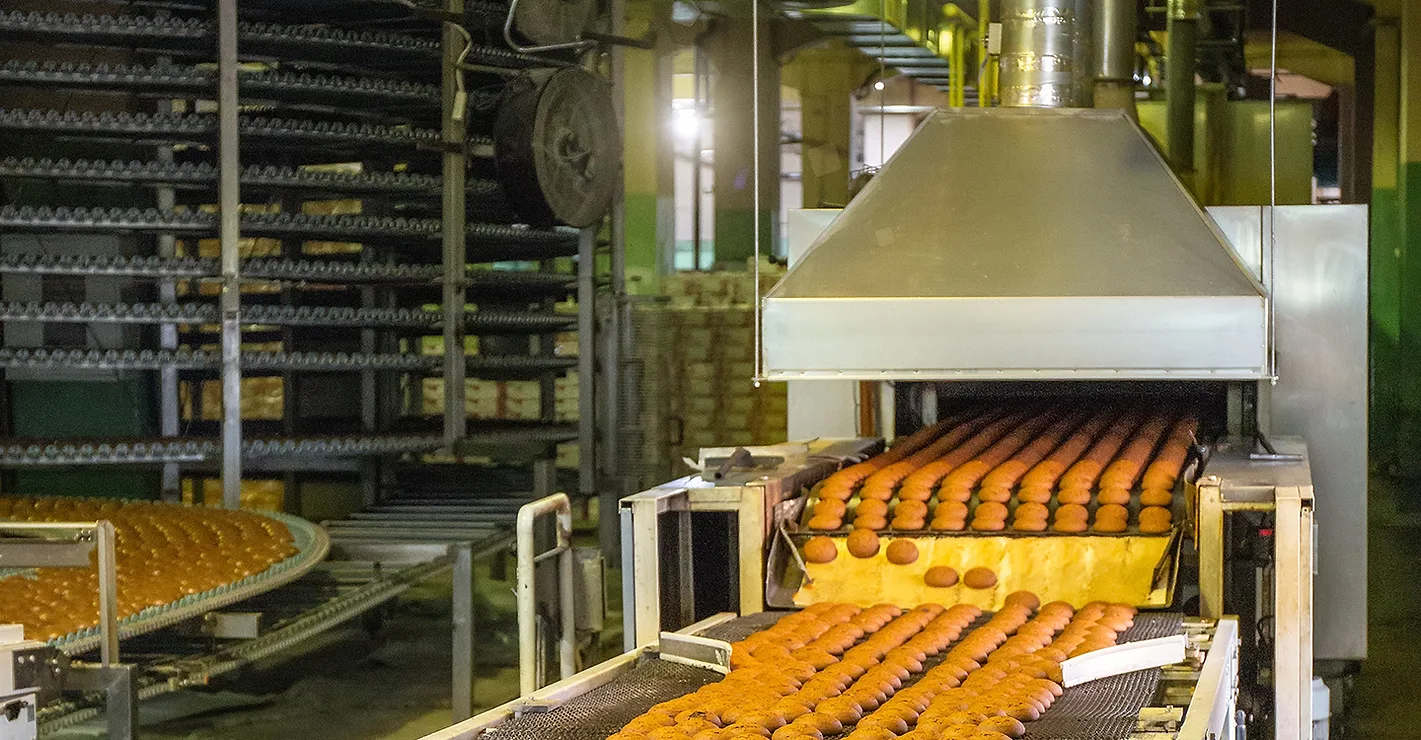
In theory, upstream processing would benefit considerably from OEE measurement, but the complexity of the process works against OEE applications, according to Wendy Armel, senior MES analyst at system integrator Stone Technologies Inc., St. Louis, MO. In baking, for example, flour and water are the primary raw materials, but many additional ingredients usually are involved. Should all be measured, and how should the measurement be done? When the raw product enters a proofer, “I have scrap from the OEE perspective,” Armel explains. “How can you slow the process down enough to measure what is occurring? It can be done,” she believes, “but people have a harder time putting their arms around the process.”
Packaging, on the other hand, involves a number of discreet steps that are conducive to OEE measurement. A line might include six interrelated but independent units—depalletizer, feeder, filler (“The heart of the line,” she says. “You don’t make any money without it.”), labeler, case packer and palletizer. Throughput disruptions are easily ascribed to a unit, simplifying the task of pinpointing the cause of downtime.
If OEE hovers in the 50 percent range, paper logs of downtime events and reject rates might suffice, though manual systems always are susceptible to “data corruption,” a euphemism for deliberate data-entry errors that disguise human failures such as poor execution of maintenance procedures. As OEE and line speeds increase, automated data collection is essential, Armel and Rockwell’s Gay agree. Data must be aggregated on a line filling 1,000-plus bottles a minute, Gay points out, if operators and supervisors hope to identify anomalies in the process and trends in production.
Major vendors of packaging equipment such as Tetra Pak and Krones are engineering OEE infrastructure into their machines and working with automation suppliers such as Rockwell to simplify the networking of controls and equipment and reduce the cost of implementation. If a plant has deployed Rockwell’s FactoryTalk Metrics for reporting plant floor activity, discussions between the OEM and Rockwell will occur prior to installation to ensure machine state coding is consistent, the proper sensors are in place, and performance data is aggregated and presented to operators in a such a way that chokepoints can be identified and data entry is minimized.
Big bang, big bucks
Retrofitting an existing line for automated collection and reporting of OEE data can be cumbersome and sub-optimal. When it is part of a more ambitious project, such as implementation of a manufacturing enterprise system (MES), the cost is more easily rationalized, as was the case at Kraft Foods Inc., where MES implementation closely followed an earlier enterprise resource planning (ERP) project. The early stages of the project were outlined by Fred Sherriff, then-vice president-operations systems at Kraft, at Food Engineering’s inaugural Food Automation Conference in 2000.
As explained by Sherriff, the goal was to drive down manufacturing costs by capturing real-time performance data residing in Allen-Bradley PLCs and channel it to databases that linked to operator-level HMIs, management reports and external partners, including more than 70 copackers. Reporting of key performance indicators was the early focus, with plant floor deployment of Rockwell’s MES solution commencing in 2003. The cost of rolling out the system to 48 Kraft facilities with 500 lines was pegged at $32 million at a MESA International presentation in 2005 by Walt Staehle, Kraft’s former director of shop floor information systems.
Looking for a reprint of this article?
From high-res PDFs to custom plaques, order your copy today!