Focus on OEE: Increased Plant Floor Visibility Pays Off
“At the time, we felt we were in the vanguard in investing in information systems that could yield bottom-line results,” recalls Staehle, who now serves as senior director-business development process automation in Siemens Inc.’s Spring House, PA office. “Now, more and more food companies are closing the gap and taking a longer-term view of using data to drive investments.”
Resistance came early, with some production managers challenging the accuracy of the numbers and disputing the OEE results. In one case, a plant manager would routinely disengage the OEE program to obscure actual performance. “Once the process was transparent, it became obvious how many times the lines were down and how long people were standing around with nothing to do,” says Staehle. “OEE brings a level of scrutiny and accountability to the line.”<br><br>
Resistance by the manager of a plant with underperforming assets is understandable, but the value of better visibility into what is occurring on the plant floor was quickly recognized by upper management. Controls engineers long have understood the value of OEE data, suggests Stone Technologies’ Armel, but now management also appreciates how the information can impact other aspects of their business. “It’s coming down to the point of who is in power and who understands the value of the information,” she says.
The narrow view of OEE is that it wrings more production out of a line, but it has a major bearing on supply chain integration and a manufacturer’s ability “to reliably and predictably commit to customer orders,” Staehle points out. “You can’t be more flexible without first being more reliable, and OEE gives you reliable assets that can fulfill both predictable and unpredictable order-fulfillment promises. Unfortunately, most companies want to jump to flexibility without first being reliable.”
He cites Boeing Co. as Exhibit A of the consequences of poor supply chain OEE performance. The aircraft builder has backlog orders for 3,500 jets and has lost contracts worth billions of dollars because of inferior shop floor management software at its suppliers’ plants. When suppliers fail to completely fulfill parts orders or deliver poor-quality components, Boeing’s lines are starved and OEE goes down. To address external chokepoints, Boeing has added 600 engineers and other supply chain experts since 2010 to audit teams that conduct exhaustive site visits to evaluate vendors’ information systems and prioritize necessary improvements.
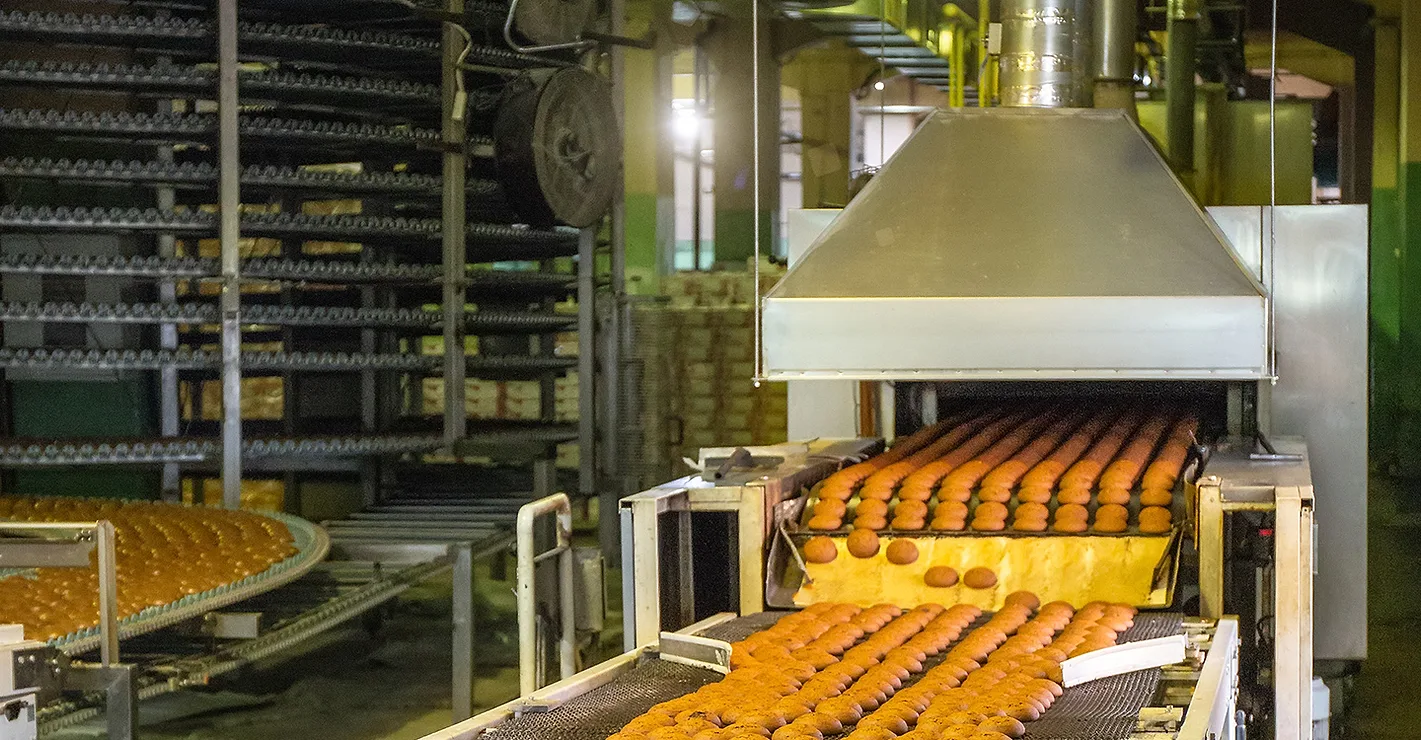
Staehle’s OEE mandate did not extend to Kraft’s Nabisco division, and manual records still were being kept at the massive biscuit and cracker plant on Chicago’s South Side as recently as 2008. In a presentation at Food Engineering’s 2010 Food Automation & Manufacturing Conference, Steve Kunkle, manager of the 1.8 million-sq.-ft. bakery, said the first order of business when he moved to the plant was the installation of an automated data-collection system from Zarpac Performance Index to facilitate root-cause analysis of machine downtime. Subsequent improvements in equipment reliability boosted monthly productivity by $1 million, he estimated.
Minimizing the role of people in data collection may enhance information accuracy, assuming systems are not turned off, but the human factor inevitably comes into play when analyzing the data and identifying the changes necessary to improve OEE. The alternative to human involvement is advanced diagnostics, and while Staehle was overseeing MES implementation, scientists at Kraft’s R&D center in Glenview, IL were experimenting with a system involving 256 digital I/Os and two video monitors to pinpoint machine disruptions and their causes. Even then, someone had to review the video to drill down to the root cause of machine downtime.
Photoelectric sensors and proximity switches do a fine job of tracking machine stops and the reject and throughput rates that define OEE, but that information by itself is of little use in improving performance. Why a jam occurred and whether changeovers should take 15 minutes instead of five are the questions that must be answered if OEE rates are to improve, and that requires human involvement. “Sometimes an interface with the operator is required when a machine goes down, and that takes the operator away from running the machine,” Rockwell’s Gay concedes, adding that constructing an “unobtrusive interface” can be a challenge. A bigger challenge is answering root-cause questions with automation alone.<br><br>
“If you want to get payback [from an OEE system], you need fact-based reason codes,” TriCore’s McCarthy observes, and writing those codes can be complex and costly. To simplify the coding challenge, many manufacturers opt for a menu approach, with operators presented with a list of possible upset-causes and selecting the most appropriate to describe the event.<br><br>
An alternative is to involve continuous improvement specialists such as black belts and green belts, though McCarthy questions how much coordination occurs between the lean team and the production managers who drive plants’ OEE systems.
He relates the case of a dairy that armed its lean team with statistical process control (SPC) and other analytical tools and turned it loose on the OEE data to improve fill-level control. The team identified which nozzles on the filler machine deviated from acceptable fill levels and then brought them back into spec. The project required a $1.5 million investment, but it reduced product giveaway by an average of 4 grams per gallon, enough to produce a payback in less than five months. “SPC in itself doesn’t do anything,” McCarthy says, but placed in the hands of specialists armed with OEE data in a management-driven project, the results can be spectacular.
ABCs of OEE
If capacity constraints are not an issue, there is little incentive to develop the networked information system required to support OEE improvement efforts, allows McCarthy, and even those that need more capacity without adding lines face the challenge of continuous improvement fatigue. “It’s very hard for a plant to maintain discipline over a long time,” he reflects, and interest in developing new reason codes can easily wane. Nonetheless, “the situation on the ground is much better than it was 10 years ago,” he adds.
Staff fatigue is a problem, acknowledges Staehle, but organizations must recognize that OEE is a fundamental continuous improvement tool, with the emphasis on continuous. “It’s like dancing with the bear,” he says. “When do you stop? When the bear wants to.”
“OEE provides a vision of what went wrong, but it doesn’t provide the solution,” adds Gay. “That’s why you need a lean or Six Sigma team to be involved. They are very complementary” to the continuous improvement process.
In years past, OEE sometimes was presented as a black-box solution to capacity constraints. As understanding of its potential and limitations has improved, production professionals and managers have gained a better appreciation of how best to utilize it.
For more information:
Michael Gay, Rockwell Automation, 860-604-0972, mdgay@ra.rockwell.com
Walt Staehle, Siemens Industry Inc., 215-646-7400, walter.staehle@siemens.com
Wendy Armel, Stone Technologies Inc., 972-395-1627, warmel@stonetek.com
David McCarthy, TriCore, 262-886-3630
Looking for a reprint of this article?
From high-res PDFs to custom plaques, order your copy today!