Sustainable Barrier Coatings Replace PFAS, PE and other Plasticized Materials in Packaging
As Amazon is replacing plastic air bubble packaging with paper, food companies are finding alternatives to unsustainable packaging materials.
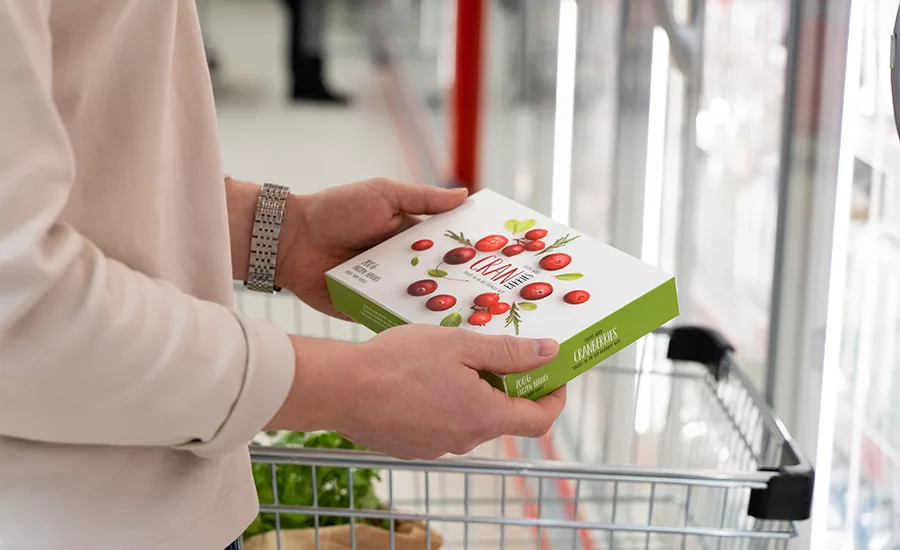
Stora Enso’s Tambrite Aqua+ is a circular packaging material for frozen and chilled food packaging that reduces the need for fossil-based plastics and improves recyclability after use. It utilizes a dispersion coating that helps to reduce the use of plastic that is increasingly subject to costs incurred by packagers.
Sustainable barrier coatings without PFAS can be used in various levels of packaging and include polyhydroxy alkanoates (PHA), polylactic acid (PLA), waxes and wax blends, proteins, cellulose and chitosan, starch, water-based polymer dispersions, polyvinyl alcohol (PVOH), graphene oxide (GO), and plant-based coatings — to name a few. Not all provide the same performance, but the technologies are growing month by month, so if there isn’t an alternative for your PE or PFAS application, there may be in the not-too-distant future as chemical companies research and develop new replacements for plastic-based and PFAS coatings.
As packaging continues to transition from plastics to fiber-based formats, barrier coatings play a critical role in enabling paper and paperboard to perform in demanding applications. Solenis develops and supplies a portfolio of TopScreen water-based barrier coatings that allow fiber substrates to meet the functional requirements of modern packaging.
“These coatings provide resistance to water, moisture, vapor, oil, grease and oxygen, replacing traditional solutions such as polyethylene (PE) laminates, paraffin waxes, silicones or materials containing intentionally added PFAS,” says William Kuecker, Solenis senior director, global strategic marketing. “Applications include a wide range of food and consumer packaging formats such as cups, trays, wraps, folding cartons, corrugated containers and flexible packaging papers.”
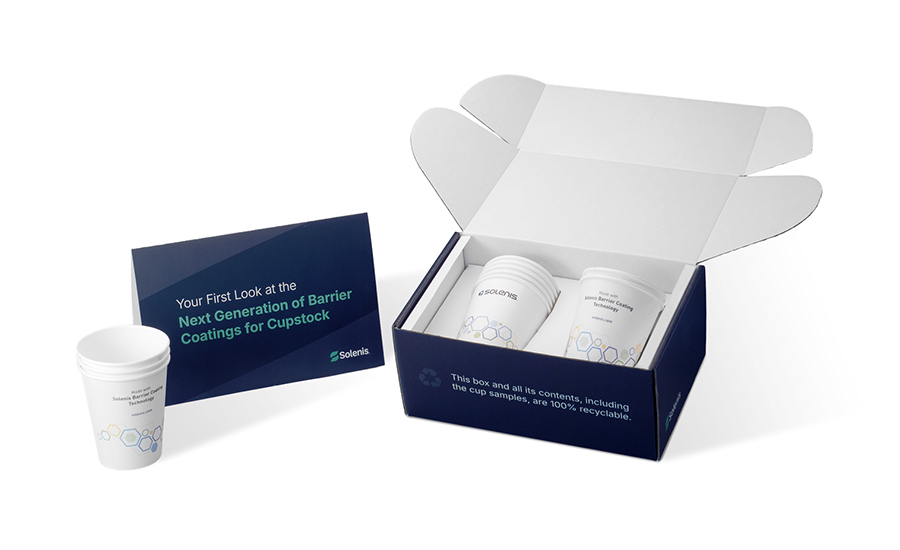
Depending on the formulation, coated products can be recyclable, repulpable, compostable, biodegradable or based on renewable content. Solenis’ portfolio also incorporates biobased options such as PHA- and biowax-containing coatings, supporting both performance and circularity goals.
Stora Enso offers fiber-based packaging material, including a range of barrier-coated options for food service, liquid packaging and frozen and chilled food, says Jalliina Järvinen, VP, barrier development. “Our barrier offering includes conventional extrusion coatings like PE, PET and PP, as well as renewable alternatives like PE Green. We also offer laminations including alu-foil, high barrier solutions, and dispersion coatings Aqua and Aqua+.” [1]
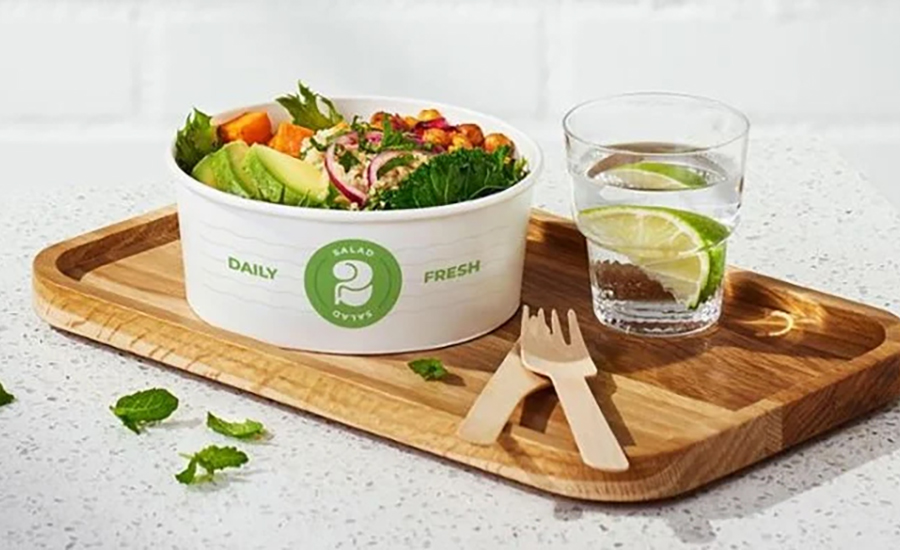
“At Impermea Materials, we specialize in engineering high-performance, bio-based and PFAS-free barrier coatings that unlock new possibilities for sustainable packaging,” says David Zamarin, CEO and founder. “Designed for paper and pulp, as well as molded fiber substrates, our solutions deliver industry-leading functionality without compromising recyclability or compostability.”
Impermea Materials Coating Types
OLEO-PAK™ 4100 – A high-performance oil and grease barrier ideal for frozen foods, takeout trays and deli containers. It’s microwaveable, ovenable and maintains flexibility without sacrificing compostability.
HYDRO-PAK™ + MVTR 4040 – A moisture vapor barrier that offers excellent hydrophobicity while preserving printability and product freshness. Commonly used in dry food and pet food applications.
BIO-PAK™ + MVTR 4140 and BIO-PAK™ + OTR 4060 – BIO-PAK barrier coatings are designed to meet both grease, moisture and oxygen barrier needs. These are ideal for brands committed to compostable and recyclable solutions.
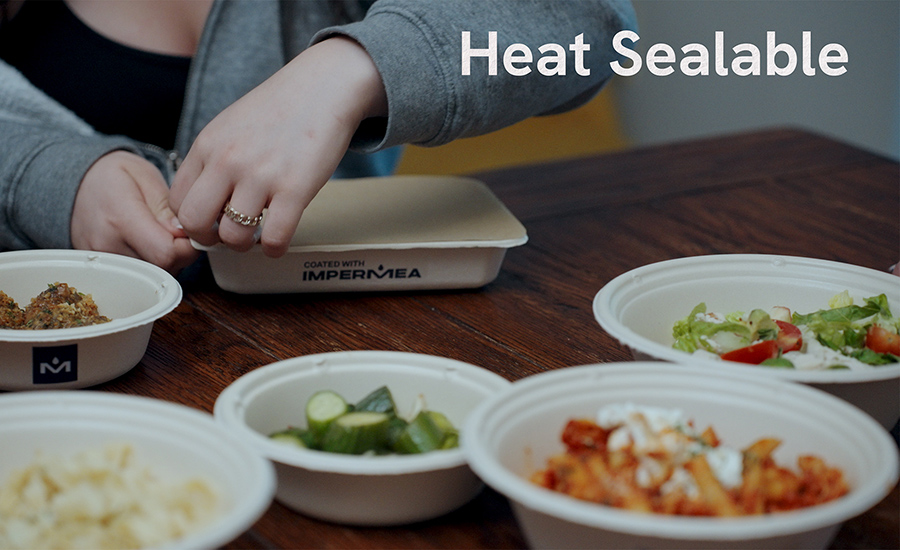
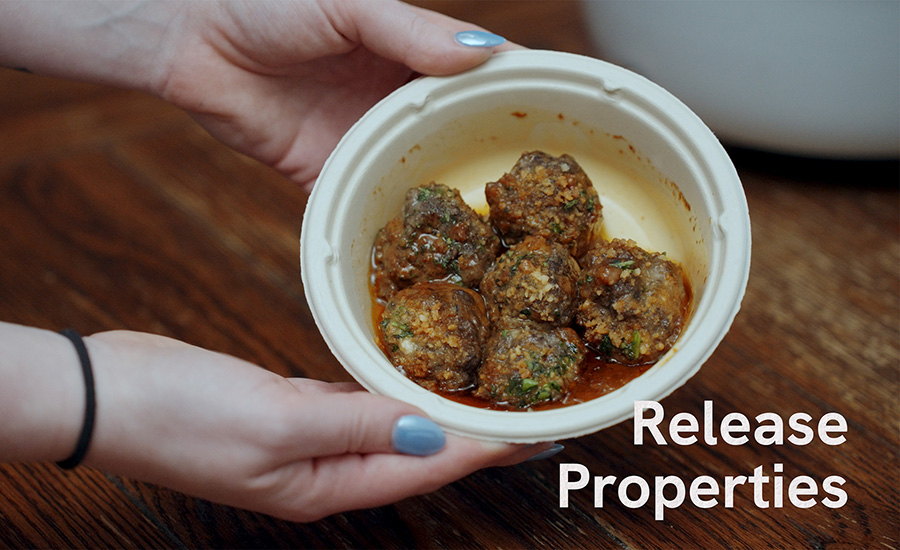
REL-PAK™ 4700 – A hydrophobic coating for paperboard packaging with release properties tailored for food and bakery applications. REL-PAK™ 4700 is a high-performance, water-based release coating offering clean release, heat sealability, and full recyclability, making it an ideal alternative to silicone- or plastic-based coatings.
All Impermea coatings meet U.S. FDA food contact requirements under 21 CFR 176.170 & 176.180, with most certified for use under Sections A through H, and select formulations also approved under Section J. Each solution is engineered for compatibility with existing converting equipment, delivering performance, sustainability and production efficiency in a single solution.
Why Sustainable Barrier Coatings?
The benefits of barrier coatings are enhanced product protection and improved functionality of paperboard, in addition to helping brand owners replace fully-plastic packaging, says Stora Enso’s Järvinen.
“Whether a barrier-coated material is suitable depends ultimately on the packaged product, the level of protection needed and other performance specifications,” Järvinen says. “The right combination of barrier and board can achieve a durable package that performs well in printing, filling, transportation, storage and recycling.”
Impermea’s barrier coatings offer protection against oil, grease, moisture, vapor, water and oxygen without relying on PFAS, fluorine or plastic, Zamarin says. “Designed with versatility in mind, our coatings are microwaveable, ovenable and heat sealable, all while maintaining excellent printability and material flexibility. They’re ideal for a wide range of food-contact formats, including wrappers, cups, bowls, trays and molded fiber containers.”
Selection of materials will depend on the application. Impermea is a high-performance materials company, and its coatings are engineered to meet the most demanding barrier requirements, Zamarin adds. “In some cases, brands choose lower-spec options because they don’t need the level of protection we provide. But for companies prioritizing long-term durability, compliance and sustainability, our solutions offer performance that lower-cost alternatives simply can’t match.”
EXPLORE MORE


When to Apply Barrier Coatings to Materials
The most common way to apply barrier coatings today is through off-line processes. This typically requires either investing in a dedicated coating line or shipping uncoated paper and board to a site with coating capabilities. While effective, this approach introduces extra handling, inventory and freight, which adds cost, lengthens lead times and reduces process control.
An alternative is to apply water-based barrier coatings in-line on flexographic printing presses, much like other functional or protective finishes used in print, says Solenis’ Kuecker. With this method, the barrier layer is applied through a coating station on the same press that prints the graphics, eliminating a separate coating step and allowing converters to add both graphics and functionality in one streamlined process.
“Only lighter barrier coatings today can be applied in a printing press, e.g., light grease or moisture barriers,” says Stora Enso’s Järvinen. “We also offer barriers from a non-separate process stage; i.e., inline dispersions, and those are typically very comparable to solutions done in a printing press.”
“Barrier coatings can also be applied in-register — a process that is covered by a patent —meaning they are applied only where functionality is required,” Kuecker adds. This precision reduces coating usage, minimizes waste and supports design flexibility.
Performance-wise, in-line flexographic application can achieve barrier properties equivalent to off-line methods when formulations are tailored to the substrate and press conditions, Kuecker says. It also provides converters with greater control over production scheduling and reduces the complexity of moving material between sites.
“Our barrier coatings can be applied during the printing process, much like coatings used in book covers and other printed substrates,” says Impermea’s Zamarin. “We support multiple application methods, including rod, gravure, spray and flexographic printing, each optimized for different manufacturing needs and performance goals.”
Impermea Materials has made significant advancements in flexographic press compatibility through its exclusive strategic partnership with INX International, one of the largest ink manufacturers in North America. “INX brings technical expertise and a global distribution network to the table,” Zamarin says. “Through this collaboration, INX is the exclusive distributor of our OLEO-PAK 4100 for the printing press applied market, enabling scalable, drop-in applications of our PFAS-free, plastic-free barrier coatings directly on flexo lines. This integration allows converters to meet demanding sustainability and performance standards without adding extra process steps, ensuring that in-line application is not only possible but commercially optimized. By combining INX’s print innovation with Impermea’s next-gen chemistry, we’re making sustainable packaging more accessible and effective at every stage of production.”
Barrier Coatings and Paperboard
Our local recycler will not accept pizza boxes, because it says it can’t recycle paperboard with grease stains, which it automatically assumes that all used pizza boxes have grease stains because consumers aren’t neat and tidy.
“The issue with grease-stained paperboard, such as pizza boxes, being rejected from recycling streams isn’t just about consumer habits; it’s about how the materials are engineered from the outset,” says Impermea’s Zamarin. Most traditional coatings either use plastic or PFAS to block grease, which unfortunately render the packaging non-recyclable, non-compostable or neither.
Grease does not automatically mean a box is unable to be recycled, says Stora Enso’s Järvinen. Surface stains generally do not prevent recycling, and lightly greasy pizza boxes are commonly accepted in recycling streams. However, if the box includes food leftovers or if the material is fully penetrated by grease, then it might not meet recyclability standards.
“For added grease resistance, there are several barrier coating options,” Järvinen says. “From our portfolio, we offer Aqua for light grease resistance requirements, PE and PP for medium requirements, and PET for more advanced requirements.”
“We’ve developed PFAS-free, plastic-free barrier coatings, such as OLEO PAK 4100, that deliver effective oil and grease resistance while maintaining the paperboard’s recyclability, compostability and repulpability,” Zamarin says. “It’s already being used in takeout containers, food trays and other formats where both barrier performance and sustainability are important.”
But solving this problem long term means rethinking the entire system, from coatings to how packaging is collected, sorted and processed, Zamarin adds. “Our goal is to eliminate single-use plastic waste and support infrastructure that enables paper-based packaging, such as future-ready pizza boxes, to be designed for circularity from the ground up.”
“While our coatings offer a ready solution, the broader market and infrastructure have not yet fully caught up,” Zamarin adds. “That’s why we’re not just developing better chemistry; we’re advocating for a shift in how the industry approaches design and end-of-life strategy. If more of the market transitions to PFAS-free, recyclable barrier solutions like ours, we can unlock real progress toward circularity at scale. The technology is here. Now it’s about aligning systems and ambition to meet it.”
Are plastic-coated barriers sustainable and recyclable?
Plastic-coated barriers are typically not considered sustainable or easily recyclable. Most use polyethylene (PE) or similar plastic films that are laminated onto paperboard, creating a multi-material structure that is difficult to separate in standard recycling systems. As a result, many of these materials are diverted to landfill, even if the paper component is technically recyclable.
Some plastics, such as mono-material PE, are more recyclable in theory; however, they require specialized collection and processing infrastructure that is not widely available. Additionally, the presence of food contamination or thin-layer coatings often further complicates recovery.
From a sustainability perspective, the trend is shifting toward simpler, single-material solutions such as water-based coatings applied directly to paper. These can deliver performance without undermining recyclability or compostability. Materials that are compatible with existing recovery systems and avoid persistent chemicals like PFAS are increasingly being viewed as more viable long-term.
Ultimately, the most sustainable barrier technologies will be those that strike a balance between functionality and real-world end-of-life outcomes, supporting a circular economy rather than contributing to the growing problem of single-use waste.
— David Zamarin, CEO and founder, Impermea Materials
Barrier-coated paperboard can replace fully-plastic packaging, ultimately increasing the share of renewable materials in packaging. Many barrier coatings are fossil-based, but renewable bio-based alternatives are commercially available. Also, Stora Enso uses barrier chemicals, like plastics, in minimum amounts to provide their unique properties while other properties, like rigidity, is from the paperboard. However, as mentioned, “sustainable” depends on many factors through a package’s life cycle — and to what material it is being compared. The true impact of a material can be assessed with verifiable methods, like Life Cycle Assessment (LCA).
Regarding recyclability, in Europe, some barrier-coated paperboards can be recycled with standard processes, but more complex barriers may require specialized mills. Recycling capacity and acceptance in standard mill processes for barrier boards are on the rise.
— Jalliina Järvinen, VP, barrier development, Stora Enso
Looking to the Future
While there’s been a lot of talk on future exotic materials, such as edible and water-soluble packaging, mycelium and plant-based composites, bioplastics and compostable films, active and smart packaging, eco-friendly inks and adhesives, reusable and refillable packaging systems, etc., suppliers are busy perfecting what they have and extending their products’ usefulness.
“While our core chemistry doesn’t fall directly into categories like edible films, mycelium or bioplastics, we actively collaborate with leaders in these emerging areas,” says Impermea’s Zamarin. “Our barrier coatings are designed to complement a wide range of sustainable substrates — not just paper — and can be used to enhance the functionality of plant-based composites, molded fiber and other next-gen materials. These partnerships enable us to enhance the performance of innovative packaging formats, providing sustainably focused brands with the barrier protection they need to scale without compromising their environmental goals.”
“Our focus is on wood fiber-based packaging materials,” says Stora Enso’s Järvinen. “Our materials are 99.9% technically recyclable with many home- or industrially-compostable options. Among our barrier solutions, PE Green is a renewable alternative, while Bio is biodegradable and industrially-compostable.”
Lightweighting, i.e., reducing the amount of raw material needed to produce a package while maintaining necessary properties, is and will continue to be an important topic in packaging sustainability, Järvinen adds.
“One of the most promising areas we are working in is the development of PHA-based barrier coatings,” says Solenis’ Kuecker. Polyhydroxyalkanoates (PHAs) are a family of biobased polyesters produced through microbial fermentation of renewable resources. They provide the same packaging functionality as conventional plastics but are biodegradable in soil, freshwater, and marine environments, as well as home compostable.
“Our PHA-based coatings are available as extrusion laminates, applied off-line, or as water-based barrier coatings that can potentially be applied in-line on flexographic presses, combining graphics and functionality in a single step,” Kuecker says. They deliver resistance to oil and grease, water, oxygen and moisture vapor (MVTR), making them suitable for applications such as barrier flat sheet, cupstock, flexible packaging and extrusion coating.
PHAs are especially significant because they can serve as a replacement for polylactic acid (PLA). While PLA is biobased, it requires industrial composting to degrade and is less effective in natural environments. PHAs, on the other hand, extend end-of-life and circularity options by enabling compostability as well as biodegradability in soil and marine conditions.
“Looking forward, we expect biodegradability to become a stronger driver in sustainable packaging alongside recyclability, Kuecker says. As regulations tighten and brand owners set ambitious goals, materials like PHAs that combine performance, process compatibility and broader circularity pathways will be among the most important innovations for the next wave of sustainable packaging.
“Looking ahead, we see growing momentum around circularity-driven design, PFAS-free certifications and the integration of smart packaging technologies that connect material performance with traceability and compliance,” Zamarin says. “As regulations tighten and consumers demand more from packaging, materials that combine sustainability with proven functionality will define the future of the industry.
Plastic containers on the way out?
The Wall Street Journal recently reported that only 10% of plastic containers and such are actually recycled in the U.S. Obviously, we’re throwing way more plastic than is being recycled. Do you think that sustainable packaging alternatives will prove economically successful in the future?
Yes, we absolutely believe that sustainable packaging alternatives will not only become more economically viable but will also become the standard in the near future.
The current system, where only about 10% of plastic packaging is recycled, is fundamentally unsustainable. It’s built on a linear model of take, make and waste, and that comes with long-term human, environmental and financial costs. In contrast, sustainable, recyclable and compostable packaging solutions promote a circular economy where materials are designed to be reused, recovered or reintegrated, rather than discarded. Over time, this model proves far more cost-effective than the escalating costs of managing single-use plastic waste.
We’re already seeing this shift. As consumers become more educated and value-driven, they’re increasingly supporting brands that align with their environmental goals. Companies that adopt credible, high-performance alternatives to plastic aren’t just doing the right thing — they’re making a smart, future-proof business decision.
— David Zamarin, CEO and founder, Impermea Materials
Whether or not a packaging material is “sustainable” depends on many factors throughout its life cycle, including raw material, production efficiency, recyclability and more. Fiber-based materials are renewable, benefit from already high collection and recycling rates in Europe and can potentially help brand owners reduce their climate impact compared to fully-plastic solutions. These materials are already commonplace in many consumer end-uses, demonstrating an ability to perform as well as plastic, both functionally and economically.
— Jalliina Järvinen, VP, barrier development, Stora Enso
Looking for a reprint of this article?
From high-res PDFs to custom plaques, order your copy today!