This work will inform the agency’s upcoming post-market safety assessment of the food contact uses of phthalates.
The U.S. FDA has evaluated eight ortho-(o)-phthalates used as plasticizers in food contact for a cumulative risk assessment. This analysis will inform the FDA's upcoming safety assessment and determine if these substances should be grouped based on their chemical or pharmacological similarities.
The shift toward a more circular economy has led to the adoption of mono-material structures. However, trade-offs exist on the road to improved sustainability for machinery and materials alike.
While research insights indicate that most companies have a low-to-moderate likelihood of increasing their use of reusable materials, recyclable materials continue to be the primary focus for packaging innovation and sustainability initiatives.
By combining fiber-based materials, bio-based coatings and coating line expertise, the three companies have built ready-to-implement structures that deliver barrier performance and heat sealability over a wide sealing window.
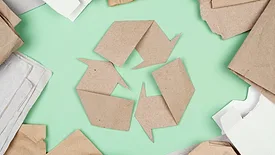
In response to the growing demand for recyclable packaging, this food-safe, fiber-based solution supports the packaging industry’s transition toward upcoming recyclability requirements under the EU Packaging and Packaging Waste Regulation.
There are two key points in the lifecycle of food packaging where sustainability gains can be made: end-of-line and end-of-life. At first glance, these terms may appear interchangeable, but they describe distinct stages of food packaging manufacturing.
Make packaging sustainable by removing plastic and PFAS and replacing them with sustainable paperboard and barrier coatings that are easily recyclable and compostable.
Five years ago, sustainability meant reducing packaging material. Now, the clean label trend has taken on the mantle of sustainability, and its definition includes natural ingredients, decarbonization and recycling under the banner of clean labeling.
The definition of clean label is evolving to include not only natural ingredients but also decarbonization, reductions in virgin plastic packaging, cleaner processing, energy efficiency and more.
Over-reacting or not, several consumer groups and clinicians — backed by new data — want phthalates out of the food supply. But is it a doable and practical task?
The solution integrates Eastman’s biobased and compostable Solus performance additives with BioPBS polymer to form a thin coating on UPM’s compostable and recyclable barrier base papers.