FOOD ENGINEERING’s 2025 Top 100 Food and Beverage Companies
September 16, 2025
FOOD ENGINEERING’s 2025 Top 100 Food and Beverage Companies
September 16, 2025
Food and beverage manufacturers continued to face a gauntlet of economic and geopolitical challenges in 2024, but for some, growth was still possible.
In their annual reports — from which FOOD ENGINEERING pulls annual sales data to compile our ranking — manufacturers pointed to uncertainty in their operating environment, including fluctuating consumer demand, supply chain constraints, weather events, high interest rates, tariffs and other trade relations concerns, and political instability and unrest, including the ongoing conflict in Ukraine.
Manufacturers also cite inflationary pressures, which balloon operational costs and heighten competitiveness. According to the U.S. Bureau of Labor Statistics’ Producer Price Index (PPI), final demand for goods and services rose 3.3% from the end of December 2023 to December 2024. Specifically, prices for processed goods rose 0.2% over the same period, while prices for unprocessed goods rose 5.1%.
FOOD ENGINEERING’s 2026 Top 100 Food and Beverage Companies Is Now Available!!
See who's leading the industry in 2026 and how the landscape is changing.
Meanwhile, the Consumer Price Index (CPI) rose 2.9% from December 2023 to December 2024, with overall food prices increasing 2.5%. Food at home prices increased by 1.8%.
While sales were largely down under these dynamic conditions, some of the world’s top food and beverage manufacturers experienced revenue growth.
Ranking Review
PepsiCo and Nestlé — our leaders from previous rankings — have traded places, with PepsiCo taking the top spot. The company generated $91.8 billion in 2024, with 2% organic revenue growth for the year. Ramon L. Laguarta, CEO and chairman of the board, cites portfolio evolution and geographic diversification as drivers for growth.
“As we look ahead, we believe the runway for growth remains vast,” Laguarta said in PepsiCo’s annual report. “We operate in two large and attractive categories — global beverages and convenient foods — which represent a $1.3 trillion global opportunity. Roughly 60% of our business comes from geographies with 5% of the global population, which means we have a massive opening to expand in geographies covering the other 95% of the population.”
PepsiCo also initiated and completed two major acquisitions last year. The company acquired the Strauss Group’s 50% ownership in Sabra for $241 million in December 2024, making it PepsiCo’s wholly-owned subsidiary. The beverage and snacking giant also announced its acquisition of Garza Food Ventures LLC, dba Siete Foods, for $1.2 billion. The acquisition closed in January 2025.
Looking for a reprint of this article?
From high-res PDFs to custom plaques, order your copy today!
Citing product innovation and international growth, other beverage manufacturers experienced growth, rising several spots in the ranking. For example:
- Diageo jumped from 23 to 18
- China’s Kweichow Moutai rose from 24 to 20
- Keurig Dr. Pepper moved from 33 to 30
- Mexico’s Femsa Coca-Cola jumped from 37 to 33
- Kirin Holdings jumped from 64 to 52
- Monster Beverage Corp. moved from 77 to 71
Confectionery companies also reported revenue growth in 2024. Ferrero posted just over $19 billion in annual revenue, rising in the ranking from 28 to 26. The company notes product innovation and international growth contributed to its approximately 9% increase in annual revenue.
Ferrero opened its first U.S. chocolate processing facility in Bloomington, Illinois in May 2024, building on the company’s existing manufacturing campus. A $214 million Kinder Bueno facility followed in October 2024.
"This new project will help us increase Ferrero's incredible momentum and innovations here in the U.S. market," Michael Lindsey, president and chief business officer of Ferrero North America, said in October 2024. "Kinder Bueno quickly became an American favorite after being introduced just five years ago, and with the support of leaders in Illinois, the Bloomington community, and our valued retail partners like Walmart, the brand will continue to grow and thrive."
The Hershey Company missed its revenue target of $11.5 billion, but it earned $11.2 billion in 2024, achieving 0.3% net sales growth. The company, which acquired the Sour Strips brand founded by social media personality Maxx Chewning last year, aims to satisfy shifting consumer preferences, elevate better-for-you snacking and adapt to new shopping behaviors.
Barry Callebaut reported a nearly 23% increase in net sales from the 2022/2023 fiscal year, jumping from 59 to 46 in the ranking. However, the company experienced a 0.3% increase in global chocolate volume sales and a 1.4% decrease in global cocoa volume sales. While the chocolate and cocoa products supplier is impacted by fluctuating cocoa bean prices, it says it passes on those increases through its cost-plus model.
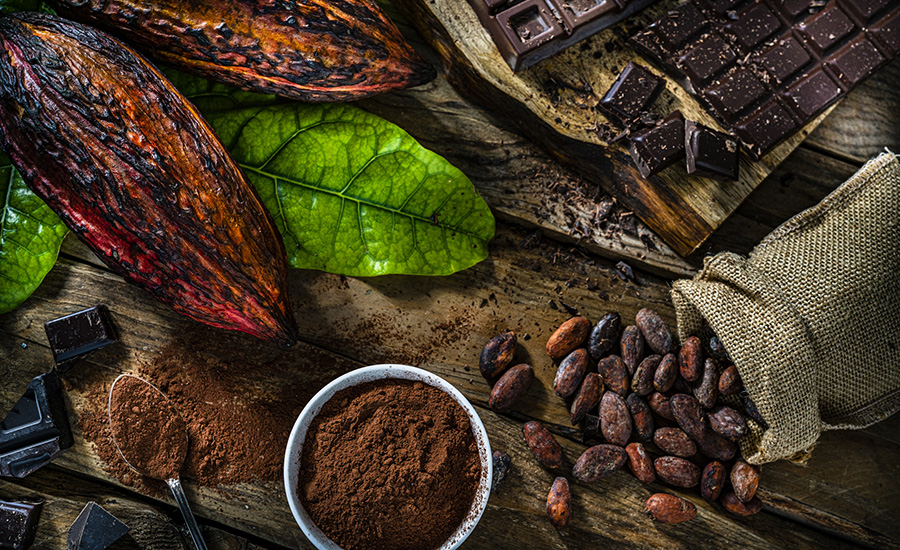
Olam International also experienced a double-digit revenue increase driven by “unprecedented highs” in commodity prices, especially for coffee and cocoa. The ingredient supplier earned S$56 billion ($41 billion), marking the first time it crossed the S$50 billion threshold since 2022. With these results, Olam rose four places to crack the Top 10 of our ranking.
Other Acquisitions and Divestitures
Several other notable acquisitions and divestitures were initiated and completed in 2024:
- The Campbell’s Company completed its acquisition of Sovos Brands, Inc. for $2.1 billion.
- Lakeview Farms, a portfolio company of CapVest Partners LLP, announced plans to acquire the noosa yogurt brand from The Campbell’s Company.
- General Mills announced plans to sell its North American yogurt business for $2.1 billion
- Furlani Foods announced plans to acquire Cole’s Quality Foods, joining to garlic bread makers
- The J.M. Smucker Co. opted to sell its Voortman cookie brand to Second Nature Brands, a creator of premium snacks and treats controlled by CapVest Partners LLP.
- Hain Celestial Group has completed the sale of its ParmCrisps snack brand to independent snacks company Our Home.
- Mount Franklin Foods, LLC, manufacturer of branded, contract and private label confectionery, nuts, snacks and foodservice products, acquired the assets of Stuffed Puffs, LLC
- Tilray acquires Hop Valley Brewing Company, Terrapin Beer Co., Revolver Brewing and Atwater Brewery from Molson Coors
Looking Ahead
At least three planned acquisitions have the potential to shake up our 2025 ranking of the Top 100 Food and Beverage Companies.
In May 2025, PepsiCo completed its acquisition poppi, a fast-growing prebiotic soda brand for $1.95 billion, including $300 million of anticipated cash tax benefits for a net purchase price of $1.65 billion. Fortune reports poppi earned $500 million in revenue in 2024.
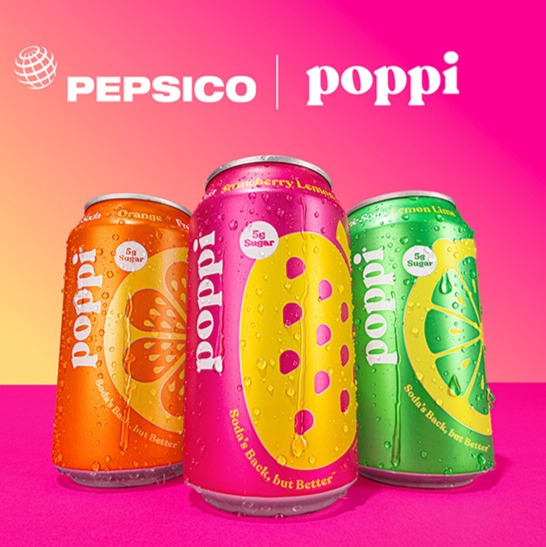
"poppi represents a compelling strategic fit within our short- and long-term vision for the future of beverages," says Ram Krishnan, CEO of PepsiCo Beverages U.S. "Its rapid growth, strong consumer engagement, and differentiated functional positioning make it a dynamic addition to our portfolio. We are excited to scale poppi's momentum and unlock new growth through our capabilities — we're just getting started."
Meanwhile, Mars announced plans in August 2024 to acquire Kellanova, the snack and plant-based food spinoff of Kellogg’s, for $36 billion. Kellanova, which generated $12.7 billion in 2024, offers Mars an opportunity to expand its snacking portfolio, says Poul Weihrauch, CEO and office of the president, Mars, Inc.
“We will honor the heritage and innovation behind Kellanova’s incredible snacking and food brands while combining our respective strengths to deliver more choice and innovation to consumers and customers,” Weihrauch says. “We have tremendous respect for the storied legacy that Kellanova has built and look forward to welcoming the Kellanova team.”
The proposed acquisition has cleared antitrust review by the U.S. Federal Trade Commission, but it remains under investigation by the European Commission. The European Commission has until Oct. 31 to complete its investigation and issue a decision. With all approvals, Mars and Kellanova expect the transaction to close toward the end of 2025.
In July, Ferrero announced it would snap up WK Kellogg Co., the North American cereal spinoff of Kellogg’s, for $3.1 billion. The acquisition, set to close sometime this year, represents the latest in Ferrero’s decade-long push to acquire North American food brands.

“Over recent years, Ferrero has expanded its presence in North America, bringing together our well-known brands from around the world with local jewels rooted in the U.S.,” says Giovanni Ferrero, executive chairman of the Ferrero Group. “Today's news is a key milestone in that journey, giving us confidence in the opportunities ahead."
Last month, Keurig Dr Pepper (KDP) announced it would acquire JDE Peets’s for roughly $18 billion. Once the transaction is complete, KDP plans to split into two companies: a refreshment beverage company, with estimated annual net sales of $11 billion, and a global coffee company with annual net sales of $16 billion.
“Through the complementary combination of Keurig and JDE Peet’s, we are seizing an exceptional opportunity to create a global coffee giant,” says KDP CEO Tim Cofer. “This is the right time for this transaction, with KDP in a position of operational and financial strength, momentum across our evolved portfolio, and increasing coffee category resilience. By creating two sharply focused beverage companies with attractive and tailored growth propositions and capital allocation strategies, we are poised to generate significant shareholder value in both the near and long term.”
The PPI for final demand has dropped from 3.8% in January to 3.3% in July, with the 12-month increase for the foods index dropping from 5.9% in February to 4.2% in July. Meanwhile, the CPI has come down from 3% in January to 2.7% in June and July.
This helps, but food and beverage manufacturers continue to contend with the same challenges this year. In their FY25 second quarter results, many companies point to their ability to remain flexible during periods of difficulty.
“We remain confident in our ability to deliver against our commitments amid a challenging environment, powered by the resiliency of our categories, our advantaged global footprint and the strength of our brands and capabilities,” says Dirk Van de Put, chair and CEO, Mondelez International.