Food Engineering logo
search
cart
facebook twitter linkedin youtube
  • Sign In
  • Create Account
  • Sign Out
  • My Account
Food Engineering logo
  • NEWS
    • Latest Headlines
    • Manufacturing News
    • People & Industry News
    • Plant Openings
    • Recalls
    • Regulatory Watch
    • Supplier News
  • PRODUCTS
    • New Plant Products
    • New Retail Products
  • TOPICS
    • Alternative Protein
    • Automation
    • Cannabis
    • Cleaning | Sanitation
    • Fabulous Food Plants
    • Food Safety
    • Maintenance Strategies
    • OEE
    • Packaging
    • Sustainability
    • More
  • EXCLUSIVES
    • Plant Construction Survey
    • Plant of the Year
    • Sustainable Plant of the Year
    • State of Food Manufacturing
    • Top 100 Food & Beverage Companies
  • MEDIA
    • Podcasts
    • Videos
    • Webinars
    • White Papers
  • FOOD MASTER
  • EVENTS
    • Food Automation & Manufacturing Symposium and Expo
    • Industry Events
  • RESOURCES
    • Newsletter
    • Custom Content & Marketing Services
    • FE Store
    • Government Links
    • Industry Associations
    • Market Research
    • Classified Ads
  • EMAGAZINE
    • eMagazine
    • Archive Issue
    • Advertise
  • SIGN UP!
PackagingSustainability

Obstacles to water bottle recyclability

Multiple factors, including light-weighting, labels, colorants, can negatively impact recycling.
By Debra Schug
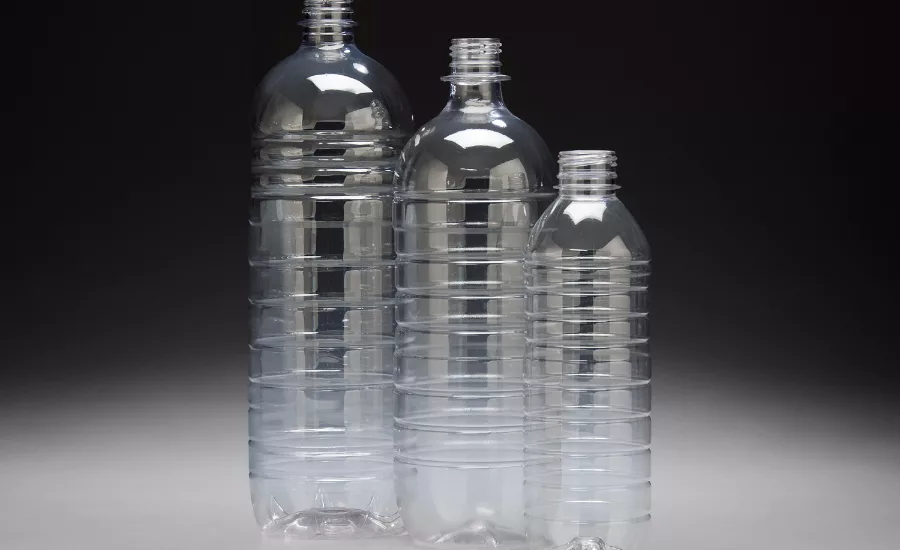
PTI Water Bottles
April 12, 2017

Many water bottlers are using much lighter-weight PET containers to meet sustainability initiatives. However, research conducted by Plastic Technologies, Inc. found that ultra-lightweight bottles can negatively impact the effectiveness of post-consumer package waste sorting and recycling systems.

There has been a growth in popularity of single-serve water bottles: consumers like them for their convenience and price, while PET resin suppliers have benefited from this surge. But not a lot of research has focused on the performance impact and the validation of sustainability assumptions. PTI, a provider of plastic packaging, wanted to provide brand owners with additional information to facilitate the decision making process.

Since the early 2000s, the weight of a 16.9 oz. water bottle has been reduced in half. The technological enhancements in this field have enabled cost reduction and contributed to positive environmental impact. And many assume that lighter weight only has positive benefits, but the study found a wide variation in performance, weight and recyclability in the bottles it examined, all sourced from retail store shelves in the United States, Europe and India.

It discovered that lighter weight, design and label choices have an impact on post-consumer recovery. The decisions made during the design phase not only have to meet physical performance requirements, but also should not negatively impact current recycling systems.

The study showed that many of the samples did not factor in generally-accepted recyclability guidelines during the design process. In some scenarios, the bottle color, label, glue or ink components had a significant impact on package recyclability.

The study offers data on package weights, wall thickness, pressurization, volumes, optical quality, color, haze and recycling performance of various commercially-available PET water bottles.

For more information, visit this page. 

KEYWORDS: bottle PET Packaging recycling

Share This Story

Looking for a reprint of this article?
From high-res PDFs to custom plaques, order your copy today!
Debra Schug was Editor-in-Chief of Food Engineering. She began her media career over a decade ago writing and producing broadcast news for both television and radio at the local and national level. She spent many years as the managing editor for two trade magazines in the oil industry and the research editor for an annual petroleum report. She has a master’s degree in journalism and mass communication from Iowa State University.

Recommended Content

JOIN TODAY
to unlock your recommendations.

Already have an account? Sign In

  • 2025 Top 100 Food and Beverage Companies

    FOOD ENGINEERING’s 2025 Top 100 Food and Beverage Companies

    While sales were largely down under dynamic economic and...
    Top 100 Food & Beverage Companies
    By: Alyse Thompson-Richards
  • Bottling machine

    How Optical and X-Ray Inspection Supports Bottling Safety and Quality

    By transitioning from legacy single-technology systems to...
    Food Safety
    By: Dan McKee
  • Bread baking in oven

    The State of Food Manufacturing in 2025

    Food and beverage manufacturers are investing in...
    Manufacturing News
    By: Alyse Thompson-Richards
Manage My Account
  • eMagazine
  • Newsletter
  • Online Registration
  • Manage My Preferences
  • Customer Service

More Videos

Popular Stories

The Campbell's Company logo

Campbell’s Terminates Exec Over Alleged Disparaging Comments

alternative protein products

Alternative Protein in 2025: Key Trends and Technologies

circular packaging material for frozen and chilled food packaging

Sustainable Barrier Coatings Replace PFAS, PE and other Plasticized Materials in Packaging

State of Maufacturing 2025

Events

June 17, 2025

Refrigerated & Frozen Foods’ State of the Cold Chain

On Demand Kelley Rodriguez, Editor in Chief of Refrigerated & Frozen Foods, will be joined in this 60-minute webinar by industry experts to help unpack the latest research.

July 23, 2025

Decarbonizing Process Heat: What You Should Know and Next Steps

On Demand Driven by climate goals, business risk, client interest, and resilience considerations, food and beverage companies are increasingly turning their attention to decarbonizing their production processes.

View All Submit An Event

Products

Recent Advances in Ready-to-Eat Food Technology

Recent Advances in Ready-to-Eat Food Technology

See More Products

CHECK OUT OUR NEW ESSENTIAL TOPICS

Alternative ProteinAutomationCleaning/SanitationFabulous Food Plants

Food SafetyMaintenance StrategiesOEE

PackagingSustainability

Related Articles

  • Veolia Neosep process

    Reducing water usage in food and beverage processing

    See More
  • food process schematic

    How food and beverage makers can better monitor water quality

    See More
  • Kingdom Fresh Farms tomatoes

    Report: Food companies aren't using packaging to show commitment to safety

    See More

Related Products

See More Products
  • download.jpg

    Recent Advances in Ready-to-Eat Food Technology

  • GlobalData_logo_blue_header.png

    USA: Food & Grocery - Market Shares, Summary & Forecasts to 2023

See More Products
×

Elevate your expertise in food engineering with unparalleled insights and connections.

Get the latest industry updates tailored your way.

JOIN TODAY!
  • RESOURCES
    • Advertise
    • Contact Us
    • Food Master
    • Store
    • Want More
  • SIGN UP TODAY
    • Create Account
    • eMagazine
    • Newsletter
    • Customer Service
    • Manage Preferences
  • SERVICES
    • Marketing Services
    • Reprints
    • Market Research
    • List Rental
    • Survey/Respondent Access
  • STAY CONNECTED
    • LinkedIn
    • Facebook
    • YouTube
    • X (Twitter)
  • PRIVACY
    • PRIVACY POLICY
    • TERMS & CONDITIONS
    • DO NOT SELL MY PERSONAL INFORMATION
    • PRIVACY REQUEST
    • ACCESSIBILITY

Copyright ©2025. All Rights Reserved BNP Media.

Design, CMS, Hosting & Web Development :: ePublishing