Food Engineering logo
search
cart
facebook twitter linkedin youtube
  • Sign In
  • Create Account
  • Sign Out
  • My Account
Food Engineering logo
  • NEWS
    • Latest Headlines
    • Manufacturing News
    • People & Industry News
    • Plant Openings
    • Recalls
    • Regulatory Watch
    • Supplier News
  • PRODUCTS
    • New Plant Products
    • New Retail Products
  • TOPICS
    • Alternative Protein
    • Automation
    • Cannabis
    • Cleaning | Sanitation
    • Fabulous Food Plants
    • Food Safety
    • Maintenance Strategies
    • OEE
    • Packaging
    • Sustainability
    • More
  • EXCLUSIVES
    • Plant Construction Survey
    • Plant of the Year
    • Sustainable Plant of the Year
    • State of Food Manufacturing
    • Top 100 Food & Beverage Companies
  • MEDIA
    • Podcasts
    • Videos
    • Webinars
    • White Papers
  • FOOD MASTER
  • EVENTS
    • Food Automation & Manufacturing Symposium and Expo
    • Industry Events
  • RESOURCES
    • Newsletter
    • Custom Content & Marketing Services
    • FE Store
    • Government Links
    • Industry Associations
    • Market Research
    • Classified Ads
  • EMAGAZINE
    • eMagazine
    • Archive Issue
    • Advertise
  • SIGN UP!
Food Safety

How to Launch a Risk Assessment Team for Pet Food Operations

As manufacturers look to increase spending on pet food-related projects, so too must they look to increase their focus on safety.
By Grant Gerke
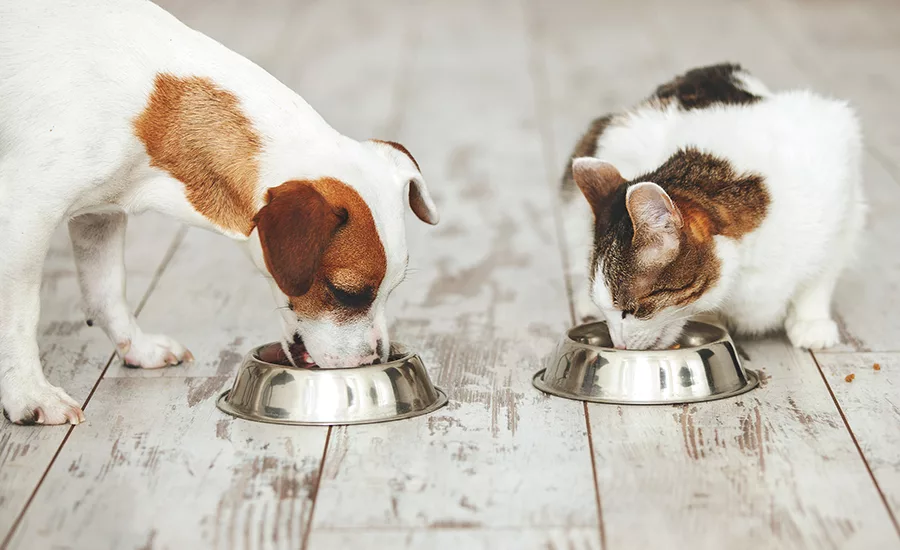
Dog and cat eating pet food

Photo courtesy of Getty Images / TatyanaGl

June 19, 2023

In 2021, the American Pet Products Association reported that “pet parents” in the U.S. spent $50 million on pet food and treats. Not surprisingly, Frost and Sullivan predicts that the pet food industry will grow by 6.6% annually until 2026.

While demand and growth for pet food are on the upswing, pet food manufacturers are evaluating capital investments to meet this demand. In 2022, CRB’s Horizons Pet Food report revealed that more than half of pet food processors want to spend between $5 and $10 million on capital projects in the near term. The survey included more than 300 pet food manufacturers.

“Of those looking to spend, line expansions or investment in new equipment and new facilities were targets,” says Tony Moses, Ph.D., director of product innovation and fellow at CRB, on the More Than Kibble podcast. “And I can tell you within that there's about 10% that are looking to spend $50 million or more.”

Also, manufacturers may invest capital on packaging upgrades due to food safety. “Normally, food safety isn't the most fun topic,” says Moses. “It's meeting regulations, but this industry is heavily invested in food safety with packaging changes as well as some other capital investments.”

So there’s plenty at stake for pet food manufacturers and modernizing operations to address food safety is one of them. However, some pet food manufacturers are playing catch up and may need to “beef up” their risk assessment teams with such high stakes in the pet food segment.

How to Build a Pet Food Risk Assessment Team

In 2022, the Food Drug Administration (FDA) discarded three Compliance Policy Guides (CPGs), and the industry now uses the Food Safety Modernization Act (FSMA) Preventive Controls for Animal Foods (PCAF). For pet food operators, staying current on food safety rules can be challenging due to the workforce issues and the lack of digitalization in a plant.

In March 2023, Dr. David Rosenblatt, head of learning and academic services at Sher Consulting & Training, discussed pet food safety for manufacturers on a recent webinar. “Risk assessment has taken a giant leap forward, as it was not mandatory for the food industry at all in the United States until recently,” says Rosenblatt on the webinar. Hazard Analysis and Risk-Based Preventive Controls (HARPC) is now mandated by the FDA, and it covers food safety concerns beyond critical control points.


Dr. David Rosenblatt


Dr. David Rosenblatt, head of learning and academic services at Sher Consulting & Training, provides best practices on starting an internal safety team. Image courtesy of Sher Consulting and Training


For a risk assessment or food safety team, there is no definition under FSMA on who has to be on the team. FSMA says the team must have the knowledge and experience to perform a risk assessment. “I assessed all of these standards, all saying the same thing,” says Rosenblatt. “Nobody's telling you who should be on your (safety) team, and it is acceptable to have a one-person team.” However, Rosenblatt doesn’t recommend one-person teams due to the need for food knowledge, operations experience and maintenance skills.

Below are Rosenblatt’s best practices for an internal pet food safety team:

1. One leader:

The team leader does not have to be somebody who is a pet food safety expert or knows bacteria, toxins or chemical issues. But this person has to be versed in the risk assessment methodology. That's your team leader. 

2. Maintenance operations person:

A risk assessment team needs an active maintenance operations member to identify hazards due to machine breakdowns and overall systems/plant floor perspective.

3. Safety Expert

This is a microbiologist, a toxicologist or somebody who speaks the language of pet food safety. Nobody knows everything, and this is why an outside consultant can be a good fit. An outside consultant can identify peer-reviewed versus non-peer-reviewed material, know where to search for answers and be an expert on validation testing.

4. Nutrition expert

This person has knowledge in nutritional adequacy, which nutrients can cause what type of disease, what diseases can cause overdoses, risk nutrition and severity knowledge is beneficial. If you search for an outside consultant, look for a person with pet food experience.

KEYWORDS: CRB investments pet food risk assessment

Share This Story

Looking for a reprint of this article?
From high-res PDFs to custom plaques, order your copy today!

Grant gerke

Grant Gerke is a digital manufacturing contributing writer in the food, beverage and packaging industries, with more than 15 years of experience writing about system software, ingredient trends, packaging material and equipment developments, automation technology and workforce trends. Other work includes coverage of electrification in multiple industries.  

Recommended Content

JOIN TODAY
to unlock your recommendations.

Already have an account? Sign In

  • 2025 Top 100 Food and Beverage Companies

    FOOD ENGINEERING’s 2025 Top 100 Food and Beverage Companies

    While sales were largely down under dynamic economic and...
    Top 100 Food & Beverage Companies
    By: Alyse Thompson-Richards
  • Bottling machine

    How Optical and X-Ray Inspection Supports Bottling Safety and Quality

    By transitioning from legacy single-technology systems to...
    Food Safety
    By: Dan McKee
  • Bread baking in oven

    The State of Food Manufacturing in 2025

    Food and beverage manufacturers are investing in...
    Manufacturing News
    By: Alyse Thompson-Richards
Manage My Account
  • eMagazine
  • Newsletter
  • Online Registration
  • Manage My Preferences
  • Customer Service

More Videos

Popular Stories

The Campbell's Company logo

Campbell’s Terminates Exec Over Alleged Disparaging Comments

Frito-Lay logo

PepsiCo to Close Two Florida Facilities

alternative protein products

Alternative Protein in 2025: Key Trends and Technologies

State of Maufacturing 2025

Events

June 17, 2025

Refrigerated & Frozen Foods’ State of the Cold Chain

On Demand Kelley Rodriguez, Editor in Chief of Refrigerated & Frozen Foods, will be joined in this 60-minute webinar by industry experts to help unpack the latest research.

July 23, 2025

Decarbonizing Process Heat: What You Should Know and Next Steps

On Demand Driven by climate goals, business risk, client interest, and resilience considerations, food and beverage companies are increasingly turning their attention to decarbonizing their production processes.

View All Submit An Event

Products

Recent Advances in Ready-to-Eat Food Technology

Recent Advances in Ready-to-Eat Food Technology

See More Products

CHECK OUT OUR NEW ESSENTIAL TOPICS

Alternative ProteinAutomationCleaning/SanitationFabulous Food Plants

Food SafetyMaintenance StrategiesOEE

PackagingSustainability

Related Articles

  • Cybersecurity

    Cyber Insurance Drives Increased Security

    See More
  • Food manufacturing data

    Digital KPIs Emerge but Are Brands Finding Accurate Data?

    See More
  • Digital lock on data

    How to Communicate OT Cybersecurity Risk and Investment to Food and Beverage Leadership

    See More

Related Products

See More Products
  • statical.jpg

    Statistical Process Control for the Food Industry: A Guide for Practitioners and Managers

  • Cleaning-in-Place: Dairy, Food and Beverage Operations, 3rd Edition

  • 1119775590.jpg

    Thermal Food Engineering Operations

See More Products
×

Elevate your expertise in food engineering with unparalleled insights and connections.

Get the latest industry updates tailored your way.

JOIN TODAY!
  • RESOURCES
    • Advertise
    • Contact Us
    • Food Master
    • Store
    • Want More
  • SIGN UP TODAY
    • Create Account
    • eMagazine
    • Newsletter
    • Customer Service
    • Manage Preferences
  • SERVICES
    • Marketing Services
    • Reprints
    • Market Research
    • List Rental
    • Survey/Respondent Access
  • STAY CONNECTED
    • LinkedIn
    • Facebook
    • YouTube
    • X (Twitter)
  • PRIVACY
    • PRIVACY POLICY
    • TERMS & CONDITIONS
    • DO NOT SELL MY PERSONAL INFORMATION
    • PRIVACY REQUEST
    • ACCESSIBILITY

Copyright ©2025. All Rights Reserved BNP Media.

Design, CMS, Hosting & Web Development :: ePublishing