How Small Manufacturers are Building a Business Case for Robotics
Smaller manufacturers are the fastest-growing area of industrial robotics today, driven by the need for new collaborative robotics systems.

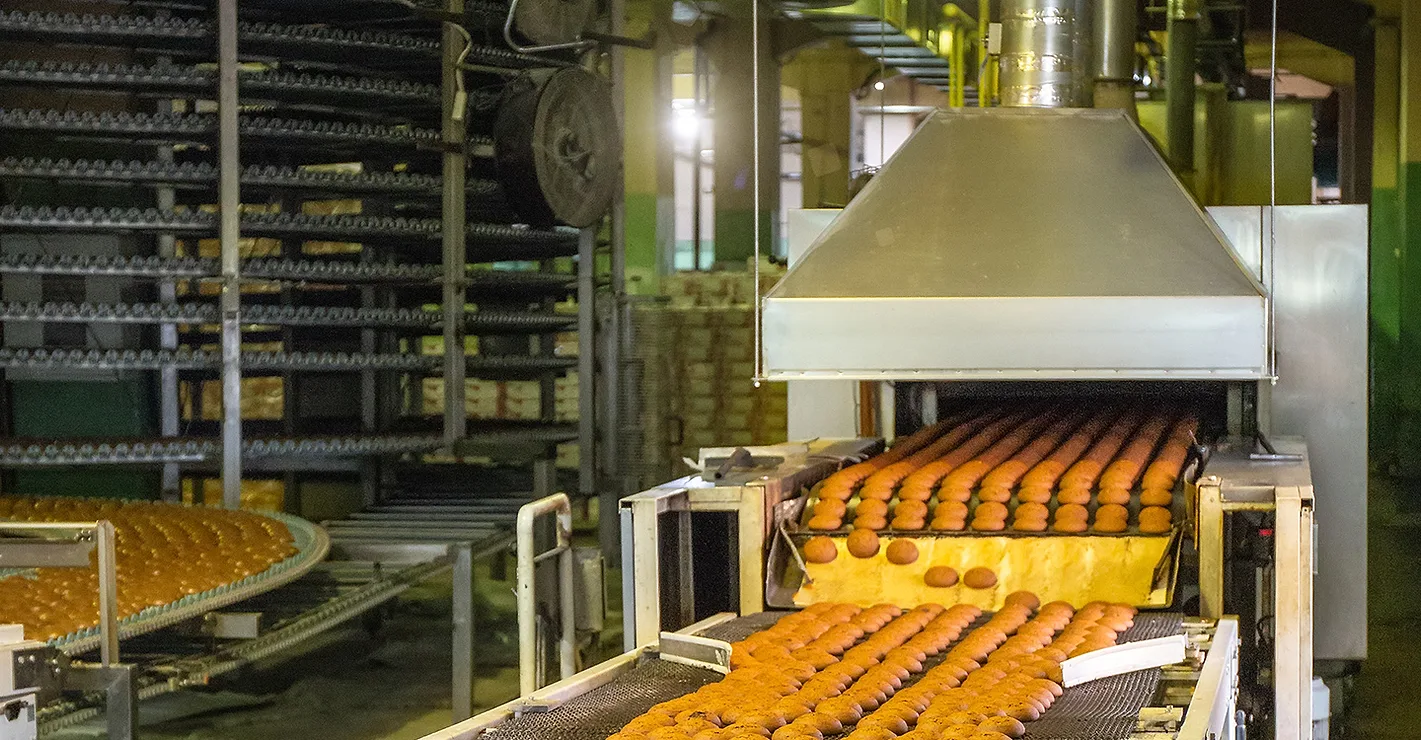
Packaging is one of the top jobs for robots in food factories, eliminating a repetitive task for humans.
Photo courtesy of Getty Images
Small manufacturers are gaining the scale, speed and quality advantages they need to compete and win against larger competitors through automation and robotics.
They’re gaining that competitive advantage by using robotics to automate time-consuming tasks across shop floors. This frees manufacturing teams to spend time on work that delights customers and delivers higher margins.
The bottom line is that automation and robotics allow small manufacturers to compete, win more deals and solidify customer relationships as effectively as their larger competitors.
Industrial robots used by small manufacturers
Seeing an opportunity to expand their systems and solutions markets, robotics providers are fast-tracking intro-level robotics machinery, programming and robotics-as-a-service offerings. The average price of an industrial robot has halved over the past decade. It was around $23,000 in 2022, down from $47,000 in 2011, according to ARK Invest. The firm predicts costs will fall a further 50% to 60% by 2025.
Why small manufacturers are turning to robotics now
Smaller manufacturers are the fastest-growing area of industrial robotics today, driven by the need for new collaborative robotics systems. The global market for industrial robots is expected to grow at a compound annual growth rate (CAGR) of 9.39%. It is estimated to reach a total market value of $30.5 billion by 2030. The collaborative robot segment, core to small manufacturers due to flexibility and adaptability, is growing with a CAGR of 14.7%. In 2022, this segment generated $ 715 million in revenue, projected to surpass $2.1 billion by 2030.
Addressing challenges and improving optimization
To address challenges and improve optimization in robotics, a small manufacturing company can consider the following reasons on why turning to robotics is beneficial:
Labor shortages, fluctuating material availability and costs, and progressively tighter customer quality standards drive small manufacturers to automate more of their shop floor operations.
Labor shortages in remote regions of North America where production workers are scarce are where robotics is flourishing in small manufacturing companies. The Harvard Business Review’s recent article, “A New Generation of Robots Can Help Small Manufacturers,” observes that “manufacturing especially is having huge problems recruiting and retaining employees. More than 2 million manufacturing jobs will sit unfilled across the United States by the end of this decade, and three-quarters of European companies already have difficulty recruiting suitable workers. Workplaces are crying out for talent and face decreased productivity and unsustainable staff turnover.”
A plastics manufacturer located in a remote region of the Pacific Northwest couldn’t recruit enough production workers to handle the orders they’d received from their best customers, so they decided to start piloting robotics.
The manufacturer invested in two robotic stackers, sorters and end-of-arm extensions on their robots to fulfil diabetic test kit orders for a leading European biomedical manufacturer. Running three shifts a week with the stackers and end-of-arm extensions, they delivered their largest order of 150,000 kits a week.
Measurable performance gains that strengthen the business case for robotics.
Robotics in small manufacturers are delivering measurable results at scale. Building a business case for robotics factors in all associated costs and benefits. The following are a few of the many measurable benefits that robotics is delivering for small manufacturers today. Reducing maintenance costs by 10-40%, increasing productivity by 3 to 5%, and reducing time-to-market for new products by 20 to 50% are a few of the measurable results robotics is delivering. The cost savings extend to quality control and inventory holding, with reductions of 10-20% and 20-50%, respectively. Furthermore, the automation of knowledge work can lead to a productivity increase of 45% to 55% for technical professionals.
Building a business case for robotics
Automating the most time-consuming areas of production to reduce costs and improve quality is the goal many companies initially pursue when they adopt robotics. Start small with those areas draining cash and time from operations – they will show the greatest gains from automating them with robotics.
Define a strategy for implementing robotics across the shop floor that will deliver measurable results at scale. Knowing that the investment in a robotics system is paying off and tracking how much helps strengthen and defend the business case for future automation projects.
Here are the steps small manufacturers take in building a business case for robotics:
- Identify Pain Points. The first step is to identify the most time-consuming and labor-intensive tasks in the manufacturing process. These are the areas where automation can provide the most significant benefits. For example, pain points could include supply chain disruptions, labor shortages, regulatory compliance, inefficient processes or productivity issues.
- Evaluate Potential Solutions. Once the pain points are identified, evaluate the different robotic solutions available. Manufacturers often create comparison tables in Google Sheets or Excel to compare cost, ease of implementation, and potential return on investment.
- Calculate ROI. Calculate the Return on Investment (ROI) for the proposed robotic solution. This involves determining the initial cost of the robot, ongoing costs, labor cost savings, increased productivitynand potential tax incentives. The ROI is typically calculated over a horizon of 5 to 10 years, considering an industrial robot can work for an average of 15 years.
- Complete initial pilot testing. Implement a small-scale pilot project to test the effectiveness of the chosen robotic solution. This allows manufacturers to assess the real-world benefits and challenges of automation.
- Measure and share results with production teams. Track the performance of the pilot project, focusing on key metrics such as productivity, quality and cost savings. This data will be crucial in building a compelling business case.
- Scale up across the shop floor. If the pilot project is successful, plan for a larger-scale implementation. Consider the necessary resources, timeline, and potential impact on the overall operations.
- Review and adjust. Continually review the performance of the robotic systems and make necessary adjustments. This ensures that the automation strategy remains effective and continues to deliver value.
Looking for a reprint of this article?
From high-res PDFs to custom plaques, order your copy today!