Food Engineering logo
search
cart
facebook twitter linkedin youtube
  • Sign In
  • Create Account
  • Sign Out
  • My Account
Food Engineering logo
  • NEWS
    • Latest Headlines
    • Manufacturing News
    • People & Industry News
    • Plant Openings
    • Recalls
    • Regulatory Watch
    • Supplier News
  • PRODUCTS
    • New Plant Products
    • New Retail Products
  • TOPICS
    • Alternative Protein
    • Automation
    • Cannabis
    • Cleaning | Sanitation
    • Cross-Functional Food Innovation
    • Fabulous Food Plants
    • Food Safety
    • Maintenance Strategies
    • OEE
    • Packaging
    • Sustainability
    • More
  • EXCLUSIVES
    • Plant Construction Survey
    • Plant of the Year
    • Sustainable Plant of the Year
    • State of Food Manufacturing
    • Top 100 Food & Beverage Companies
  • MEDIA
    • Podcasts
    • Videos
    • Webinars
    • White Papers
  • FOOD MASTER
  • EVENTS
    • Food Automation & Manufacturing Symposium and Expo
    • Industry Events
  • RESOURCES
    • Newsletter
    • Custom Content & Marketing Services
    • FE Store
    • Government Links
    • Industry Associations
    • Market Research
    • Sponsor Insights
    • Classified Ads
  • EMAGAZINE
    • eMagazine
    • Archive Issue
    • Advertise
  • SIGN UP!
Food Safety

Food Safety

The effects of FSMA's sanitary transportation of food rule

Regulation establishes requirements designed to minimize risk during the transportation of food and beverages that could compromise its safety

By Debra Schug
track and trace

More visibility in both tracking and tracing from RFID tags helps manufacturers provide cost-efficient and high-quality products to their customers.

Photo courtesy of EU Automation
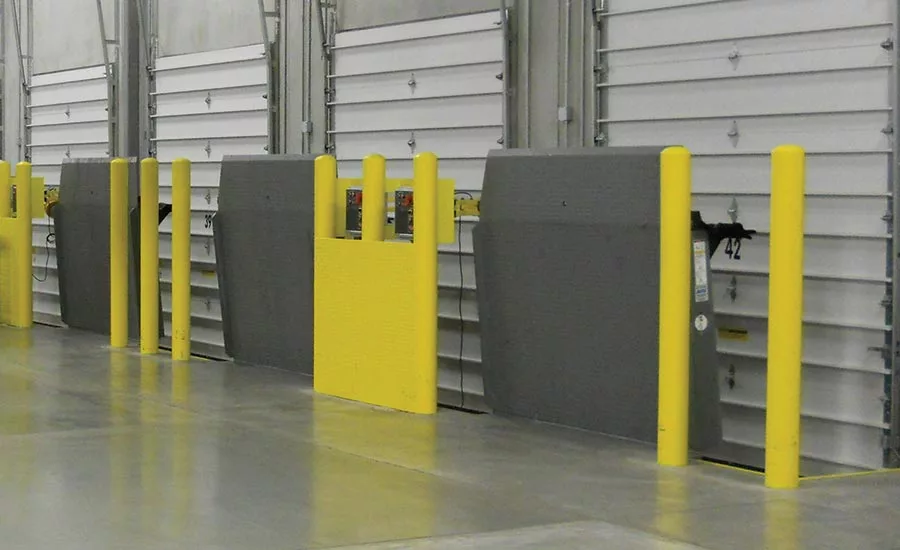
Full-Chain Traceability and TR+ Analytics

More visibility in both tracking and tracing from RFID tags helps manufacturers provide cost-efficient and high-quality products to their customers.

Photo courtesy of EU Automation
RTR 601 Food Core temperature data logger

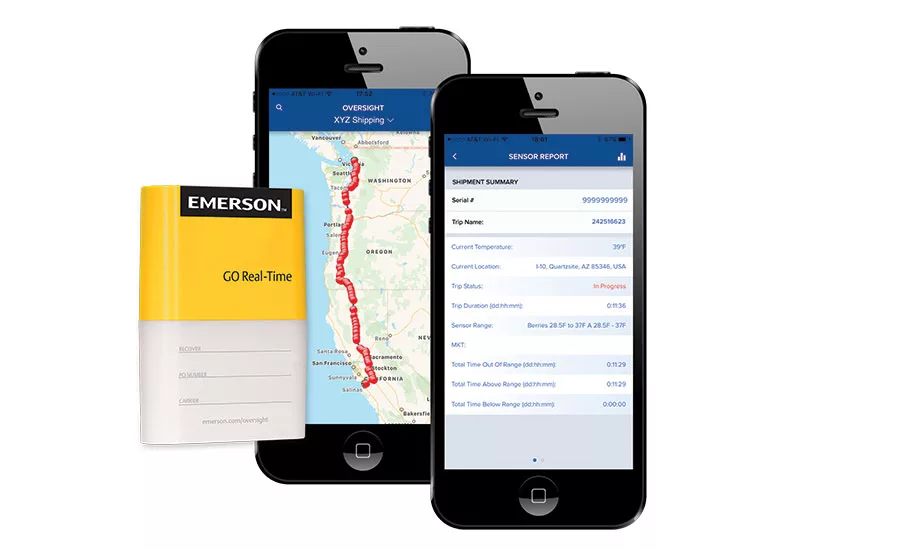
To verify adherence to cold chain protocols, GO Real-Time trackers from Emerson can be placed on a load. The processor can input the serial number of the unit into Emerson’s mobile app and know the temperature and location of the product in real time. Real-time alerts via text and email can also be set up.

Photo courtesy of Emerson

RTR 601 Food Core temperature data logger

The RTR-601 Food Core temperature data logger from T&D records temperature data that can be automatically sent via wireless communication to a designated email address or an FTP server.

Photo courtesy of CAS DataLoggers
Mobile Auditor app

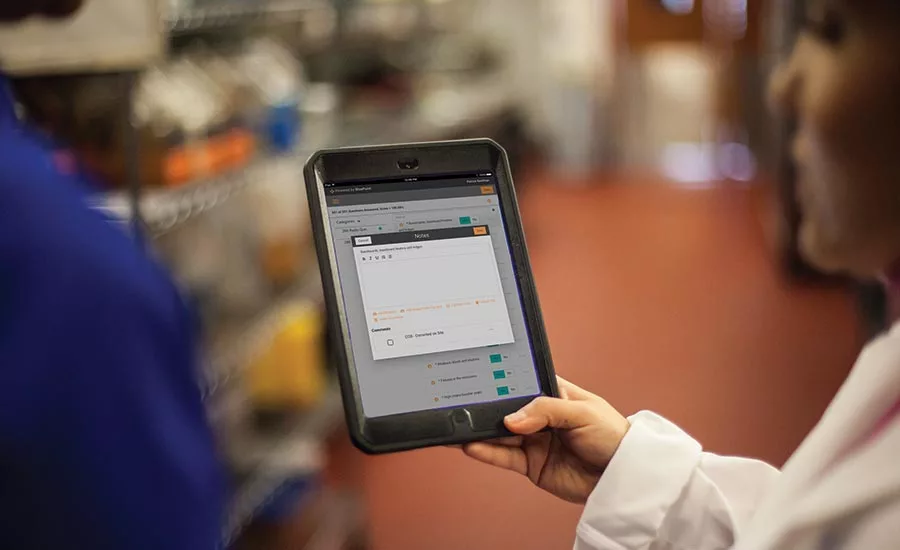
RizePoint’s Mobile Auditor app provides companies tools for performing audits anywhere and also syncs with Bluetooth thermometers and IoT networks.

track and trace
Full-Chain Traceability and TR+ Analytics
RTR 601 Food Core temperature data logger
Mobile Auditor app
May 14, 2018

How GSF uses blockchain technology for food safety

Food distributor Golden State Foods (GSF) has partnered with IBM to explore how blockchain, IoT, and analytics can enhance customer experience by providing transparencies as product moves through its supply chain ecosystem. Guilda Javaheri, CTO for GSF, explains more about blockchain technology and why the company has decided to use it.


FE: Please describe blockchain technology and how it applies to the food processing industry.

Javaheri: When you think of blockchain, think of a shared ledger and an enabling technology for a chain of trusted, traceable and secure transactions. Blockchain technology allows participants in a business ecosystem to record events in a secured network with checks and balances. Blockchain technology provides trusted platforms for data exchanges and collaboration that is inherently transparent.  

The adoption of emerging technologies such as blockchain will ultimately enable the food processing industry to completely digitize their supply chain processes. Given the breadth of technologies available, the food processing industry is in a prime position to benefit from improved traceability and real-time data to ensure product integrity and food safety. Since the food supply is global in nature, the need for timely access, collaboration, traceability and trust amongst business partners is more important than ever.    


FE: Why did Golden State Foods decide to use this type of technology? 

Javaheri: Blockchain technology has the potential to reinvent how supply chains operate and track their transactions. Combining blockchain with Watson IoT information offers the potential to have real-time, immutable, trusted transactions within a business ecosystem that further enhance the quality and trust of supply chain information. 


FE: How is IBM’s blockchain technology helping Golden State Foods manage food safety, particularly in its distribution of food products?

Javaheri: In today’s global supply chain of food, it is very important to deliver a trusted product that has all the certifications and validations necessary to guarantee food safety and quality. GSF conducted a Proof of Concept [POC] with IBM to assess the fit and applicability of blockchain technology in the fresh products supply chain. The POC results identified several opportunities for GSF to bring additional value to its business network by leveraging blockchain and IoT technologies. 

As a next step, GSF has decided to partner with IBM to leverage IBM’s development and investment in the IBM Food Trust Blockchain platform. GSF is starting a journey to use key elements of the Food Trust platform and develop additional functionality important to restaurants and the supply chains that support restaurants. 


FE: How can this technology help processors comply with FSMA’s STF rule? 

Javaheri: Blockchain augmented with Watson IoT information enables the processors to proactively identify any temperature issues and adjust remotely where necessary, preventing the possibility of spoilage. Additionally, blockchain technology provides an immutable timeline of the food’s journey from supplier to restaurant, so that any issues can be spotted instantly and traced back to the source.  


FE: How does it automate collecting and analyzing food safety data? 

Javaheri: Blockchain enables participants to deploy ‘smart contracts,’ which are business rules encapsulated in code. Smart contracts can automatically perform quality management functions and communicate the result to all appropriate parties in real time. In our pilot, we are also automating capturing temperature data [IoT] and location data [RFID].  


FE: What are some of the other benefits to using this technology? 

Javaheri: Blockchain together with Watson IoT cuts down significant risks throughout the supply chain. As soon as a product starts its journey, the solution captures the location and temperature of the product from the time that it arrives at a manufacturing facility all the way to its final destination. The instant recording of important data, along with the data’s immutability and security, prevents human error and ensures that anyone can access accurate information at any stage of the journey. It also provides a quick answer to those searching for a product, so if a recall needs to occur, the recall can be pinpointed to specific products in a distinct location—versus recalling an entire product. 


FE: Anything else you would like to add?

Javaheri: Blockchain does more than just ‘digitize’ the supply chain. It will ultimately enable GSF and its network partners to use capabilities like ‘smart contracts’ to drive process automation and remove costly reconciliation. A shared, trusted, continuous stream of data about products moving throughout the supply chain enables us to reshape the way we do business within our ecosystem.

KEYWORDS: FSMA logistics

Share This Story

Looking for a reprint of this article?
From high-res PDFs to custom plaques, order your copy today!

Debra Schug was Editor-in-Chief of Food Engineering. She began her media career over a decade ago writing and producing broadcast news for both television and radio at the local and national level. She spent many years as the managing editor for two trade magazines in the oil industry and the research editor for an annual petroleum report. She has a master’s degree in journalism and mass communication from Iowa State University.

Recommended Content

JOIN TODAY
to unlock your recommendations.

Already have an account? Sign In

  • CJ Schwan’s Salina facility.

    Recipe for Growth: How CJ Schwan’s Powers Pizza Production with People and Automation

    Blending advanced automation with purposeful design, this...
    Cross-Functional Food Innovation
    By: Alyse Thompson-Richards
  • Paris Baguette rendering

    FOOD ENGINEERING’s 49th Annual Plant Construction Survey

    Food and beverage manufacturers continue to invest in...
    Plant Construction Survey
    By: Alyse Thompson-Richards
  • Bottling machine

    How Optical and X-Ray Inspection Supports Bottling Safety and Quality

    By transitioning from legacy single-technology systems to...
    Food Safety
    By: Dan McKee
Previous 1 2 Next
Manage My Account
  • eMagazine
  • Newsletter
  • Online Registration
  • Manage My Preferences
  • Customer Service

More Videos

Sponsored Content

Sponsored Content is a special paid section where industry companies provide high quality, objective, non-commercial content around topics of interest to the Food Engineering audience. All Sponsored Content is supplied by the advertising company and any opinions expressed in this article are those of the author and not necessarily reflect the views of Food Engineering or its parent company, BNP Media. Interested in participating in our Sponsored Content section? Contact your local rep!

close
  • Worker in protective food-processing attire uses a tablet beside stainless-steel conveyor equipment in a modern food manufacturing facility.
    Sponsored bySafetyChain

    Your Biggest Losses Are Hiding in Data You Already Have

  • Stainless steel conveyor system transferring cut food pieces—likely pasta or fries—through an enclosed industrial processing line using a flexible hose and screw conveyor in a manufacturing facility.
    Sponsored byHapman

    What’s Slowing Down Your Bulk Material Handling Process?

  • AI-enhanced technology in CIP operations
    Sponsored byEcolab

    Using AI to unlock new value from your CIP processes

Popular Stories

Little Sesame staff standing outside at the opening of its new facility in Capitol Heights, Maryland with a ribbon-cutting ceremony.

All Roads Lead to Growth for Hummus Maker Little Sesame

Ecolab CIP IQ

Looking Toward Water-Smart Cleaning and Sanitation

A-B Williamsburg Brewery

Anheuser-Busch Invests $5.8M in Virginia Brewery

Promo for the 2026 Plant of the Year: CJ Shwan

Events

June 17, 2025

Refrigerated & Frozen Foods’ State of the Cold Chain

On Demand Kelley Rodriguez, Editor in Chief of Refrigerated & Frozen Foods, will be joined in this 60-minute webinar by industry experts to help unpack the latest research.

July 23, 2025

Decarbonizing Process Heat: What You Should Know and Next Steps

On Demand Driven by climate goals, business risk, client interest, and resilience considerations, food and beverage companies are increasingly turning their attention to decarbonizing their production processes.

View All Submit An Event

Products

Recent Advances in Ready-to-Eat Food Technology

Recent Advances in Ready-to-Eat Food Technology

See More Products

June 10 Hapman Webinar: Dust, Damage, and Downtime: Designing Bulk Solids Systems That Protect Product and People


CHECK OUT OUR NEW ESSENTIAL TOPICS

Alternative ProteinAutomationCleaning/SanitationFabulous Food Plants

Food SafetyMaintenance StrategiesOEE

PackagingSustainability

Related Articles

  • Debra-Schug

    Effects of FSMA still unclear as pieces are put in place

    See More
  • Comment period extended on FSMA proposed sanitary transportation rule

    See More
  • FDA proposes FSMA rule on sanitary transportation

    See More

Related Products

See More Products
  • The 10 Principles of Food Industry Sustainability

  • handbookfoodscience.jpg

    Handbook of Food Science and Technology 2: Food Process Engineering and Packaging

  • food engineering.jpg

    Handbook of Food Engineering, Third Edition

See More Products
×

Elevate your expertise in food engineering with unparalleled insights and connections.

Get the latest industry updates tailored your way.

JOIN TODAY!
  • RESOURCES
    • Advertise
    • Contact Us
    • Food Master
    • Store
    • Want More
  • SIGN UP TODAY
    • Create Account
    • eMagazine
    • Newsletter
    • Customer Service
    • Manage Preferences
  • SERVICES
    • Marketing Services
    • Reprints
    • Market Research
    • List Rental
    • Survey/Respondent Access
  • STAY CONNECTED
    • LinkedIn
    • Facebook
    • YouTube
    • X (Twitter)
  • PRIVACY
    • PRIVACY POLICY
    • TERMS & CONDITIONS
    • DO NOT SELL MY PERSONAL INFORMATION
    • PRIVACY REQUEST
    • ACCESSIBILITY

Copyright ©2026. All Rights Reserved BNP Media, Inc. and BNP Media II, LLC.

Design, CMS, Hosting & Web Development :: ePublishing