Food Engineering logo
search
cart
facebook twitter linkedin youtube
  • Sign In
  • Create Account
  • Sign Out
  • My Account
Food Engineering logo
  • NEWS
    • Latest Headlines
    • Manufacturing News
    • People & Industry News
    • Plant Openings
    • Recalls
    • Regulatory Watch
    • Supplier News
  • PRODUCTS
    • New Plant Products
    • New Retail Products
  • TOPICS
    • Alternative Protein
    • Automation
    • Cannabis
    • Cleaning | Sanitation
    • Cross-Functional Food Innovation
    • Fabulous Food Plants
    • Food Safety
    • Maintenance Strategies
    • OEE
    • Packaging
    • Sustainability
    • More
  • EXCLUSIVES
    • Plant Construction Survey
    • Plant of the Year
    • Sustainable Plant of the Year
    • State of Food Manufacturing
    • Top 100 Food & Beverage Companies
  • MEDIA
    • Podcasts
    • Videos
    • Webinars
    • White Papers
  • FOOD MASTER
  • EVENTS
    • Food Automation & Manufacturing Symposium and Expo
    • Industry Events
  • RESOURCES
    • Newsletter
    • Custom Content & Marketing Services
    • FE Store
    • Government Links
    • Industry Associations
    • Market Research
    • Sponsor Insights
    • Classified Ads
  • EMAGAZINE
    • eMagazine
    • Archive Issue
    • Advertise
  • SIGN UP!
Cleaning | SanitationFood SafetyOEEProcessing

Why the IP69K Rating is Essential For Bearings in the Food And Beverage Industry

By Jake Wenzel
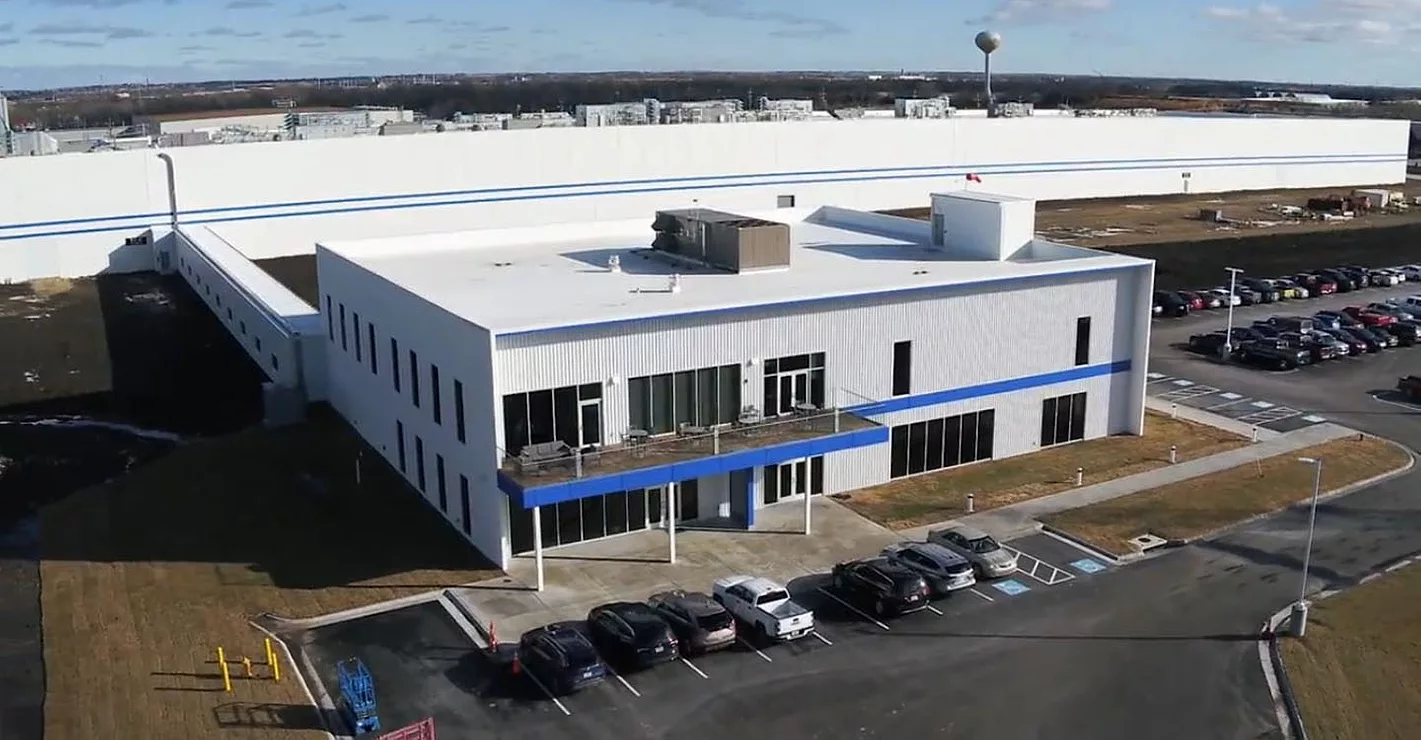
Egg Central Station is qualified for high standards of food safety

Image courtesy of Vital Farms

July 1, 2024

The ingress protection, or IP, rating system was developed by ISO and the IEC. The standard measures an enclosure’s ability to withstand contamination ingress. While it was originally created for electrical components, it soon became applicable to the mechanical world.

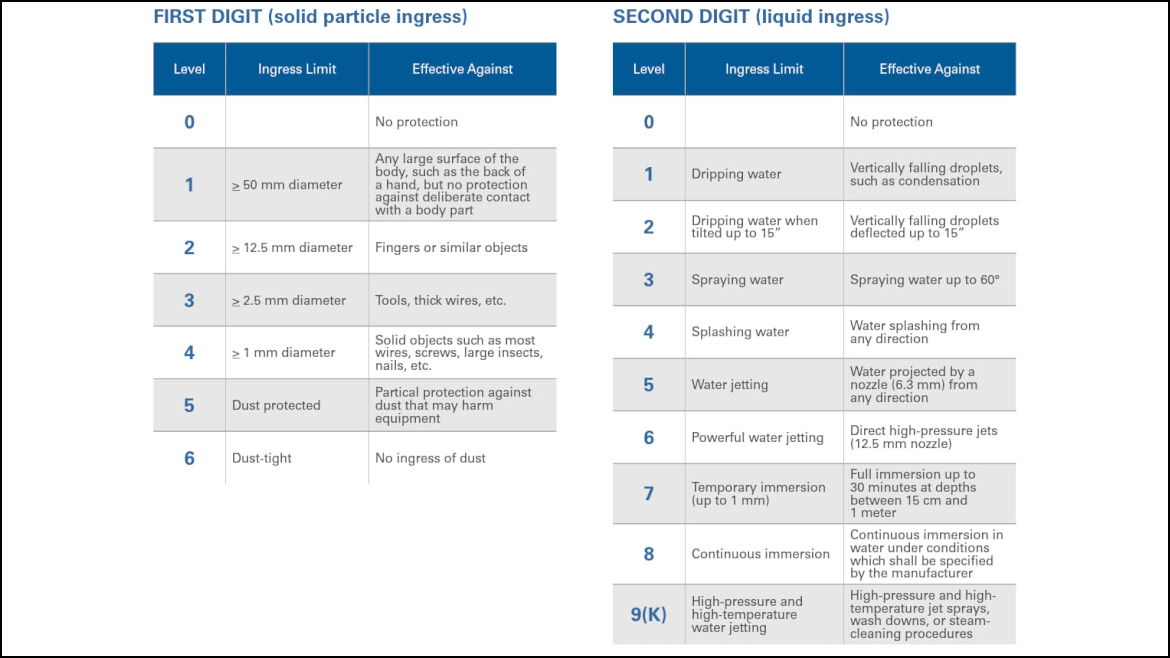
The IP rating scale has a two-character format. The first character represents the degree of protection against solid-particle contaminants. The second represents the level of protection against liquids. As you can see in the IP rating scale below, IP69K offers the highest level of protection against both solids and liquids.
Ingress-Protection-(IP)-Ratings.jpg

Ingress Protection (IP) Ratings. Adapted from “A Brief Overview of Ingress Protection (IP) Ratings,” by Leviton Manufacturing Co., Inc. https://www.leviton.com/en/products/industry-solutions/food-beverage-processing/what-is-ip69k


IP69K in the Food and Beverage Industry

There’s a high demand to resist contaminants in food and beverage plants. Every day, these facilities contend with food particles from processing, heavy and regular washdown processes, and food safety regulations. These factors are all driving the industry to make the shift toward IP69K-rated products. 

These products are typically more hygienic and designed to withstand bacterial contaminants. They also perform better in very wet environments and washdown conditions, which ultimately helps increase uptime and lower maintenance costs. Ideal applications for IP69K-rated products include anything that involves food contact (or the potential for food contact), as well as areas that are subject to washdown or have regular contact with liquids.

The severity of washdown conditions could be a factor in determining if you need an IP69K-rated bearing. The 9K indicates a resistance to high-temperature, high-pressure water spray. IP66, 67 or 68 products may perform well in less demanding applications. But when the presence of bacteria is possible and washdown is frequent, IP69K products are going to perform the best and be the most hygienic. This is especially critical for anything water can damage, such as control panels, electric motors and bearings.


IP69K and Bearings

Bearings are used in almost every step of food and beverage processing—appearing in conveyors, washers, mixers, fryers, ovens and other equipment. These bearings undergo exceedingly difficult operating conditions, including heavy washdowns, in critical, food-safe areas. No matter the industry, keeping contaminants out of bearings is crucial to performance.

IP69K-rated bearings offer multiple benefits. Keeping solid contaminants out of the bearing helps avoid damage to rings and rolling elements. Keeping liquids out helps ensure lubricant is not diluted and washed out. This allows the bearing to operate as intended while maximizing life and minimizing downtime. The improved seals usually associated with IP69K-rated bearings better retain lubricant. This reduces the likelihood that lubricant will come into contact with food—increasing food safety.

Bearings earn the IP69K rating in one of two ways:

  • Primary bearing seals. These seals are usually made of a rubber compound that is chemically resistant to stand up to washdowns. This rubber compound is often used as multiple contacting seal lips that create added barriers to keep contaminants out. There is typically some form of deflecting device used in conjunction with the lip seals that will rotate with the shaft and use the centrifugal forces of the shaft rotation to fling away solid or liquid contaminants. This is commonly known as a flinger.
  • End covers with simple primary seals. These end covers bolt onto the sides of the bearing housings and provide an additional barrier to contaminants.

Both styles can be used with multiple lubrication options such as food-grade greases and solid lubricants—providing additional layers of contamination protection.

Each of these designs has its pros and cons. The primary seal standalone option maintains the footprint of any similar sized bearing and does not provide any place for bacteria to sit and grow. However, the multiple contacting seal lips can increase the torque needed to turn a shaft compared to conventional seal designs. The end cover option may not increase torque, but the end covers themselves have been known to harbor bacterial growths and are difficult to clean. You will also find that many housings for IP69K-rated bearings do not contain provisions for relubrication. This is to remove another potential area for contamination. Whether filled with grease or solid lubricant, these bearings are generally considered lubricated for life.


Summary

IP ratings designate the level to which a product is protected from solid and liquid contamination. The first character corresponds to the solids, the second character to liquids. The incredibly demanding operating application and washdown conditions, along with food safety concerns and regulations, have driven a shift toward IP69K-rated products in the food and beverage industry. These products can perform better and in a more hygienic manner than their conventional counterparts. From a bearing perspective, this rating is achieved by more robust seals and flingers and potentially auxiliary end covers. The use of such, along with proper food-grade grease or solid lubricant, can be a great option to reduce maintenance needs, improve food safety and reduce downtime. All of which can lead to an increased volume of safer food and beverage products flowing out the door and onto store shelves.

KEYWORDS: bearing CIP/COP conveying washdowns

Share This Story

Looking for a reprint of this article?
From high-res PDFs to custom plaques, order your copy today!

Jake 350

Jake Wenzel is an application engineer at the Timken Company. During his time with Timken, he has provided application support for customers primarily in the food and beverage market. Wenzel has a Bachelor of Science in mechanical engineering with a minor in business essentials from the University of Akron.

Recommended Content

JOIN TODAY
to unlock your recommendations.

Already have an account? Sign In

  • CJ Schwan’s Salina facility.

    Recipe for Growth: How CJ Schwan’s Powers Pizza Production with People and Automation

    Blending advanced automation with purposeful design, this...
    Plant of the Year
    By: Alyse Thompson-Richards
  • Paris Baguette rendering

    FOOD ENGINEERING’s 49th Annual Plant Construction Survey

    Food and beverage manufacturers continue to invest in...
    Plant Openings
    By: Alyse Thompson-Richards
  • Bottling machine

    How Optical and X-Ray Inspection Supports Bottling Safety and Quality

    By transitioning from legacy single-technology systems to...
    Food Safety
    By: Dan McKee
Manage My Account
  • eMagazine
  • Newsletter
  • Online Registration
  • Manage My Preferences
  • Customer Service

More Videos

Sponsored Content

Sponsored Content is a special paid section where industry companies provide high quality, objective, non-commercial content around topics of interest to the Food Engineering audience. All Sponsored Content is supplied by the advertising company and any opinions expressed in this article are those of the author and not necessarily reflect the views of Food Engineering or its parent company, BNP Media. Interested in participating in our Sponsored Content section? Contact your local rep!

close
  • Close-up of a group of freshly baked stuffed empanadas being transferred onto a conveyor belt.
    Sponsored byDorner

    Smarter Line Design Improves Food Manufacturing Efficiency and Throughput

  • An old and tattered manual titled 'Revised 5/20/1971' on a desk along with a cellphone, sunglasses, Apple iWatch, laptop and keyboard, and a water bottle.
    Sponsored byEnSight Solutions

    Redefining Quality: Has the Industry Lost Sight of What Actually Matters?

  • Worker in protective food-processing attire uses a tablet beside stainless-steel conveyor equipment in a modern food manufacturing facility.
    Sponsored bySafetyChain

    Your Biggest Losses Are Hiding in Data You Already Have

Popular Stories

AB Baldwinsville Investment

Anheuser-Busch Invests $13M in New York Brewery

Food processing factory workers loading into a food cart.

Managing Facility-Induced Food Waste

Granola

Roskam Foods to Close California Plant as Part of Cereal Production Consolidation

Promo for the 2026 Plant of the Year Award

Events

September 23, 2026

An In-Depth Look at 2026's Top 100 Food and Beverage Companies

Join Lynn Dornblaser, Client Advisor at Mintel, and Alyse Thompson-Richards, Editor-in-Chief of FOOD ENGINEERING, as they break down the 2026 Top 100 Food and Beverage Companies and discuss the factors affecting this year’s rankings.

September 29, 2026

Food Safety Execution and Your Bottom Line

Explore food safety strategies that strengthen sanitation, risk management, operational efficiency, and compliance across foodservice and facility environments.

View All Submit An Event

Products

Recent Advances in Ready-to-Eat Food Technology

Recent Advances in Ready-to-Eat Food Technology

See More Products

September 23 FE Editorial Webinar


CHECK OUT OUR NEW ESSENTIAL TOPICS

Alternative ProteinAutomationCleaning/SanitationFabulous Food Plants

Food SafetyMaintenance StrategiesOEE

PackagingSustainability

Related Articles

  • Cobots for End-of-Line Packaging & Palletizing in the Food and Beverage Industry

    See More
  • How the FIT Development Program can keep technicians in the food and beverage industry

    See More

Related Products

See More Products
  • small-occ.jpg

    Occupational Health and Safety in the Food and Beverage Industry

  • food crime.jpg

    Food Crime: An Introduction to Deviance in the Food Industry

  • Cleaning-in-Place: Dairy, Food and Beverage Operations, 3rd Edition

See More Products
×

Elevate your expertise in food engineering with unparalleled insights and connections.

Get the latest industry updates tailored your way.

JOIN TODAY!
  • RESOURCES
    • Advertise
    • Contact Us
    • Food Master
    • Store
    • Want More
  • SIGN UP TODAY
    • Create Account
    • eMagazine
    • Newsletter
    • Customer Service
    • Manage Preferences
  • SERVICES
    • Marketing Services
    • Reprints
    • Market Research
    • List Rental
    • Survey/Respondent Access
  • STAY CONNECTED
    • LinkedIn
    • Facebook
    • YouTube
    • X (Twitter)
  • PRIVACY
    • PRIVACY POLICY
    • TERMS & CONDITIONS
    • DO NOT SELL MY PERSONAL INFORMATION
    • PRIVACY REQUEST
    • ACCESSIBILITY

Copyright ©2026. All Rights Reserved BNP Media, Inc. and BNP Media II, LLC.

Design, CMS, Hosting & Web Development :: ePublishing