Heat Exchanger Solutions for 5 Types of Challenging Food Products

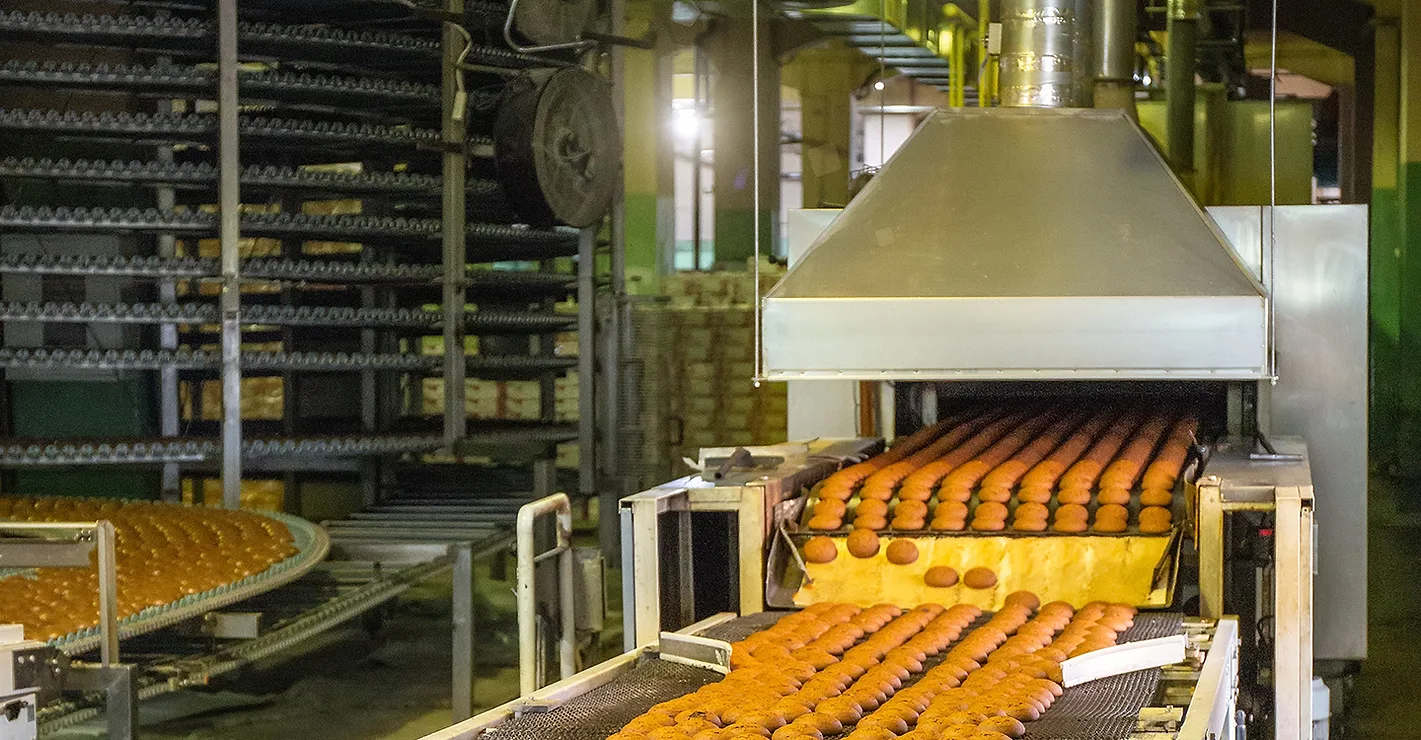
Image by Towfiqu barbhuiya via Unsplash.
Thermal treatments, such as pasteurization, heating and cooling, are featured in the manufacturing of multiple food and beverage products. Many of these treatments use heat exchangers, but manufacturers must take into consideration various factors when choosing the right heat exchanger for their process, including the physical properties of the product itself.
Here are five of the most challenging food products in terms of thermal processing, and the heat exchanger solutions to help manufacturers handle them correctly.
1. Highly viscous materials
Highly viscous foods, including nut butters and other fat-based products, can be almost solid at low temperatures. This creates a number of challenges, one of which is physically moving the material through the heat exchanger. Other considerations include preventing the product from fouling the surface of the heat exchanger (which reduces thermal efficiency) and ensuring an even temperature throughout.
Nut butter can be one of the most difficult products to heat, cool or pump, and so a heavy duty rotating scraped surface heat exchanger (SSHE) is required. The HRS RHD Series was specifically designed for such tough material. Combining the proven rotary scraper rod action of the standard R Series heat exchanger with a larger motor and bigger scraping rods, together with extra mounting supports, the RHD Series is equipped to handle even the toughest foodstuffs.
2. Products containing pieces
The challenge when dealing with pieces of product is ensuring the mixture moves through the process at a constant speed (to ensure the correct temperatures are maintained for the required time) without damaging the physical integrity of the product. This type of product can contain anything from small, diced vegetables to large fruit pieces. Many manufacturers also process a range of products using the same equipment, meaning that processing lines need to be flexible – capable of working with both hard and soft products (such as root vegetables and berries) across a range of sizes.
The Unicus Series of reciprocal SSHE is suitable for this type of product. The separately controlled hydraulic scrapers are available in a range of designs and are fully controllable so a variety of products can be moved gently but effectively through the heat exchanger, providing timely and efficiency heat transfer without damaging product integrity.
3. Thermally challenging products
Some ingredients, such as eggs or chocolate, are very sensitive to temperature and must be processed at precise temperatures to avoid damaging the product. Liquid egg, for example, is extremely delicate as the proteins in egg are more sensitive to heat than other products, such as milk or juices. This is due to the fact that the white and yolk are distinct components with different compositions and behaviors. When mixed, they interact mutually: egg white is denatured at 136°F while yolk is denatured at 149°F.
Because of this, pasteurizing liquid egg can have a number of unwanted effects, including gel formation and softening of the yolk, irreversible denaturation of the proteins, or changes to the appearance. If not handled correctly, thermal pasteurization can decrease protein content, change physical characteristics such as texture and color, and increase product viscosity.
Choosing the right pasteurization regime and equipment is vital to minimize and prevent such unwanted effects. Depending on the required handling, corrugated tube heat exchangers or SSHEs are ideal for processing liquid eggs and other egg-based products.
Likewise, tempering chocolate is extremely difficult. Without strict temperature control, the crystals formed are of different sizes and the resulting chocolate will “bloom,” having a matte appearance and waxy texture.
Without tempering, it is impossible to achieve chocolate’s characteristic snap and glossy finish. Another issue is that tempered chocolate solidifies quickly as it cools, so it is important to maintain a working temperature until it has been molded or poured into the final shape.
The HRS R Series has been used to commercially temper chocolate. The system uses three R Series rotary scraped surface heat exchangers in series: the first raises the temperature by 19°C; the second cools it back down by 2°C; and the final heat exchanger raises it again, allowing the chocolate to be transported and worked elsewhere. This system is also significantly quicker than traditional batch-based tempering.
4. Delicate products
Many sauces, and some dairy products such as thick cream, need to be handled delicately in order to avoid splitting or shearing, while careful temperature control is required to avoid the creation of undesirable flavors, such as a burnt taste.
Tomato-based sauces, white sauces, mayonnaise, béchamel sauce, pesto sauce and dressings are all examples of products where traditional plate or tubular heat exchangers can easily burn or freeze the product because of their static nature. Heat exchangers used in the production of sauces must also work with high viscosity fluids and preserve any particles in the food without breaking them.
Once again, the solution is a gentle yet thermally efficient reciprocating SSHE. This quickly raises or lowers the product temperature while keeping pressure and physical agitation low to avoid damaging the product.
5. Very dense materials
Globally, there is increasing interest in using heat exchangers to process mechanically deboned meat (MDM), meat slurry and viscera components. One advantage is that heat exchangers have the potential to generate products with better quality, at lower cost and with less waste and lower energy consumption than traditional methods of heating and cooling MDM.
Many of these products have high fouling potential (which limits heat transfer), but also need delicate handling to preserve their integrity. In addition, their thick nature means that it can be difficult to achieve the required temperature all the way through the material. This is because of a phenomenon known as “slugging,” whereby a channel of warmer material travels down the center of the product, while the material at the tube wall does not move. If the cooling medium is cold enough (for example, 23°F or lower), this can create a risk that the product at the tube wall will freeze, while the material in the center is not cooled sufficiently.
The HRS RHD Series has been employed commercially to keep meat viscera and similar materials below a specified temperature of 39°F. Modifications for this project included adapting the internal scraper configuration to achieve the necessary performance and implementing a heavy-duty gearbox to withstand the higher torques required to keep the product moving. Because the RHD Series ensures thorough mixing in the heat exchanger, slugging does not occur.
Some heat exchanger developers will not offer solutions for certain food products because they are so challenging in terms of physical and thermal handling. However, HRS Heat Exchangers has spent 40 years specializing in developing heat exchangers and processing systems for these most difficult products.
Looking for a reprint of this article?
From high-res PDFs to custom plaques, order your copy today!