Food Engineering logo
search
cart
facebook twitter linkedin youtube
  • Sign In
  • Create Account
  • Sign Out
  • My Account
Food Engineering logo
  • NEWS
    • Latest Headlines
    • Manufacturing News
    • People & Industry News
    • Plant Openings
    • Recalls
    • Regulatory Watch
    • Supplier News
  • PRODUCTS
    • New Plant Products
    • New Retail Products
  • TOPICS
    • Alternative Protein
    • Automation
    • Cannabis
    • Cleaning | Sanitation
    • Cross-Functional Food Innovation
    • Fabulous Food Plants
    • Food Safety
    • Maintenance Strategies
    • OEE
    • Packaging
    • Sustainability
    • More
  • EXCLUSIVES
    • Plant Construction Survey
    • Plant of the Year
    • Sustainable Plant of the Year
    • State of Food Manufacturing
    • Top 100 Food & Beverage Companies
  • MEDIA
    • Podcasts
    • Videos
    • Webinars
    • White Papers
  • FOOD MASTER
  • EVENTS
    • Food Automation & Manufacturing Symposium and Expo
    • Industry Events
  • RESOURCES
    • Newsletter
    • Custom Content & Marketing Services
    • FE Store
    • Government Links
    • Industry Associations
    • Market Research
    • Sponsor Insights
    • Classified Ads
  • EMAGAZINE
    • eMagazine
    • Archive Issue
    • Advertise
  • SIGN UP!
Packaging

Store-wrapped beef’s Waterloo?
By Kevin T. Higgins
August 6, 2012
waterloo packaging red meat
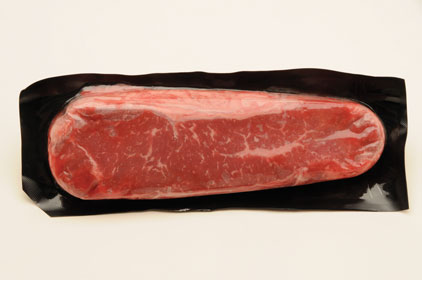
By impregnating one side of the film with sodium nitrite, Curwood scientists were able to give beef wrapped in vacuum packaging the bright red color shoppers expect. Source: DuPont.
Case-ready meat has replaced in-store wrapping for many products, and a new film provides another opportunity for centralized packaging in vacuum bags.
 
A smidge of sodium nitrite on the food-contact surface of barrier film means the difference between red meat and purple haze, scientists at Curwood Inc. discovered, and the result is a vacuum package that significantly extends the display-case time of beef compared to MAP master packs.
 
Oshkosh, WI-based Curwood calls its new vacuum package FreshCase, an advancement years in the making, according to Bill Goerich, marketing manager for the new line. While sodium nitrite has a long track record of use in hot dogs, bacon and other meats, adding it to film meant an FDA review to attain GRAS (generally regarded as safe) status. As it slowly rolls out at retailers such as HEB and Walmart for tenderloins, rib eyes and other muscle cuts, FreshCase is gathering innovation laurels. DuPont recently named FreshCase its Diamond award winner as the most innovative new package based on sustainability and reductions in cost and waste.
 
Whether beef is store wrapped or arrives from a packing house in a low- or high-oxygen master pack, retailers have only a few days to sell the packages before oxidation runs its course and the meat turns brown, forcing stores to mark down the packages for quick sale. Until now, vacuum packs were not an option because, in the absence of any oxygen, the beef retains a purple hue beef eaters find unappealing. With FreshCase, “you can probably display the beef for three weeks before you have to freeze it” to prevent browning, Goerich says.
 
Sodium nitrite is a common food additive, inhibiting lipid oxidation and some microbial growth, notably botulinum, though it is not effective against pathogens of concern in fresh beef. Curwood’s process involves extruding sodium nitrite on a film’s food-contact layer. After the package is vacuum sealed, enzymatic reactions with the compound result in the formation of nitric oxide, which combines with the meat’s myoglobin to lock in a red appearance. “There are no detectable levels of sodium nitrite in the meat,” adds Goerich.
 
The DuPont judges gave their highest award to FreshCase partly because of the supply chain efficiencies it provides. Less corrugated material is needed than with case-ready packages in expanded polystyrene trays and PVC overwrap, and more meat can be loaded on a trailer. Goerich maintains the gases in modified atmosphere packages lower a trailer’s capacity by 20,000 lbs. Extended shelf life and fewer leakers also mean reduced food waste.
 
The film runs on conventional vacuum-packaging machines at the same temperature and machinability as conventional vacuum bags, he says, and is available in an all-clear format or with a black back panel.
 
Other food packaging recognized by DuPont included flat-bread pouches from Pepperidge Farm and Kraft’s Smart Bottle Inc.’s one-gallon flexible pouch used for salad dressing in foodservice (“Kraft says ‘yes’ to flex,” Food Engineering, March 2012). Pepperidge Farm, working with CP Flexible Packaging and other vendors, eliminated two-thirds of package material for Deli Flats thin rolls by removing the tray, which also shrank the overall package by a quarter, thereby reducing transportation costs. 
 
“The new package format is flow-wrapped on horizontal form/fill/seal equipment and is a much tighter fit,” according to Glen Dupuis of Pepperidge’s packaging R&D department in Norwalk, CT. The packs can be displayed flat or shoulder stacked upright. 
 
For more information:
Bill Goerich, Curwood Inc., 920-527-7772
KEYWORDS: extrusion flexible packaging modified atmosphere packaging

Share This Story

Looking for a reprint of this article?
From high-res PDFs to custom plaques, order your copy today!


Kevin Higgins was Senior Editor for FE.

Recommended Content

JOIN TODAY
to unlock your recommendations.

Already have an account? Sign In

  • CJ Schwan’s Salina facility.

    Recipe for Growth: How CJ Schwan’s Powers Pizza Production with People and Automation

    Blending advanced automation with purposeful design, this...
    Plant of the Year
    By: Alyse Thompson-Richards
  • Paris Baguette rendering

    FOOD ENGINEERING’s 49th Annual Plant Construction Survey

    Food and beverage manufacturers continue to invest in...
    Plant Openings
    By: Alyse Thompson-Richards
  • Bottling machine

    How Optical and X-Ray Inspection Supports Bottling Safety and Quality

    By transitioning from legacy single-technology systems to...
    Food Safety
    By: Dan McKee
Manage My Account
  • eMagazine
  • Newsletter
  • Online Registration
  • Manage My Preferences
  • Customer Service

More Videos

Sponsored Content

Sponsored Content is a special paid section where industry companies provide high quality, objective, non-commercial content around topics of interest to the Food Engineering audience. All Sponsored Content is supplied by the advertising company and any opinions expressed in this article are those of the author and not necessarily reflect the views of Food Engineering or its parent company, BNP Media. Interested in participating in our Sponsored Content section? Contact your local rep!

close
  • Close-up of a group of freshly baked stuffed empanadas being transferred onto a conveyor belt.
    Sponsored byDorner

    Smarter Line Design Improves Food Manufacturing Efficiency and Throughput

  • An old and tattered manual titled 'Revised 5/20/1971' on a desk along with a cellphone, sunglasses, Apple iWatch, laptop and keyboard, and a water bottle.
    Sponsored byEnSight Solutions

    Redefining Quality: Has the Industry Lost Sight of What Actually Matters?

  • Worker in protective food-processing attire uses a tablet beside stainless-steel conveyor equipment in a modern food manufacturing facility.
    Sponsored bySafetyChain

    Your Biggest Losses Are Hiding in Data You Already Have

Popular Stories

AB Baldwinsville Investment

Anheuser-Busch Invests $13M in New York Brewery

Food processing factory workers loading into a food cart.

Managing Facility-Induced Food Waste

Granola

Roskam Foods to Close California Plant as Part of Cereal Production Consolidation

Promo for the 2026 Plant of the Year Award

Events

September 23, 2026

An In-Depth Look at 2026's Top 100 Food and Beverage Companies

Join Lynn Dornblaser, Client Advisor at Mintel, and Alyse Thompson-Richards, Editor-in-Chief of FOOD ENGINEERING, as they break down the 2026 Top 100 Food and Beverage Companies and discuss the factors affecting this year’s rankings.

September 29, 2026

Food Safety Execution and Your Bottom Line

Explore food safety strategies that strengthen sanitation, risk management, operational efficiency, and compliance across foodservice and facility environments.

View All Submit An Event

Products

Recent Advances in Ready-to-Eat Food Technology

Recent Advances in Ready-to-Eat Food Technology

See More Products

September 23 FE Editorial Webinar


CHECK OUT OUR NEW ESSENTIAL TOPICS

Alternative ProteinAutomationCleaning/SanitationFabulous Food Plants

Food SafetyMaintenance StrategiesOEE

PackagingSustainability

Related Articles

  • Trend watch: Higher beef prices, corn uncertainty in store for 2013

    See More
  • Scoop-and-store bag for nuts

    See More
  • wonkyweb.jpg

    Wonky Bread Wrapped In New Compostable Bags

    See More

Related Products

See More Products
  • ready to eat.webp

    Recent Advances in Ready-to-Eat Food Technology

  • GlobalData_logo_blue_header.png

    Cooked Meats - Packaged (Meat) Market in United States of America...

  • composites.jpg

    Composites Materials for Food Packaging

See More Products
×

Elevate your expertise in food engineering with unparalleled insights and connections.

Get the latest industry updates tailored your way.

JOIN TODAY!
  • RESOURCES
    • Advertise
    • Contact Us
    • Food Master
    • Store
    • Want More
  • SIGN UP TODAY
    • Create Account
    • eMagazine
    • Newsletter
    • Customer Service
    • Manage Preferences
  • SERVICES
    • Marketing Services
    • Reprints
    • Market Research
    • List Rental
    • Survey/Respondent Access
  • STAY CONNECTED
    • LinkedIn
    • Facebook
    • YouTube
    • X (Twitter)
  • PRIVACY
    • PRIVACY POLICY
    • TERMS & CONDITIONS
    • DO NOT SELL MY PERSONAL INFORMATION
    • PRIVACY REQUEST
    • ACCESSIBILITY

Copyright ©2026. All Rights Reserved BNP Media, Inc. and BNP Media II, LLC.

Design, CMS, Hosting & Web Development :: ePublishing