Food Engineering logo
search
cart
facebook twitter linkedin youtube
  • Sign In
  • Create Account
  • Sign Out
  • My Account
Food Engineering logo
  • NEWS
    • Latest Headlines
    • Manufacturing News
    • People & Industry News
    • Plant Openings
    • Recalls
    • Regulatory Watch
    • Supplier News
  • PRODUCTS
    • New Plant Products
    • New Retail Products
  • TOPICS
    • Alternative Protein
    • Automation
    • Cannabis
    • Cleaning | Sanitation
    • Cross-Functional Food Innovation
    • Fabulous Food Plants
    • Food Safety
    • Maintenance Strategies
    • OEE
    • Packaging
    • Sustainability
    • More
  • EXCLUSIVES
    • Plant Construction Survey
    • Plant of the Year
    • Sustainable Plant of the Year
    • State of Food Manufacturing
    • Top 100 Food & Beverage Companies
  • MEDIA
    • Podcasts
    • Videos
    • Webinars
    • White Papers
  • FOOD MASTER
  • EVENTS
    • Food Automation & Manufacturing Symposium and Expo
    • Industry Events
  • RESOURCES
    • Newsletter
    • Custom Content & Marketing Services
    • FE Store
    • Government Links
    • Industry Associations
    • Market Research
    • Sponsor Insights
    • Classified Ads
  • EMAGAZINE
    • eMagazine
    • Archive Issue
    • Advertise
  • SIGN UP!
Case Studies & Field Reports

Field Reports

Nestle's heat recovery success driven by Kobelco compressors

Water heated by recovered heat from oil-free air compressors
compressor

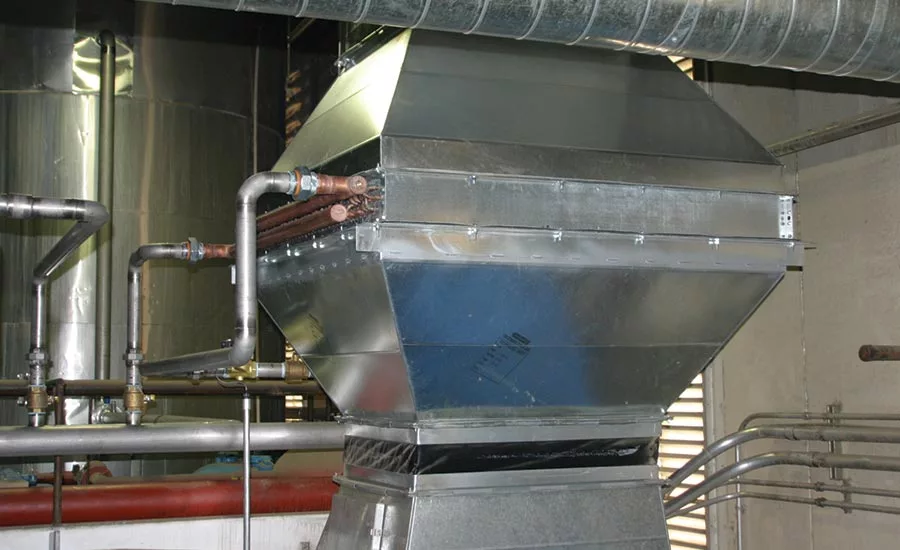
Heat coming off air-cooled compressors is ducted through finned coils that transfer more than 350,000 BTUs per compressor per hour to preheat the hot water makeup supply. Source: Rogers Machinery.

August 28, 2017

The Nestlé factory in Tulare, California uses compressed air in a wide range of applications. While recovering heat from water-cooled compressors is fairly common, the compressors in the Nestlé factory are air-cooled. That required a creative solution to capture the heat and use it to heat process water.

The project began in the mid-1990s, when Nestlé began a phased replacement of its existing oil-free reciprocating compressors, which were experiencing unacceptably high maintenance costs and downtime.

An initial cooling plan for the air compressors involved simply ducting the cooling air out of the roof. That would dramatically reduce the heat load inside the utilities area, but Nestlé’s global commitment to energy efficiency presented Nestle Project Engineer Tom Finn with a challenge and an opportunity: instead of just rejecting all that heat, could it be put to work?

“Nestlé is highly tuned into resource conservation,” Finn says. “In Tulare, we’re already at the stage of the game where we’ve pulled the low hanging fruit, so we have to be more creative in finding ways to capture energy savings.”

A common method to recover heat rejected from air-cooled compressors is to direct the warmed air via ductwork to a large space to provide interior heating during cold seasons. Because the heating season in California’s Central Valley is short, most of the time the heat still would be vented outdoors. Rather than settle for this, Finn conceived of a system to recover BTUs rejected from the air-cooled compressors to heat water.

“I had to think about what we use year round in a food production facility,” Finn explains. “The answer was hot water. We have many hot water stations around the plant for washing, sanitary systems, waste systems and a lot more.”

The system involves feeding water and heat through a finned coil. Heat rejected from each operating compressor, amounting to more than 350,000 BTUs per compressor per hour, would be scavenged in an 11,500 cfm air flow and fed to the coil via ductwork. Water from the plant’s hot water make-up supply would flow through the coil and pick up heat rejected by the compressor. Water exiting the coil would be warmer than when it went in, so less natural gas would be required to raise the temperature of water for the plant’s hot water applications. Each compressor would have its own heat exchanger and the heat recovery process would operate, in series, whenever a compressor was running.

The Tulare plant has four 125-horsepower Kobelco KNW Series oil-free, air-cooled screw compressors. Two compressors are typically running constantly. When demand rises and pressure drops, a third compressor comes on automatically. The fourth compressor allows Nestlé to rotate compressors in service.

Air leaving each compressor passes through a moisture separator, then a regenerative-type dual tower dryer, and then to a dry air receiver tank that serves as a pressure buffer to help minimize compressor cycling. Clean, dry air exits the receiver into the piping network for use as part of the process throughout the plant.

Finn calculates the total cost for the heat recovery system at $150,000, including touchscreen controls for the pumps and diverter valves. The reduction in natural gas consumption because the intake water is preheated amounts to 309 therms per 24 hours. The project’s payback period was initially estimated at almost four years, but ROI actually occurred in a little over three years.


For more information:

Lane Hawkinson, Rogers Machinery, 800-394-6151,
lane.hawkinson@rogers-machinery.com, www.knw-series.com

KEYWORDS: compressors energy efficiency water

Share This Story

Looking for a reprint of this article?
From high-res PDFs to custom plaques, order your copy today!

Recommended Content

JOIN TODAY
to unlock your recommendations.

Already have an account? Sign In

  • FE Top100 Food & Beverage Companies hero, gold lettering with black background.

    FOOD ENGINEERING’s 2026 Top 100 Food and Beverage Companies

    See where the world’s leading food and beverage companies...
    Manufacturing News
    By: Alyse Thompson-Richards
  • CJ Schwan’s Salina facility.

    Recipe for Growth: How CJ Schwan’s Powers Pizza Production with People and Automation

    Blending advanced automation with purposeful design, this...
    Plant of the Year
    By: Alyse Thompson-Richards
  • Paris Baguette rendering

    FOOD ENGINEERING’s 49th Annual Plant Construction Survey

    Food and beverage manufacturers continue to invest in...
    Plant Openings
    By: Alyse Thompson-Richards
Manage My Account
  • eMagazine
  • Newsletter
  • Online Registration
  • Manage My Preferences
  • Customer Service

More Videos

Sponsored Content

Sponsored Content is a special paid section where industry companies provide high quality, objective, non-commercial content around topics of interest to the Food Engineering audience. All Sponsored Content is supplied by the advertising company and any opinions expressed in this article are those of the author and not necessarily reflect the views of Food Engineering or its parent company, BNP Media. Interested in participating in our Sponsored Content section? Contact your local rep!

close
  • Close-up of a group of freshly baked stuffed empanadas being transferred onto a conveyor belt.
    Sponsored byDorner

    Smarter Line Design Improves Food Manufacturing Efficiency and Throughput

  • An old and tattered manual titled 'Revised 5/20/1971' on a desk along with a cellphone, sunglasses, Apple iWatch, laptop and keyboard, and a water bottle.
    Sponsored byEnSight Solutions

    Redefining Quality: Has the Industry Lost Sight of What Actually Matters?

  • Worker in protective food-processing attire uses a tablet beside stainless-steel conveyor equipment in a modern food manufacturing facility.
    Sponsored bySafetyChain

    Your Biggest Losses Are Hiding in Data You Already Have

Popular Stories

FE Top100 Food & Beverage Companies hero, gold lettering with black background.

FOOD ENGINEERING’s 2026 Top 100 Food and Beverage Companies

AB Baldwinsville Investment

Anheuser-Busch Invests $13M in New York Brewery

Granola

Roskam Foods to Close California Plant as Part of Cereal Production Consolidation

Graphic with text on the left: ‘Food Engineering 2026 Top 100 - Explore leaders.’ Right side: images of juice bottles and chicken on a conveyor. Bottom text 'View Rankings'.


Promo for the 2027 Plant of the Year Award

Events

September 23, 2026

An In-Depth Look at 2026's Top 100 Food and Beverage Companies

Join Lynn Dornblaser, Client Advisor at Mintel, and Alyse Thompson-Richards, Editor-in-Chief of FOOD ENGINEERING, as they break down the 2026 Top 100 Food and Beverage Companies and discuss the factors affecting this year’s rankings.

September 29, 2026

Food Safety Execution and Your Bottom Line

Explore food safety strategies that strengthen sanitation, risk management, operational efficiency, and compliance across foodservice and facility environments.

View All Submit An Event

Products

Recent Advances in Ready-to-Eat Food Technology

Recent Advances in Ready-to-Eat Food Technology

See More Products

September 23 FE Editorial Webinar


CHECK OUT OUR NEW ESSENTIAL TOPICS

Alternative ProteinAutomationCleaning/SanitationFabulous Food Plants

Food SafetyMaintenance StrategiesOEE

PackagingSustainability

Related Articles

  • ARC: WMS market driven by omni-channel requirements

    See More
  • Automation market growth driven by software and service

    See More
  • ExpertRECALL Index finds 'recall sprawl' driven by global economy

    See More

Related Products

See More Products
  • Milk Processing and Quality Management

See More Products
×

Elevate your expertise in food engineering with unparalleled insights and connections.

Get the latest industry updates tailored your way.

JOIN TODAY!
  • RESOURCES
    • Advertise
    • Contact Us
    • Food Master
    • Store
    • Want More
  • SIGN UP TODAY
    • Create Account
    • eMagazine
    • Newsletter
    • Customer Service
    • Manage Preferences
  • SERVICES
    • Marketing Services
    • Reprints
    • Market Research
    • List Rental
    • Survey/Respondent Access
  • STAY CONNECTED
    • LinkedIn
    • Facebook
    • YouTube
    • X (Twitter)
  • PRIVACY
    • PRIVACY POLICY
    • TERMS & CONDITIONS
    • DO NOT SELL MY PERSONAL INFORMATION
    • PRIVACY REQUEST
    • ACCESSIBILITY

Copyright ©2026. All Rights Reserved BNP Media, Inc. and BNP Media II, LLC.

Design, CMS, Hosting & Web Development :: ePublishing