Food Engineering logo
search
cart
facebook twitter linkedin youtube
  • Sign In
  • Create Account
  • Sign Out
  • My Account
Food Engineering logo
  • NEWS
    • Latest Headlines
    • Manufacturing News
    • People & Industry News
    • Plant Openings
    • Recalls
    • Regulatory Watch
    • Supplier News
  • PRODUCTS
    • New Plant Products
    • New Retail Products
  • TOPICS
    • Alternative Protein
    • Automation
    • Cannabis
    • Cleaning | Sanitation
    • Cross-Functional Food Innovation
    • Fabulous Food Plants
    • Food Safety
    • Maintenance Strategies
    • OEE
    • Packaging
    • Sustainability
    • More
  • EXCLUSIVES
    • Plant Construction Survey
    • Plant of the Year
    • Sustainable Plant of the Year
    • State of Food Manufacturing
    • Top 100 Food & Beverage Companies
  • MEDIA
    • Podcasts
    • Videos
    • Webinars
    • White Papers
  • FOOD MASTER
  • EVENTS
    • Food Automation & Manufacturing Symposium and Expo
    • Industry Events
  • RESOURCES
    • Newsletter
    • Custom Content & Marketing Services
    • FE Store
    • Government Links
    • Industry Associations
    • Market Research
    • Sponsor Insights
    • Classified Ads
  • EMAGAZINE
    • eMagazine
    • Archive Issue
    • Advertise
  • SIGN UP!
Manufacturing NewsSupplier News

Securing a Top Crop

By Ron Baruchi
Using crop data to increase quality and maximize output

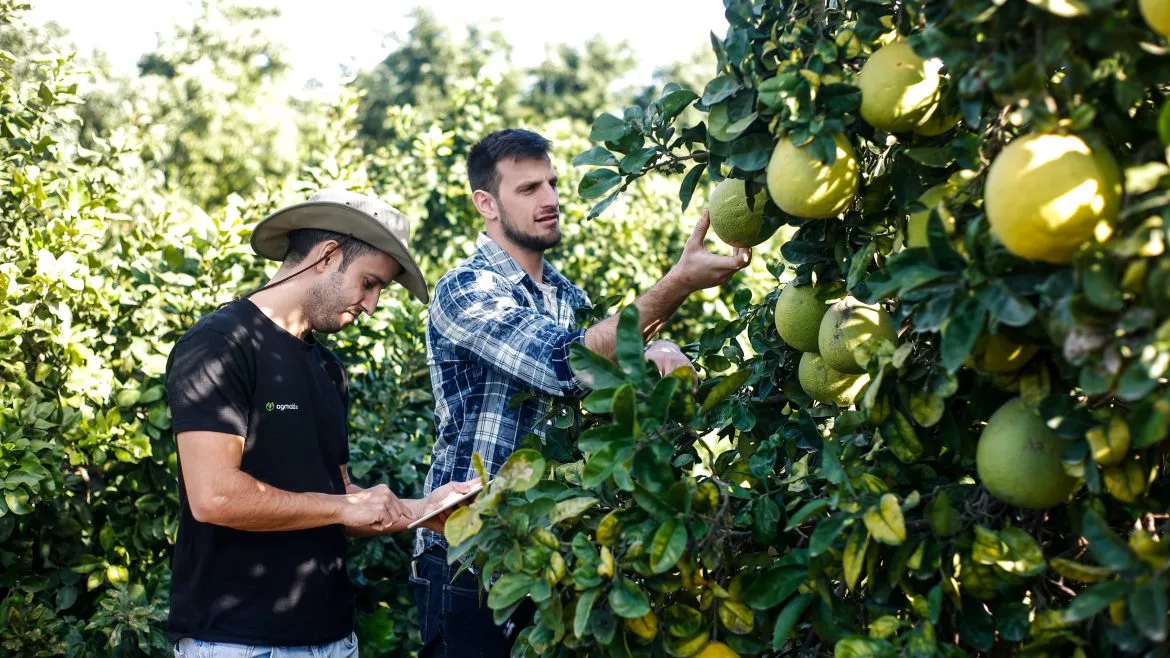
Technological developments are key in driving quality standards upwards, allowing food manufacturers to keep up with consumer demands for quality foods at a competitive price. Image courtesy of Agmatix

February 8, 2023

The food industry has grown substantially over the past few decades. Where individuals used to visit their local grocer for fresh fruits and vegetables, they now have the choice of several supermarkets in every town, not to mention online shopping and even same day delivery. The food market has boomed and, as a result, consumers now expect more variety and higher quality products—all at lower prices. To keep up with these demands, the food industry has turned to the use of AI and Big Data to analyze and optimize each stage of the production process, including at the very start of the supply chain where raw ingredients are grown in the field. 

The food supply value chain is vast, stretching from the sewn seed through to stores and supermarkets. Big Data is often utilized from the very first stage of food production—considered the growing stage—to aid in fertilization, irrigation and crop disease management processes. However, the uses and benefits of this data extend far beyond just these elements—and far beyond the farmers’ field.

Looking further down the production line to the food manufacturing process, crop quality becomes critical. Generally, food manufacturers pay the same price per truck load of product, regardless of the quality of the load. Most often, any quality issues are only uncovered during the manufacturing process. For example, in pomegranates, nutritional input during the growing stage of the fruit determines the acidity levels of the crop, which in turn determines whether the pomegranate is made into juice or sold as a fresh fruit. To a juice producer—wanting to keep the product standard and consistent to consumers—receiving highly variable fruits makes this difficult to achieve.

Similar results are seen in almonds, where oil quality from properly fertilized trees has been found to result in almonds with better health contributions and a longer shelf life, giving producers the ability to boast a healthier product which lasts longer. 

If a received truckload of produce doesn’t meet food manufacturers’ criteria, it may have to be discarded. This results in large amounts of waste and an unknown output per truck load of produce, ultimately affecting the bottom line for food manufacturers and filtering additional costs down the supply chain. 

To keep output reliably high and costs low, it’s critical for food manufacturers to improve the quality of their input ingredients and minimize this waste. The good news is that there’s a solution to the unpredictable quality of these input ingredients, and it all starts with crop health and nutrition.

By leveraging Big Data and AI, crop nutrient requirements can now be calculated accurately and effectively, and can even be tailored to each individual crop type and growing conditions. Data such as rainfall, temperature, and soil type are added to fertilization and yield data for each specific crop variant to create a holistic view of the individual crops’ nutritional and management needs. This data is then analyzed using advanced AI and can be leveraged by food manufacturers to ensure growing practices are as efficient, cost-effective, productive and sustainable as possible. By providing their growers with bespoke, live crop nutrition plans to achieve optimal yield, food manufacturers can guarantee they receive top quality ingredients and a maximal, predictable truck load from their suppliers. This, in turn, also unlocks key environmental benefits by reducing waste and minimizing disruptions to their production processes.

Naturally, AgTech innovations such as these offer the potential to improve the production of numerous different food products across the wider industry, beyond just pomegranates and almonds. These technologies are key in making crop nutrition plans more advanced and more accessible than ever, providing key decision support systems for both growers and food manufacturers and facilitating long-term, quantifiable benefits across the board. For manufacturers, deploying these digital solutions at field level essentially means that they are empowered to play a more vertically integrated role in the food supply value chain and, in turn, to increase their profitability.

Taking a wider view, the digital nature of these solutions also critically provides opportunities for further collaboration, making it possible to conduct agronomical research on a worldwide scale. By enabling researchers to combine their data with a wealth of global knowledge around specific crop varieties, disease management, nutritional needs and more, issues exactly like this can be addressed for stakeholders industry wide.

Ultimately, technological developments like these are key in driving quality standards upwards, allowing food manufacturers to keep up with consumer demands for quality foods at a competitive price. With the use of AI rapidly developing and digital solutions becoming more advanced and commonplace across the food supply value chain, the positive impact for the wider food industry is clear. In a nutshell, the benefits of harvesting data aren’t just for those harvesting crops.

KEYWORDS: artificial intelligence (AI) big data digitalization farming farming trends

Share This Story

Looking for a reprint of this article?
From high-res PDFs to custom plaques, order your copy today!
Ron Baruchi is the CEO of Agmatix, which offer data driven solutions for agronomists, food producers, researchers and those in the agricultural community via its online platform. The platform uses big data to improve farming efficiency and yields, as well as improving desired aspects of the crop. This helps to drive decision-making, significantly improving the efficiencies and sustainability of food production.

Recommended Content

JOIN TODAY
to unlock your recommendations.

Already have an account? Sign In

  • CJ Schwan’s Salina facility.

    Recipe for Growth: How CJ Schwan’s Powers Pizza Production with People and Automation

    Blending advanced automation with purposeful design, this...
    Cross-Functional Food Innovation
    By: Alyse Thompson-Richards
  • Paris Baguette rendering

    FOOD ENGINEERING’s 49th Annual Plant Construction Survey

    Food and beverage manufacturers continue to invest in...
    Plant Openings
    By: Alyse Thompson-Richards
  • Bottling machine

    How Optical and X-Ray Inspection Supports Bottling Safety and Quality

    By transitioning from legacy single-technology systems to...
    Food Safety
    By: Dan McKee
Manage My Account
  • eMagazine
  • Newsletter
  • Online Registration
  • Manage My Preferences
  • Customer Service

More Videos

Sponsored Content

Sponsored Content is a special paid section where industry companies provide high quality, objective, non-commercial content around topics of interest to the Food Engineering audience. All Sponsored Content is supplied by the advertising company and any opinions expressed in this article are those of the author and not necessarily reflect the views of Food Engineering or its parent company, BNP Media. Interested in participating in our Sponsored Content section? Contact your local rep!

close
  • Close-up of a group of freshly baked stuffed empanadas being transferred onto a conveyor belt.
    Sponsored byDorner

    Smarter Line Design Improves Food Manufacturing Efficiency and Throughput

  • An old and tattered manual titled 'Revised 5/20/1971' on a desk along with a cellphone, sunglasses, Apple iWatch, laptop and keyboard, and a water bottle.
    Sponsored byEnSight Solutions

    Redefining Quality: Has the Industry Lost Sight of What Actually Matters?

  • Worker in protective food-processing attire uses a tablet beside stainless-steel conveyor equipment in a modern food manufacturing facility.
    Sponsored bySafetyChain

    Your Biggest Losses Are Hiding in Data You Already Have

Popular Stories

Beef steaks

Tyson Foods to Close Two Beef Facilities

AB Baldwinsville Investment

Anheuser-Busch Invests $13M in New York Brewery

Food processing factory workers loading into a food cart.

Managing Facility-Induced Food Waste

Promo for the 2026 Plant of the Year Award

Events

September 23, 2026

An In-Depth Look at 2026's Top 100 Food and Beverage Companies

Join Lynn Dornblaser, Client Advisor at Mintel, and Alyse Thompson-Richards, Editor-in-Chief of FOOD ENGINEERING, as they break down the 2026 Top 100 Food and Beverage Companies and discuss the factors affecting this year’s rankings.

September 29, 2026

Food Safety Execution and Your Bottom Line

Explore food safety strategies that strengthen sanitation, risk management, operational efficiency, and compliance across foodservice and facility environments.

View All Submit An Event

Products

Recent Advances in Ready-to-Eat Food Technology

Recent Advances in Ready-to-Eat Food Technology

See More Products

September 23 FE Editorial Webinar


CHECK OUT OUR NEW ESSENTIAL TOPICS

Alternative ProteinAutomationCleaning/SanitationFabulous Food Plants

Food SafetyMaintenance StrategiesOEE

PackagingSustainability

Related Articles

  • Food Safety a Top Issue to Consumers

    See More
  • Hershey named a top brand for millennials

    See More
  • Regulatory Watch: Food a top concern for Homeland Security

    See More

Related Products

See More Products
  • statical.jpg

    Statistical Process Control for the Food Industry: A Guide for Practitioners and Managers

  • Optimizing Social Media from a B2B Perspective

See More Products

Events

View AllSubmit An Event
  • September 23, 2026

    An In-Depth Look at 2026's Top 100 Food and Beverage Companies

    Join Lynn Dornblaser, Client Advisor at Mintel, and Alyse Thompson-Richards, Editor-in-Chief of FOOD ENGINEERING, as they break down the 2026 Top 100 Food and Beverage Companies and discuss the factors affecting this year’s rankings.
View AllSubmit An Event
×

Elevate your expertise in food engineering with unparalleled insights and connections.

Get the latest industry updates tailored your way.

JOIN TODAY!
  • RESOURCES
    • Advertise
    • Contact Us
    • Food Master
    • Store
    • Want More
  • SIGN UP TODAY
    • Create Account
    • eMagazine
    • Newsletter
    • Customer Service
    • Manage Preferences
  • SERVICES
    • Marketing Services
    • Reprints
    • Market Research
    • List Rental
    • Survey/Respondent Access
  • STAY CONNECTED
    • LinkedIn
    • Facebook
    • YouTube
    • X (Twitter)
  • PRIVACY
    • PRIVACY POLICY
    • TERMS & CONDITIONS
    • DO NOT SELL MY PERSONAL INFORMATION
    • PRIVACY REQUEST
    • ACCESSIBILITY

Copyright ©2026. All Rights Reserved BNP Media, Inc. and BNP Media II, LLC.

Design, CMS, Hosting & Web Development :: ePublishing