Food Engineering logo
search
cart
facebook twitter linkedin youtube
  • Sign In
  • Create Account
  • Sign Out
  • My Account
Food Engineering logo
  • NEWS
    • Latest Headlines
    • Manufacturing News
    • People & Industry News
    • Plant Openings
    • Recalls
    • Regulatory Watch
    • Supplier News
  • PRODUCTS
    • New Plant Products
    • New Retail Products
  • TOPICS
    • Alternative Protein
    • Automation
    • Cannabis
    • Cleaning | Sanitation
    • Fabulous Food Plants
    • Food Safety
    • Maintenance Strategies
    • OEE
    • Packaging
    • Sustainability
    • More
  • EXCLUSIVES
    • Plant Construction Survey
    • Plant of the Year
    • Sustainable Plant of the Year
    • State of Food Manufacturing
    • Top 100 Food & Beverage Companies
  • MEDIA
    • Podcasts
    • Videos
    • Webinars
    • White Papers
  • FOOD MASTER
  • EVENTS
    • Food Automation & Manufacturing Symposium and Expo
    • Industry Events
  • RESOURCES
    • Newsletter
    • Custom Content & Marketing Services
    • FE Store
    • Government Links
    • Industry Associations
    • Market Research
    • Classified Ads
  • EMAGAZINE
    • eMagazine
    • Archive Issue
    • Advertise
  • SIGN UP!
Latest headlines

COVID-19

OSHA releases guidance on recording COVID-19 cases

The goal is to simplify reporting so companies can concentrate on protecting workers
By Wayne Labs, Senior Contributing Technical Editor
OSHA-COVID-19
April 13, 2020

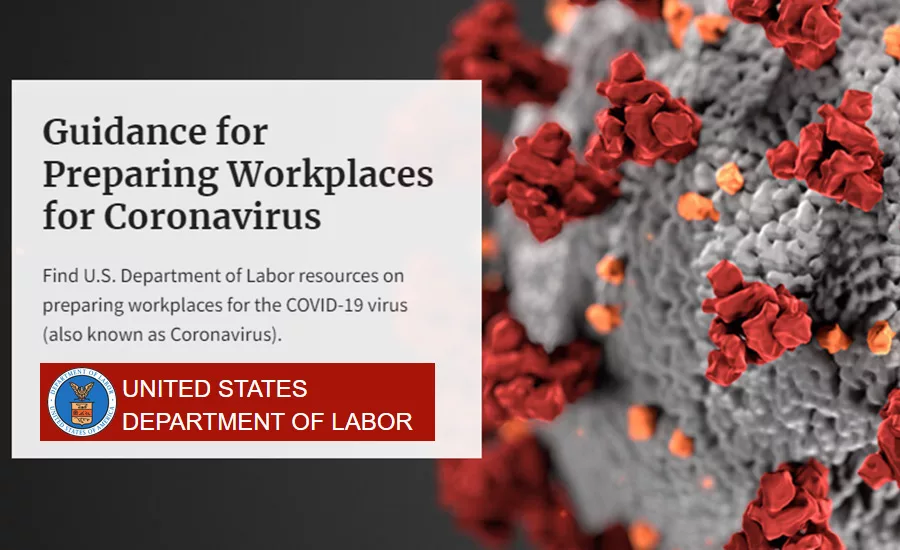
The U.S. Department of Labor’s Occupational Safety and Health Administration (OSHA) has issued interim guidance for enforcing OSHA’s recordkeeping requirements (29 CFR Part 1904) as it relates to recording cases of COVID-19.

Under OSHA’s recordkeeping requirements, COVID-19 is a recordable illness, and employers are responsible for recording cases of COVID-19, if the case:

  • Is confirmed as a COVID-19 illness;
  • Is work-related as defined by 29 CFR 1904.5; and
  • Involves one or more of the general recording criteria in 29 CFR 1904.7, such as medical treatment beyond first aid or days away from work.

In areas where there is ongoing community transmission, employers other than those in the healthcare industry, emergency response organizations (e.g., emergency medical, firefighting and law enforcement services), and correctional institutions may have difficulty making determinations about whether workers who contracted COVID-19 did so due to exposures at work.

Accordingly, until further notice, OSHA will not enforce its recordkeeping requirements to require these employers to make work-relatedness determinations for COVID-19 cases, except where: (1) There is objective evidence that a COVID-19 case may be work-related; and (2) The evidence was reasonably available to the employer. Employers of workers in the healthcare industry, emergency response organizations and correctional institutions must continue to make work-relatedness determinations pursuant to 29 CFR Part 1904. 

OSHA’s enforcement policy will provide certainty to the regulated community and help employers focus their response efforts on implementing good hygiene practices in their workplaces and otherwise mitigating COVID-19’s effects.

For further information and resources about the coronavirus disease, please visit OSHA’s COVID-19 webpage.

Under the Occupational Safety and Health Act of 1970, employers are responsible for providing safe and healthful workplaces for their employees. OSHA’s role is to help ensure these conditions for America’s working men and women by setting and enforcing standards, and providing training, education and assistance. For more information, visit www.osha.gov.

KEYWORDS: illness reporting OSHA worker safety

Share This Story

Looking for a reprint of this article?
From high-res PDFs to custom plaques, order your copy today!

Wayne labs 200px
Wayne Labs has more than 30 years of editorial experience in industrial automation. He served as senior technical editor for I&CS/Control Solutions magazine for 18 years where he covered software, control system hardware and sensors/transmitters. Labs ran his own consulting business and contributed feature articles to Electronic Design, Control, Control Design, Industrial Networking and Food Engineering magazines. Before joining Food Engineering, he served as a senior technical editor for Omega Engineering Inc. Labs also worked in wireless systems and served as a field engineer for GE’s Mobile Communications Division and as a systems engineer for Bucks County Emergency Services. In addition to writing technical feature articles, Wayne covers FE’s Engineering R&D section.

Recommended Content

JOIN TODAY
to unlock your recommendations.

Already have an account? Sign In

  • 2025 Top 100 Food and Beverage Companies

    FOOD ENGINEERING’s 2025 Top 100 Food and Beverage Companies

    While sales were largely down under dynamic economic and...
    Top 100 Food & Beverage Companies
    By: Alyse Thompson-Richards
  • Bottling machine

    How Optical and X-Ray Inspection Supports Bottling Safety and Quality

    By transitioning from legacy single-technology systems to...
    Food Safety
    By: Dan McKee
  • Bread baking in oven

    The State of Food Manufacturing in 2025

    Food and beverage manufacturers are investing in...
    State of Food Manufacturing
    By: Alyse Thompson-Richards
Manage My Account
  • eMagazine
  • Newsletter
  • Online Registration
  • Manage My Preferences
  • Customer Service

More Videos

Popular Stories

Brown Shell Eggs

Arkansas Processor Recalls 6M Eggs Over Salmonella Risk

Frito-Lay logo

PepsiCo to Close Two Florida Facilities

Paris Baguette manufacturing facility

Paris Baguette to Build Manufacturing Facility in Texas

State of Maufacturing 2025

Events

June 17, 2025

Refrigerated & Frozen Foods’ State of the Cold Chain

On Demand Kelley Rodriguez, Editor in Chief of Refrigerated & Frozen Foods, will be joined in this 60-minute webinar by industry experts to help unpack the latest research.

July 23, 2025

Decarbonizing Process Heat: What You Should Know and Next Steps

On Demand Driven by climate goals, business risk, client interest, and resilience considerations, food and beverage companies are increasingly turning their attention to decarbonizing their production processes.

View All Submit An Event

Products

Recent Advances in Ready-to-Eat Food Technology

Recent Advances in Ready-to-Eat Food Technology

See More Products

CHECK OUT OUR NEW ESSENTIAL TOPICS

Alternative ProteinAutomationCleaning/SanitationFabulous Food Plants

Food SafetyMaintenance StrategiesOEE

PackagingSustainability

Related Articles

  • RealWear technology lets engineers walk through sites even when not physically present

    COVID-19 review: Shorter supply chains and reliance on 3D tools for remote walk-throughs

    See More
  • Willy Shih, Professor of Management Practice in Business Administration at the Harvard Business School

    COVID-19’s effect on the supply chain could have been lessened

    See More
  • food plant construction

    The ongoing impact of COVID-19 on the food industry and its supply chains

    See More

Related Products

See More Products
  • Milk Processing and Quality Management

  • 3rd ed.jpg

    Food Process Engineering and Technology, 3E

See More Products
×

Elevate your expertise in food engineering with unparalleled insights and connections.

Get the latest industry updates tailored your way.

JOIN TODAY!
  • RESOURCES
    • Advertise
    • Contact Us
    • Food Master
    • Store
    • Want More
  • SIGN UP TODAY
    • Create Account
    • eMagazine
    • Newsletter
    • Customer Service
    • Manage Preferences
  • SERVICES
    • Marketing Services
    • Reprints
    • Market Research
    • List Rental
    • Survey/Respondent Access
  • STAY CONNECTED
    • LinkedIn
    • Facebook
    • YouTube
    • X (Twitter)
  • PRIVACY
    • PRIVACY POLICY
    • TERMS & CONDITIONS
    • DO NOT SELL MY PERSONAL INFORMATION
    • PRIVACY REQUEST
    • ACCESSIBILITY

Copyright ©2025. All Rights Reserved BNP Media.

Design, CMS, Hosting & Web Development :: ePublishing
