With 2025 Packaging Goals in Danger, Industry Targets Food Waste
Food processors and manufacturers may see opportunities with food waste reduction efforts to help support overall GHG efforts.
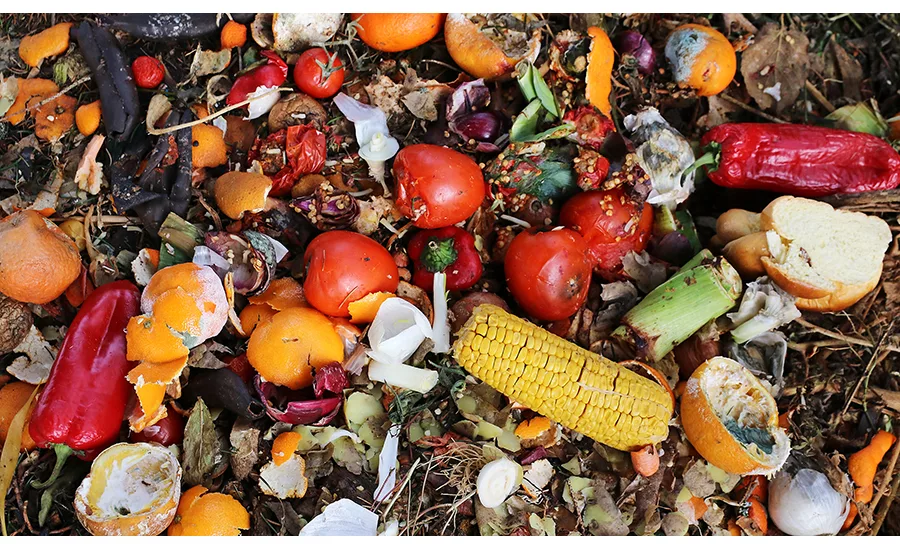
Photo courtesy of Getty Images / Astrid860l
Food waste is a big part of the conversation with consumers in 2023. Consumer research conducted by Do Good Foods in September 2022 reveals that “Americans want to be more climate-friendly, and nearly half are more concerned about food waste than they were a year ago.” Food waste is a critical component in reducing greenhouse gasses (GHG) and could help food companies move “forward” if their 2025 packaging reduction goals aren’t met—see Shifting to Sustainable Packaging.
“We are on the cusp of a consumer being able to go to the store and know what the impact of that exact package and that exact upcycled (or not) food is on the planet, and that’s extremely powerful,” says Claire Sand, CEO at Packaging Technology and Research, in a food webinar.
Big names have signed on to 2025 packaging reduction goals, such as Nestle SA, Unilever, PepsiCo, Coca-Cola and Mars Inc. A 2022 Ellen MacArthur Foundation report shows that reusable, recyclable or compostable plastic packaging increased slightly across the group to 65.4% in 2021 from 63.2% in 2019. And this report also shows that half of the brands and retailers have reduced their use of virgin plastics (resin) from fossil fuels.
So food processors and manufacturers may see opportunities with food waste reduction efforts to help support overall GHG efforts and how public and private partnerships can move the ball forward.
Public and Private Partnerships to Collect Food Waste
In Michigan, the Fremont Regional Digester can take in 165,000 tons of organic waste annually, including dairy farm, animal, food processing and consumer food waste, and turn it into biogas—Fremont, Mich., used to be the global headquarters of Gerber Baby Food.
The commercial anaerobic digester provides about 1,500 families in the local area with power. Anaerobic digesters gained momentum ten-plus years ago in the U.S. after an agreement was reached to accelerate adoption for American dairy farms. The USDA provided a loan guarantee of $22 million for the Fremont digester. Anaerobic digestion is a proven technology and has been scaled up in Europe for decades.
Going forward, the state wants to go deeper. Thirty-eight percent of all material disposed of in Michigan —three million tons annually—is organic and compostable, and the most significant portion going to the landfill is food waste, coming in 46%, according to RRS, an Ann Arbor, Mich., consulting firm. A 2022 report by RRS points to the gap in organic recovery infrastructure for food waste, with only 10 out of 109 composting facilities in Michigan accepting food waste.
Some in the food industry have inquired about vertical integration of digesters at plants. Can food producers integrate small anaerobic digesters into their operations and convert food waste into biogas or reduce energy costs for the plant?
“So we've seen small digesters with skid-mounted systems for different food processors around the state, and largely they’re failing for two reasons,” says Dana Kirk, Ph.D., P.E., biosystems engineer at Michigan State University (MSU). “One, there's a seasonality issue, and two feedstocks aren't balanced to provide the right kind of overall nutrition to the digester.”
Digesters offer numerous output options, but it’s not easy. Kirk has done a good deal of research on anaerobic digestion systems at MSU. Fifteen years ago, MSU and Kirk constructed the Anaerobic Digestion Research and Education Center, focusing on filling the void in the commercial space to help generators of organic waste look at alternative ways to utilize it.
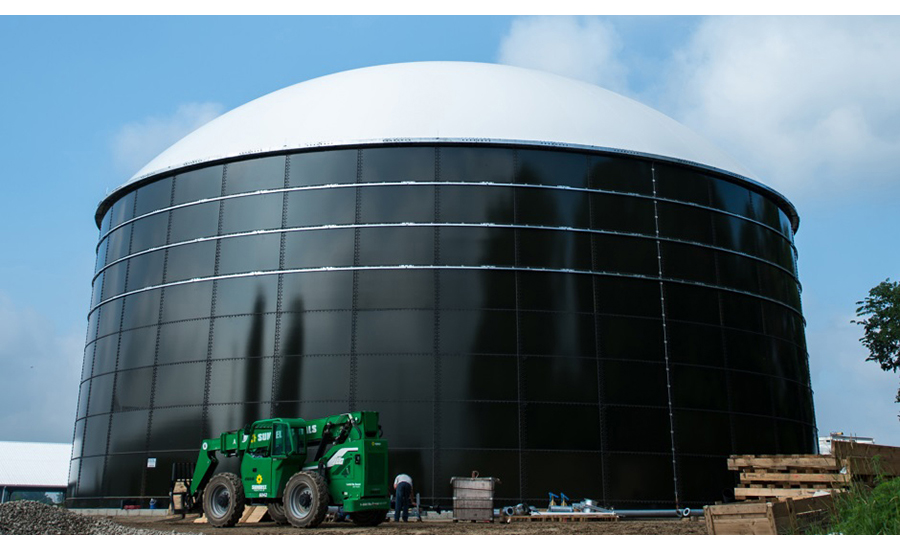 Michigan State University’s anaerobic digester manages more than 22,000 tons of organic waste from MSU and the greater Lansing area. MSU also offers training programs focused around digester operations, including mixing, heating, biology and lab testing.
Running a successful digester onsite comes down to talented operators. “MSU has an anaerobic digester from our lab, so we can do full-scale commercial pilot testing of equipment,” says Kirk. “We've done gas to electricity technologies, nutrient recovery and water reduction pilots.”
Kirk says that training operators are the key to whether a digester will succeed or fail since understanding the mechanical and biological and interfacing with the technology is crucial. MSU's training programs focus on technical drivers for a digester project, including mixing, heating, biology and lab testing. “The program contains a real engineering perspective on how to make these projects work,” says Kirk.
Kirk adds his lab at MSU has seen numerous objectives for food waste over the past fifteen years.
In the aughts, dairy digesters were evaluating how to reduce manure byproducts. From 2007 to 2012, farms built hundreds of digesters across the country as states targeted biogas to produce electricity. Kirk says the pendulum has returned to the dairy and swine segment to make low-carbon fuels from manure sources.
For food manufacturers, Kirk doesn’t see vertical integration working, but can see local and state partnerships with a central digester that can scale succeeding. The MSU anaerobic digester manages 22,000 tons per year, which is a drop in the bucket compared to the 125,000 Fremont digester.
“Some states have land diversion bills pushing 400,000 tons a year,” says Kirk.
Food Waste Hits the Mainstream
While professionals within an industry can become micro-focused, food waste is an emerging issue with the public as it connects to greenhouse gas emissions. So food processors may see more opportunities to leverage state and local partnerships or find outside funding to help get their pilot program off the ground.
Says Kirk, “We even teach a humanities class called the Food Waste Challenge at MSU, focusing on non-technical students. The class aimed to get them to understand what food waste was and how they have an impact.”
Looking for a reprint of this article?
From high-res PDFs to custom plaques, order your copy today!