Women in Engineering
Engineering Change: Discovering the Impact of Women Engineers in Food Manufacturing
June 23, 2026
Women in Engineering
Engineering Change: Discovering the Impact of Women Engineers in Food Manufacturing
June 23, 2026
Dharma Prime and Halak Mehta were called to science and engineering from the beginning.
Prime, senior controls engineer for Concept Systems, was drawn to mathematics, troubleshooting and problem-solving as early as middle school. Meanwhile, Halak Mehta, reliability engineer for Sapporo-Stone Brewing, had a love for chemistry and a strong example in her electronics engineer parents, but when she realized sensory scientists could spend the day sampling ice cream, she realized food science could be in her future.
"With food, you can really impact people's lives directly — a process or a product that you contribute to can directly go on people's plates," Mehta says. "But it's also engineering, risk assessment and maintenance plans. It's this amalgamation of engineering, science and fun."
Prime and Mehta are among the growing league of women choosing to pursue careers in the fields of science, technology, engineering and mathematics (STEM). In celebration of this growth, the UK-based Women’s Engineering Society is marking the 13th International Women in Engineering Day on June 23.
To help FOOD ENGINEERING honor the work of talented women engineers across the food industry, Prime and Mehta recently discussed their educational backgrounds, pivotal projects in their careers and advice for new and future professionals.
Workforce Data
Women have increasingly pursued careers in STEM fields over the last half century, according to data from the U.S. Department of Labor’s Women’s Bureau, but the growth has been slower in the engineering category — particularly compared to other disciplines.
As of 2024, women represent 27% of the STEM workforce, but only 16% of engineering roles are occupied by women. That’s after a steady climb from 3% in 1970.
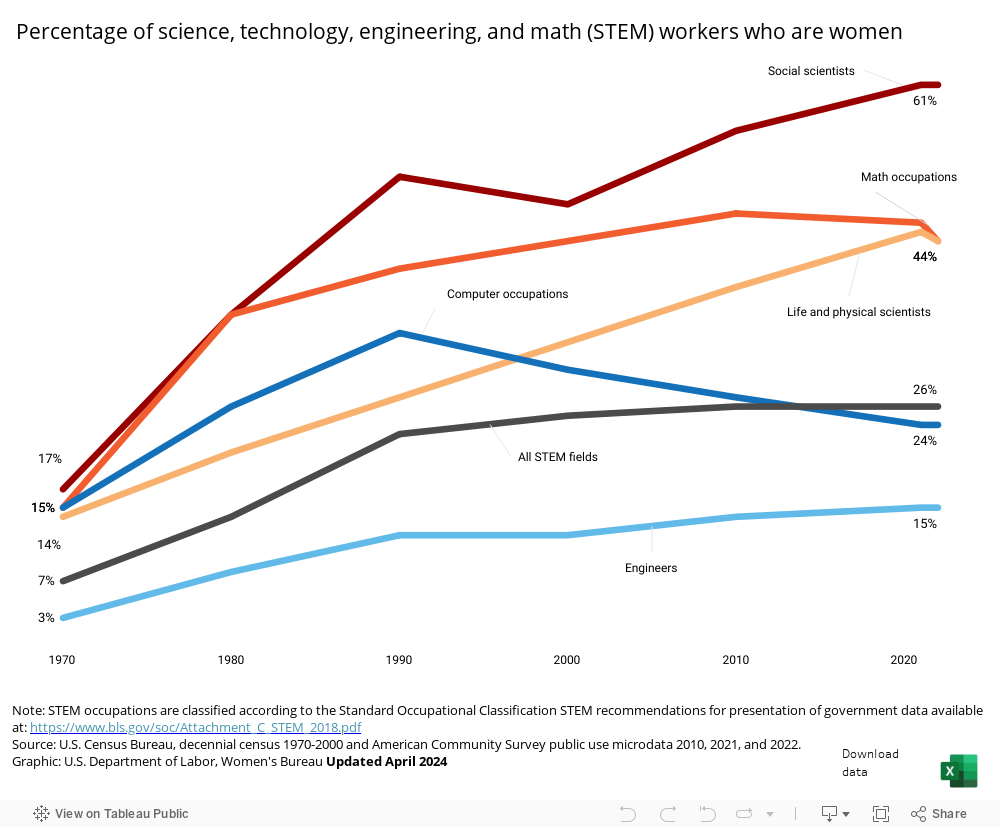
Comparatively, 60% of social scientists and nearly half (46%) of life and physical scientists are women, according to the U.S. Census Bureau’s 2024 American Community Survey (ACS). Women occupy 44% of roles in mathematics occupations and 25% in computer occupations.
Gender distributions also vary across engineering subcategories, as 2024 ACS estimates show:
An uneven distribution also exists in management roles in the architecture and engineering sector. The U.S. Census Bureau estimates women hold 14% of leadership positions in these categories.
Looking for a reprint of this article?
From high-res PDFs to custom plaques, order your copy today!
These differences don’t just appear in the field — they often begin in college programs. Prime, who studied mechanical engineering and computer science at Oregon State University, says her computer science classes were fairly even, but in her mechanical engineering courses, the ratio of men to women was about 10 to 1.
"I just learned to form really good communities with the women who I did meet in those classes," Prime says. "A lot of them I'm still friends with today, and it's just really nice to have someone that you can talk to about your experiences. I think that made getting through the classes a lot easier."
Food Engineering Podcast
Celebrating Women in Engineering: Dharma Prime
Food Engineering Podcast
Celebrating Women in Engineering: Halak Mehta
Mehta studied chemical engineering at B.M.S. College of Engineering in Bangalore, India and earned a master’s degree and a doctorate in food science from Purdue University. She says her undergraduate cohort was about 25% women, which was considered high.
"Chemical engineering remains a male-dominated field," Mehta says. "I do think that the ratio has improved in recent years. There’s definitely some preconceived notions about women in engineering, and particularly in fields like mechanical and chemical engineering. I've had to become comfortable with being the only woman in the room, and I think that that's an experience that a lot of women in this industry can relate to."
Industry Experience
Prime first discovered her love of controls engineering while working on Oregon State’s Formula Racing team. Upon graduation, she took a job at a beverage OEM, but she realized it wasn’t quite right.
"I was just doing mechanical work, and I liked it, but there was something missing," she says. "I always wanted to know, ‘I'm building all of these things, but how do I control them? How do I take the next step?’"
Since joining Concept Systems in 2023, Prime has helped dairy and potato processors in the Pacific Northwest retrofit and update their systems. She served as lead controls integrator on a greenfield potato processing plant in Washington, where she learned about all processes, from raw product processing through packaging.
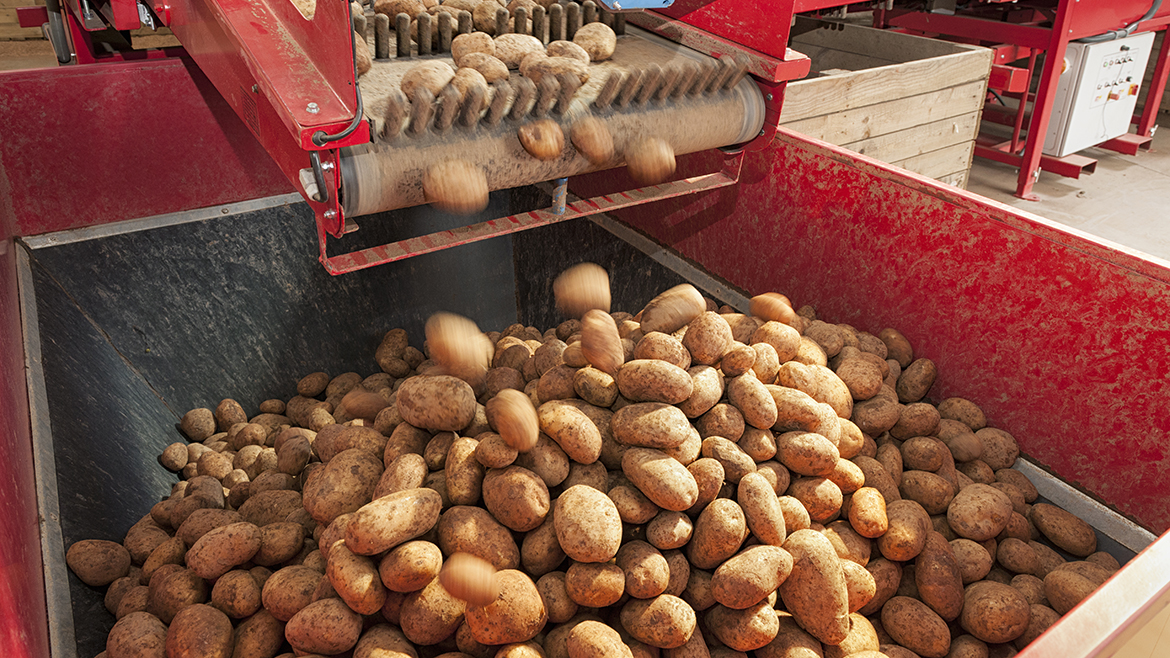
Image source: georgeclerk / E+ / Getty Images Plus
"It was really fascinating to see them almost design the equipment as we went," Prime says about the project. "They had all of the mechanical designs laid out, and they had built similar factories before, but anytime you put two things together, they don't quite line up. Figuring out that kind of troubleshooting on the fly, and they're adding a new IO as we're realizing this process is a little more complicated than we thought, is always a really fun challenge to tackle."
While always interested in food, Mehta explored several areas of chemical engineering just to be certain. Petroleum, fertilizers, fragrance — she didn’t like any of it. However, she found her niche while interning at a dairy manufacturer in India.
"I spent a large portion of my internship in the wastewater plant, and we were working on optimizing anaerobic digestion," Mehta says. "Some government regulations had recently changed, and they were trying to adapt to that change. I smelled like wastewater for nearly three months and worked in 110 degrees heat, but I felt like it was the most wonderful time, so I thought I have enough data to conclude that I like food science."
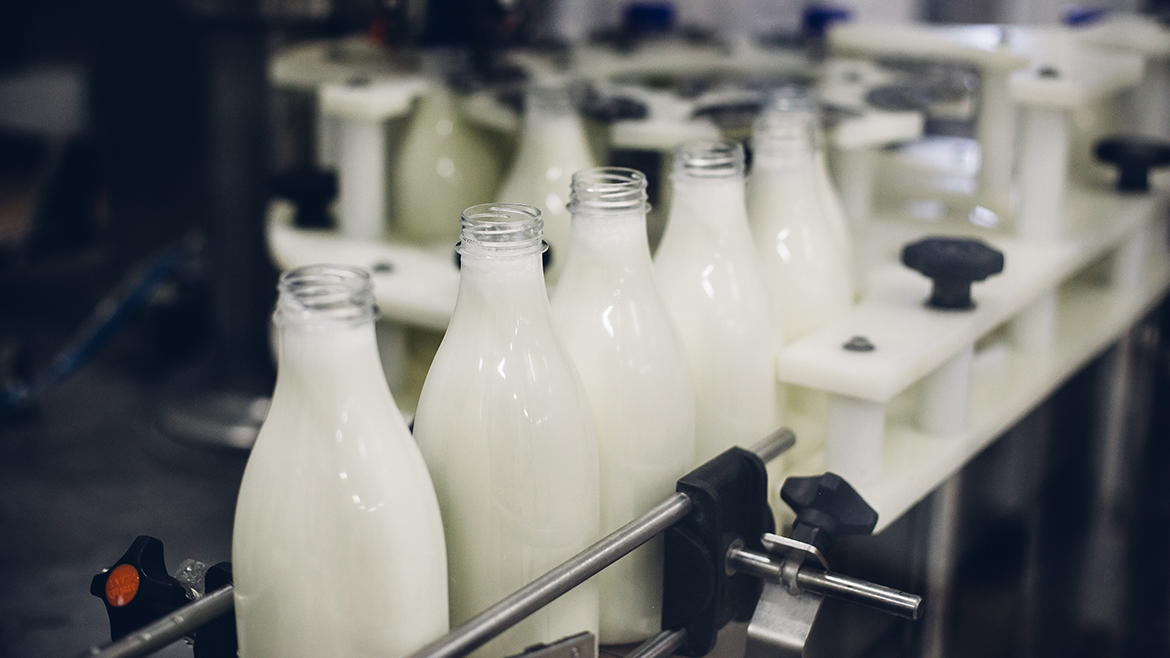
Image source: Wirestock / Getty Images Plus
Mehta began her post-graduate studies in food science at Purdue University, where, in addition to conducting research and industry training, she helped commission and install an extrusion line at the Food Entrepreneurship and Manufacturing Institute’s pilot facility.
"I had the opportunity to work on it from day one, from taking the plastic off of the new equipment, all the way to producing consumption-ready samples," she says. "It was definitely a huge lift, but there were so many aspects that I learned there that shaped me into who I am now."
Now, at Sapporo-Stone Brewing, Mehta aims to limit downtime on the company’s bottle, can and keg lines by building a reliability-centered maintenance approach.
Looking Ahead
Both Prime and Mehta emphasized the importance of mentorship — not only to improve their own skills but to support those who follow in their footsteps.
Mehta says the American Institute of Chemical Engineers, the Institute of Food Technologists and Phi Tau Sigma, an international honor society for food science and technology, have offered meaningful opportunities for formal mentorship. However, the backing of Dharmendra Mishra, professor and director of Purdue’s FEMI, helped her to overcome any doubts in her capabilities and to "think like a leader."
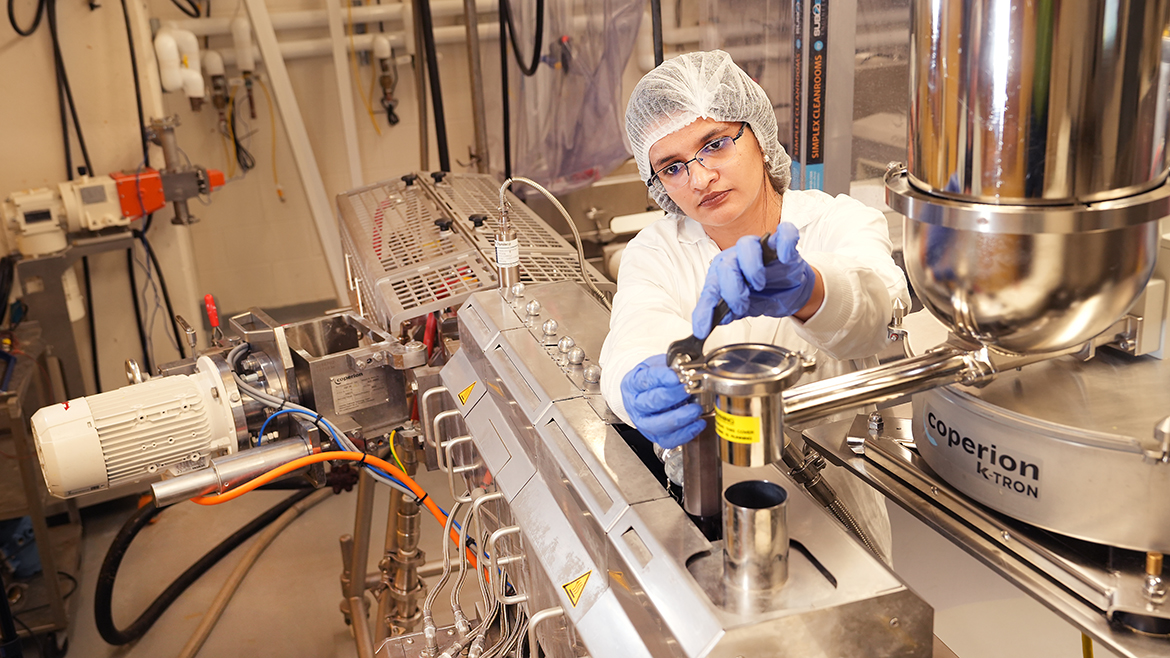
As part of her food science studies at Purdue University, Halak Mehta helped install and commission an extrusion line. Photo courtesy of Purdue University
"He always encouraged me," she says. "He always gave me some big decisions, threw me sometimes into the deep end of the pool but believed that I could swim. It helped me believe that I am entrusted with all of this decision-making, (and) I can do this."
While in college, Prime participated in the MECOP internship program, and since joining Concept Systems, she has mentored two interns through the same initiative.
"That's a really fun experience to take someone who's in the first six months to year of their career," Prime says, "and help them figure out ‘what is important for me to learn right now? How can I develop my skills and that problem-solving mindset as an engineer?’"
That also involves developing and learning to trust their "engineering gut," Prime adds.
"Even a new engineer can notice when something's wrong and when something feels off," she says. "Even if you don't have the knowledge, the background or the expertise to articulate it, I think (it’s) being able to say, ‘hey, I think we should have someone else take a look at this. I think something's going on here.’ I always try to encourage our interns when they speak up."
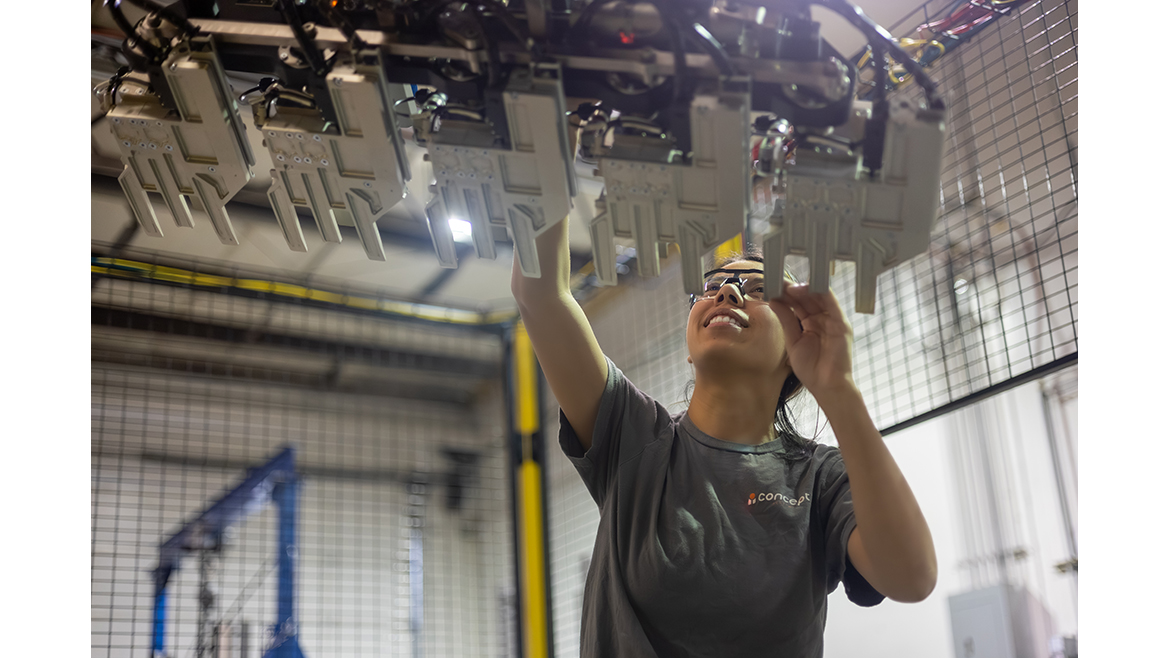
Dharma Prime, senior controls engineer, has worked on system retrofits and optimizations for food processors in the Pacific Northwest since joining Concept Systems in 2023. Photo courtesy of Concept Systems
Mehta also recommends burgeoning engineers to have a "growth mindset" while being adaptable, teachable and willing to deal with the discomfort of new experiences.
"Growth could look like different things at different stages in your career," she says. "Sometimes it's a graduate program. Sometimes it may be upskilling with a certification. Sometimes maybe it's picking up an AI tool or even picking up a new hobby. But just believing that you can learn quickly and add value to something completely new, I think that's really important."
While women pursue engineering — and build a community for each other — Mehta and Prime hope the gender gap in engineering and manufacturing continues to close.
"I do think that we are on a good trajectory," Mehta says. "We can definitely expect to see some improvements, but we need to do more. I would like to not see headlines anymore that say, ‘first woman to do XYZ in organization’s ABC-years-long history.’ No more glass ceilings."
Read the Full Amy DeJong Q&A
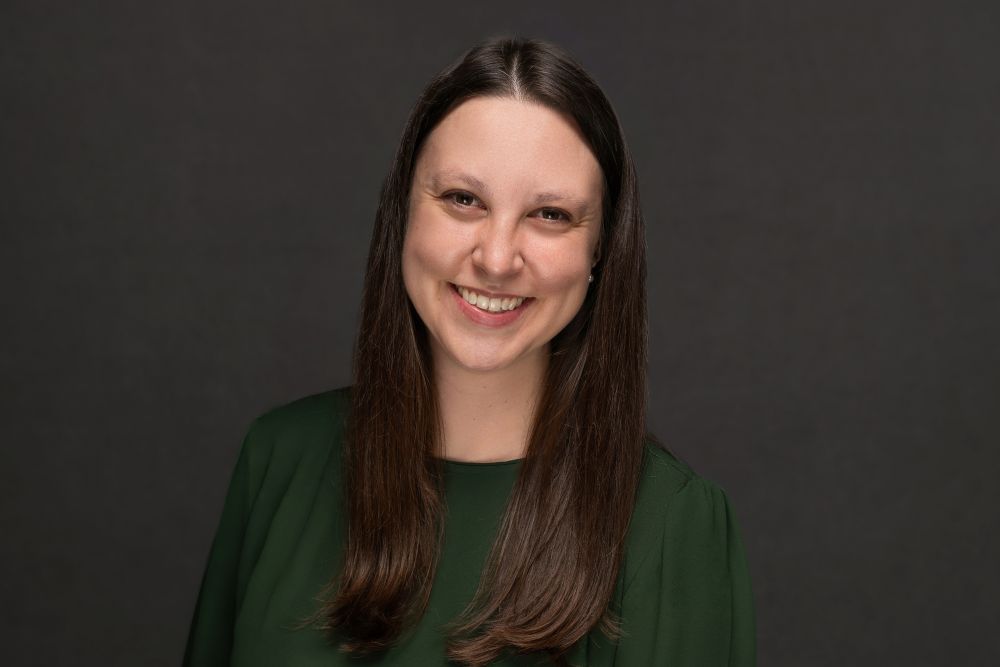
FOOD ENGINEERING also spoke to Amy DeJong, senior process engineer on Mars Snacking’s Breakthrough Technology team, about her industry experience, thoughts on diversity and advice for future engineers.
DeJong’s work focuses primarily on developing new manufacturing processes to bring Mars products to life more sustainably and efficiently. DeJong holds a Bachelor of Science degree and a PhD in food science from the University of Wisconsin-Madison, where her research focused on sugar and polyol crystallization.
You may also recognize DeJong from the 25th season of CBS’s reality show, “The Amazing Race,” which she won with her friend and lab mate, Dr. Maya Warren.
FE: What drew you to engineering and the STEM field?
AD: As a kid, I always loved math and science. I loved solving problems, asking questions and was drawn to a career where I could use these skills to solve tangible problems. I was especially excited when I learned that I could pair my love for math and science with food!
FE: How would you describe your educational experience? What was your class makeup like?
AD: I went to University of Wisconsin-Madison for food science and loved every minute of it. I became very involved in the Food Science Club, product development team and a fun food science quiz bowl competition. My graduating class was around 30 people — it was really nice being part of a relatively small major because I felt like I got to know all of my classmates and professors. My program really focused on giving us “real life” experiences through tours of neighboring food companies, access to internships and through the design of course work. I left college very prepared to enter the food industry and still remain in close contact with many of my classmates.
FE: What drew you to the food industry specifically?
AD: Everyone needs to eat and we need people who are dedicated to bringing safe, sustainable, nutritious and delicious food to the masses. I really like applying my skills in math and science toward improving our global food system.
FE: What were some of your most challenging projects and why? How did your unique experiences help shape the outcomes?
AD: It seems like all projects have their fair share of challenges; however, I think I bring a unique perspective to engineering challenges because I come from a food science background. My background has given me a strength in working at the intersection of process and product. I have found that I often approach and solve problems differently than someone who perhaps found engineering from a more traditional path. The key here is really diversity — when people from different backgrounds come together you are far more likely to come up with solutions to challenging technical problems.
FE: How do you see the U.S. food industry changing over the next decade (both in terms of workforce development and overall technological advancements)?
AD: As with many industries, I think the food industry is going to embrace new technologies to innovate and manufacture food. In manufacturing facilities, I expect to see more precise and automated ways of measuring and responding to processing conditions. I think we are going to continue to have access to more and higher quality data that will decrease waste, improve quality and decrease time spent troubleshooting challenges. I think the workforce will accordingly need to continue upskilling in things like data analytics and AI while continuing to develop hands-on problem-solving experience.
FE: How can the industry better support diversity and equity in hiring and retaining employees? What role can mentoring play? Have you benefited from a mentor?
AD: One of the practices I have seen add value is ensuring interview teams are diverse. Diverse hiring panels help make sure candidates are assessed from a variety of different perspectives. I think things like inclusive benefits packages, parental leave, flexible working hours and career growth opportunities also go a long way towards retaining employees.
I have been lucky to have many mentors throughout my career. Mentors have helped me navigate challenging projects and situations, identify new career opportunities, and see my own strengths and weaknesses in new ways.
FE: What advice would you give women entering the food and beverage industry and those considering engineering-focused careers?
AD: The food industry is a wonderful place to be. I have found it to be a place with people who are very passionate and committed to the work they do.
My advice would be to get involved professional organizations like IFT where you can meet professionals from different companies, areas of the food industry and places in their careers. Having a strong network can be so helpful when navigating different points in your career and can make work a lot more fun. I would also encourage people to be curious and ask questions. I have learned so much by talking to my peers, learning about what they are working on and picking up small side projects.