Burns & McDonnell brings together an unmatched team of consultants, engineers, construction professionals, architects and more to design and build critical infrastructure. Our solutions-driven, integrated team offers full-service capabilities. Founded in 1898 and working from more than 75 offices globally, Burns & McDonnell is 100% employee-owned.


Food Manufacturing’s Growth Calls for Integrated Project Delivery
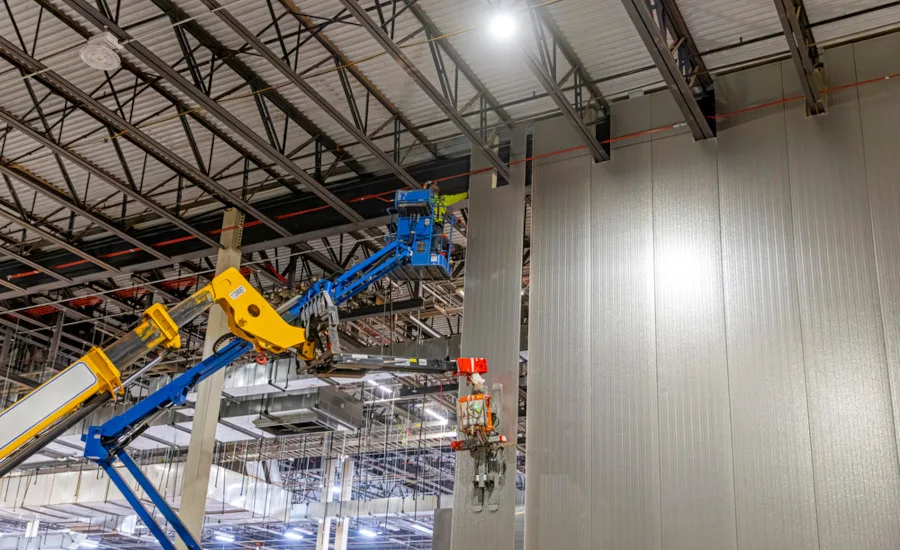
For manufacturers, growth opportunities are plentiful. Companies are expanding capacity, modernizing facilities and investing in automation to meet evolving customer demands. Investment in U.S. manufacturing remains substantial, with manufacturing construction spending totaling roughly $173 billion on an annualized basis in mid-2026 after several years of historic growth, according to the Federal Reserve in September.
Not surprisingly, turning those investments into operating facilities is a challenge. Labor shortages, equipment lead times, supply chain uncertainty and escalating project complexity are putting pressure on traditional delivery methods.
That reality is driving increased interest in integrated project delivery models, including engineer-procure-construct (EPC) approaches, that bring engineering, procurement and construction together under a more unified framework. By bringing design, procurement and construction teams together from day one under a unified delivery strategy, manufacturers improve coordination, make decisions faster and reduce the disconnects that can occur between project phases.
Reducing Risk Through a More Connected Project Approach
As projects become more complex, new facilities must support advanced technologies, meet stricter operational requirements and remain flexible enough to accommodate future growth. The result of all of this is that manufacturers are looking beyond traditional project delivery methods in search of proven approaches that provide greater certainty around cost, schedule and performance.
Currently, many industrial projects follow a linear process in which engineering, procurement and construction activities occur largely in sequence. Designers developed plans, contractors bid the work and construction began after engineering was substantially complete.
While that approach remains effective, it can create challenges, with each handoff creating another opportunity for delays, miscommunication or cost increases. For example, equipment availability may change after designs are completed. Construction requirements can introduce unexpected modifications and procurement constraints can affect schedules established months earlier.
For manufacturers operating under aggressive timelines, the consequences can be significant. Delays impact production targets. Change orders affect capital budgets. New facilities may take longer to achieve expected operational performance.
To mitigate these issues, manufacturers are adopting integrated project delivery models because this approach reduces handoffs and fragmentation and encourages collaboration from the earliest stages of project development. Rather than treating design, procurement and construction as separate functions, integrated teams work toward shared project objectives, helping align technical decisions with business priorities.
Speed: The Competitive Advantage
Manufacturing leaders view construction schedules as business strategies rather than project metrics. Every month saved during project delivery can represent earlier production, faster revenue generation and improved responsiveness to market demand.
That reality is especially important in sectors such as food and beverage manufacturing, where changing consumer preferences can create rapid shifts in demand. Facilities must often scale production, launch new products or accommodate new packaging formats without lengthy delays.
Projects that integrate planning, purchasing and construction activities can often reduce inefficiencies associated with sequential workflows. Rather than waiting for one phase to conclude before the next begins, teams can advance multiple activities in parallel while maintaining alignment around project goals.
The ability to accelerate schedules without sacrificing quality has become a significant differentiator for manufacturers competing in dynamic markets.
What Manufacturers Should Look for With Integrated Project Delivery
When project teams work collaboratively from the beginning, decisions can be evaluated through multiple lenses simultaneously. Engineering teams can assess technical requirements while procurement specialists evaluate availability and lead times. Construction professionals can identify execution challenges before they become field issues. This level of coordination helps organizations make informed decisions earlier, when changes are less expensive and easier to implement.
As manufacturers evaluate project delivery strategies, several priorities are emerging as critical indicators of success:
- Early visibility into cost and schedule impacts.
- Clear accountability throughout project execution.
- Strong communication between technical and business stakeholders.
- Flexibility to respond to market and supply chain changes.
- Alignment between facility design and operational requirements.
- Support for future automation and digital technologies.
These priorities reflect a broader shift in how manufacturers define project success. Completing a facility on time and on budget remains important, but owners want projects that support long-term operational goals as well. That means creating facilities that are easier to maintain, simpler to expand and better equipped to integrate future technologies.
Challenging Common Assumptions
While Integrated Project Delivery can offer significant advantages, misconceptions about cost, governance and project speed often persist. Separating perception from reality helps organizations evaluate whether the approach aligns with their project goals.
- Lower initial cost does not always equal lower total cost. Projects can incur substantial expenses through schedule delays, scope changes, procurement challenges and redesign efforts that may not be reflected in early estimates.
- Collaboration does not eliminate owner oversight. In highly coordinated project environments, owners continue to make strategic decisions while benefiting from improved visibility into project performance.
- Faster delivery does not require sacrificing diligence. Planning, quality reviews, safety processes and commissioning activities remain essential. The difference is that these activities can be coordinated more effectively to reduce unnecessary delays.
Understanding these distinctions helps manufacturers evaluate project opportunities based on total value rather than assumptions about traditional delivery methods.
Preparing Facilities for What's Next
The manufacturing facilities being built today must be ready for tomorrow's technologies.
Automation, data analytics, advanced controls and artificial intelligence are becoming important across industrial operations. Case in point, in FOOD ENGINEERING’s 2025 State of Food Manufacturing survey, 35% of respondents identified AI and automation as a major trend shaping the next five years, up from 27% the previous year.
Automation and other high-tech tools depend on reliable infrastructure and thoughtful facility integration. Across food and beverage manufacturing, integrated project delivery is entering a new phase of digital maturity. This collaborative delivery model aligns stakeholders around common goals and shared project outcomes. In response to compressed timelines, rising construction expenses and stringent regulatory standards, organizations are leveraging advanced data and digital solutions to improve the way production facilities are planned, delivered, and upgraded.
This forward-looking approach is particularly valuable as manufacturers face pressure to improve productivity, optimize energy consumption and increase asset performance.
As companies invest in new facilities, modernization programs, capacity expansions and project delivery approaches are evolving.
Overall successful growth will be determined by how effectively teams connect planning, design, procurement and construction around a shared vision. In an industry where market conditions change quickly and growth opportunities happen at record speed, a smarter approach to project delivery may be one of the most valuable investments a manufacturer can make.
Looking for a reprint of this article?
From high-res PDFs to custom plaques, order your copy today!