Food Engineering logo
search
cart
facebook twitter linkedin youtube
  • Sign In
  • Create Account
  • Sign Out
  • My Account
Food Engineering logo
  • NEWS
    • Latest Headlines
    • Manufacturing News
    • People & Industry News
    • Plant Openings
    • Recalls
    • Regulatory Watch
    • Supplier News
  • PRODUCTS
    • New Plant Products
    • New Retail Products
  • TOPICS
    • Alternative Protein
    • Automation
    • Cannabis
    • Cleaning | Sanitation
    • Cross-Functional Food Innovation
    • Fabulous Food Plants
    • Food Safety
    • Maintenance Strategies
    • OEE
    • Packaging
    • Sustainability
    • More
  • EXCLUSIVES
    • Plant Construction Survey
    • Plant of the Year
    • Sustainable Plant of the Year
    • State of Food Manufacturing
    • Top 100 Food & Beverage Companies
  • MEDIA
    • Podcasts
    • Videos
    • Webinars
    • White Papers
  • FOOD MASTER
  • EVENTS
    • Food Automation & Manufacturing Symposium and Expo
    • Industry Events
  • RESOURCES
    • Newsletter
    • Custom Content & Marketing Services
    • FE Store
    • Government Links
    • Industry Associations
    • Market Research
    • Sponsor Insights
    • Classified Ads
  • EMAGAZINE
    • eMagazine
    • Archive Issue
    • Advertise
  • SIGN UP!
SustainabilityManufacturing News

TECH FLASH

Lifecycle assessment sizes up environmental impacts of products
May 9, 2012
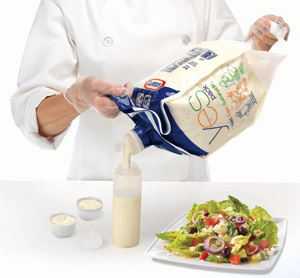
Kraft YES Pack
Kraft’s YES pack salad dressing uses 60 percent less plastic than the previous container. Source: Kraft.

Kraft Foods is using lifecycle assessment (LCA) to help it make the right changes and get the best results in new product and packaging design. LCA measures the footprint of what goes into making a product, from farm to fork and beyond.

“Lifecycle assessment is an important part of our sustainability journey,” says Roger Zellner, sustainability director for research, development & quality. “It gives us a competitive advantage, as we now have more insight into how to reduce our products’ footprints, find efficiencies and validate and explain those benefits to customers and consumers. Together, we’re focusing and working smarter and communicating better, which is good for the environment, people and our business.”

This LCA work builds on the multi-year footprinting project Kraft Foods recently used to map its impact on climate change, land and water use. Today, employees around the world are using lifecycle thinking to help uncover ways to eliminate waste in manufacturing. This can reduce the amount of raw materials, such as agricultural commodities, used at the beginning of the supply chain. LCA also can help measure how product and packaging innovations improve on previous designs, and provide a common system to measure and explain those benefits.

For example, in the US, the Kraft YES Pack salad dressing team used LCA to confirm their design has a reduced environmental impact, using 60 percent less plastic packaging than the previous container. In the UK, the Kenco coffee team used LCA to confirm its new Eco-Refill package delivers a 70 percent savings in the packaging’s carbon impact footprint compared to its glass counterpart. And in Europe, the Tassimo single-serve beverage team’s LCA showed it could reduce the carbon footprint of each T Disc beverage ingredient package by about 20 percent when upcycling them with partner TerraCycle and diverting them from landfills.
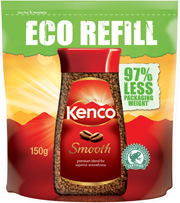
Kraft Kenco coffee
The UK’s Kenco coffee’s Eco-Refill container delivers less carbon impact than the previous glass container. Source: Kraft.

At the heart of Kraft Foods’ reductions in packaging is its Eco-Calculator. This proprietary tool helps packaging designers create more efficient, sustainable solutions based on data from the US Environmental Protection Agency, the US Department of Energy and packaging industry groups.

The Eco-Calculator figures the percentage of post-consumer recycled material in a given package design, along with the amount of energy and carbon dioxide emissions required to create the package. It also tells packaging designers how efficiently they’re using materials and how well their designs will fit a product’s physical dimensions. The tool is used along with other business practices, like economic assessments and ability to manufacture, before a final design is selected.

KEYWORDS: engineering services operational efficiency packaging design sustainable packaging waste reduction

Share This Story

Looking for a reprint of this article?
From high-res PDFs to custom plaques, order your copy today!
Recommended Content

JOIN TODAY
to unlock your recommendations.

Already have an account? Sign In

  • Bread going through conveyor belt in manufacturing plant.

    The State of Food Manufacturing in 2026

    Food and beverage manufacturers encounter significant...
    Processing
    By: Alyse Thompson-Richards
  • FE Top100 Food & Beverage Companies hero, gold lettering with black background.

    FOOD ENGINEERING’s 2026 Top 100 Food and Beverage Companies

    See where the world’s leading food and beverage companies...
    People & Industry News
    By: Alyse Thompson-Richards
  • CJ Schwan’s Salina facility.

    Recipe for Growth: How CJ Schwan’s Powers Pizza Production with People and Automation

    Blending advanced automation with purposeful design, this...
    Plant of the Year
    By: Alyse Thompson-Richards
Manage My Account
  • eMagazine
  • Newsletter
  • Online Registration
  • Manage My Preferences
  • Customer Service

More Videos

Sponsored Content

Sponsored Content is a special paid section where industry companies provide high quality, objective, non-commercial content around topics of interest to the Food Engineering audience. All Sponsored Content is supplied by the advertising company and any opinions expressed in this article are those of the author and not necessarily reflect the views of Food Engineering or its parent company, BNP Media. Interested in participating in our Sponsored Content section? Contact your local rep!

close
  • Illustration of businessman standing in the middle of a large scale, balancing between two green dollar signs at each end, one larger than the other. Blue background with very small white clouds.
    Sponsored by3-A Sanitary Standards, Inc.

    6 Questions: Before You Buy Food Processing Equipment

  • Construction crews use aerial lifts to install insulated wall panels inside an industrial facility.
    Sponsored byBurns & McDonnell

    Food Manufacturing’s Growth Calls for Integrated Project Delivery

  • Close-up of a group of freshly baked stuffed empanadas being transferred onto a conveyor belt.
    Sponsored byDorner

    Smarter Line Design Improves Food Manufacturing Efficiency and Throughput

Popular Stories

Maple Leaf Foods photo

Maple Leaf Foods to Consolidate Plant Protein Production

Smarties Mini

Nestlé Canada Invests $50M in Toronto Confectionery Factory

Illustration of businessman standing in the middle of a large scale, balancing between two green dollar signs at each end, one larger than the other. Blue background with very small white clouds.

6 Questions: Before You Buy Food Processing Equipment

An image of baked bread on a conveyor belt with text promoting the 2026 State of Food Manufacturing report.

Events

October 15, 2026

Exploring FOOD ENGINEERING’s 2026 State of Food Manufacturing

The webinar will examine how these trends are impacting every stage of the manufacturing process, from research and development through production, distribution and fulfillment.

January 1, 2030

Webinar Sponsorship Information

For webinar sponsorship information, visit www.bnpevents.com/webinars or email webinars@bnpmedia.com.

View All Submit An Event

Products

Recent Advances in Ready-to-Eat Food Technology

Recent Advances in Ready-to-Eat Food Technology

See More Products
Promo for the 2027 Plant of the Year Award


CHECK OUT OUR NEW ESSENTIAL TOPICS

Alternative Protein Automation Cleaning/Sanitation Fabulous Food Plants

Food Safety Maintenance Strategies OEE

Packaging Sustainability

Related Articles

  • Benefits of aluminum vs steel: from environmental impacts to meeting consumer needs

    Benefits of aluminum vs steel: from environmental impacts to meeting consumer needs

    See More
  • Golden Krust Patties recalls more than 9 million pounds of products

    See More
  • Research group publishes database of products containing nanomaterials

    See More

Related Products

See More Products
  • Methods_food_products-2nd-Ed-Cover-415x600.jpg

    Methods for Developing New Food Products, Expanded Second Edition

  • The 10 Principles of Food Industry Sustainability

  • Rice-Engineering-Website-Cover-439x600.jpg

    Advances in Science & Engineering of Rice

See More Products

Events

View AllSubmit An Event
  • August 18, 2020

    How Digital Transformation Impacts the Operational Efficiency and Sustainability of Your Business

    ON DEMAND: Over the past years, the manufacturing industry has experienced massive changes worldwide and the situation continues to evolve further. Highly informed and demanding consumers are shaping the market, supply chains keep remodelling into complex ecosystems and digital transformation keeps being a key player in revolutionizing the way manufacturer sites work.
View AllSubmit An Event
×

Elevate your expertise in food engineering with unparalleled insights and connections.

Get the latest industry updates tailored your way.

JOIN TODAY!
  • RESOURCES
    • Advertise
    • Contact Us
    • Food Master
    • Store
    • Want More
  • SIGN UP TODAY
    • Create Account
    • eMagazine
    • Newsletter
    • Customer Service
    • Manage Preferences
  • SERVICES
    • Marketing Services
    • Reprints
    • Market Research
    • List Rental
    • Survey/Respondent Access
  • STAY CONNECTED
    • LinkedIn
    • Facebook
    • YouTube
    • X (Twitter)
  • PRIVACY
    • PRIVACY POLICY
    • TERMS & CONDITIONS
    • DO NOT SELL MY PERSONAL INFORMATION
    • PRIVACY REQUEST
    • ACCESSIBILITY

Copyright ©2026. All Rights Reserved BNP Media, Inc. and BNP Media II, LLC.

Design, CMS, Hosting & Web Development :: ePublishing