Food Engineering logo
search
cart
facebook twitter linkedin youtube
  • Sign In
  • Create Account
  • Sign Out
  • My Account
Food Engineering logo
  • NEWS
    • Latest Headlines
    • Manufacturing News
    • People & Industry News
    • Plant Openings
    • Recalls
    • Regulatory Watch
    • Supplier News
  • PRODUCTS
    • New Plant Products
    • New Retail Products
  • TOPICS
    • Alternative Protein
    • Automation
    • Cannabis
    • Cleaning | Sanitation
    • Fabulous Food Plants
    • Food Safety
    • Maintenance Strategies
    • OEE
    • Packaging
    • Sustainability
    • More
  • EXCLUSIVES
    • Plant Construction Survey
    • Plant of the Year
    • Sustainable Plant of the Year
    • State of Food Manufacturing
    • Top 100 Food & Beverage Companies
  • MEDIA
    • Podcasts
    • Videos
    • Webinars
    • White Papers
  • FOOD MASTER
  • EVENTS
    • Food Automation & Manufacturing Symposium and Expo
    • Industry Events
  • RESOURCES
    • Newsletter
    • Custom Content & Marketing Services
    • FE Store
    • Government Links
    • Industry Associations
    • Market Research
    • Classified Ads
  • EMAGAZINE
    • eMagazine
    • Archive Issue
    • Advertise
  • SIGN UP!
Packaging

TECH FLASH

Graphical shape, orientation and alignment: What do customers want?

If you’re not paying attention to packaging preferences, you could be leaving profits on the shelf.
By Shane O'Halloran
February 13, 2013
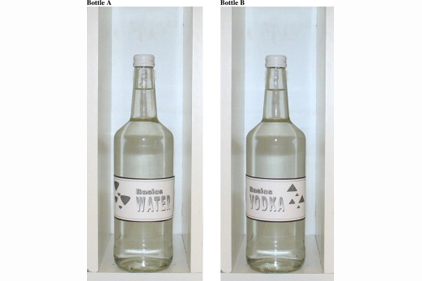
Graphical shape, orientation and alignment: What do customers want?
A study asked participants to indicate preferences on four separate graphical criteria for packaging. Source: Westerman et al, Food Quality and Preference 27.

It’s clear packaging design is an essential component in the success of any brand, both at the point of sale and in forming purchasing preferences for the future. What might be less apparent is how to harness that design to work for you. A new study sought to determine the effect of label design on consumer preference by asking participants to choose a favorite between different labels on two separate products (water and vodka).

One hundred-sixteen alcohol-consuming participants (49 female, 67 male) with an average age of 22.12 years old were recruited from the University of Leeds for the study. Participants rated eight alternative packaging designs on nine items to create the dependent variables.

Participants were asked to rate each design using a five-point Likert scale with anchors of “Definitely not” and “Definitely” for nine items: “I would purchase this product,” “this design is attention grabbing,” “this design is typical for this product,” “this design is visually appealing,” “this design would be practical,” “I think this product would be nice tasting,” “I think this product would taste refreshing,” “I find this design pleasing,” and “I find this design annoying.”

The study proceeded under the premise that aesthetic preference could be linked to simplistic packaging design features. It found a preference for rounded and upward-oriented shapes, right-aligned graphics and left-aligned text. The data suggested congruence between graphical and product form may be advantageous due to the congruent effects of taste sensations. For example, angular shapes tend to be associated with sparkling water’s “sharp” taste while rounded objects are associated with still water’s “round” taste.

The preference for rounded shapes is consistent with the theory that viewing angular shapes results in increased activation of the amygdale, causing a fear response. However, exceptions exist,such as a 2011 study that found participants preferred angular yogurt pots, suggesting the importance of market, temporal and consumer context.

Preference for an upward graphical orientation was unsurprising given the impact of the fear response discussed above. In previous studies, downward Vs and downward-pointing triangles tended to capture attention more quickly than upward Vs or triangles, suggesting they are particularly representative of displays of threat. However, no evidence for such a relationship was present in this study.

Respondents’ preference for right-oriented alignment of graphics can also be explained by the brain’s processing mechanisms. Because the left hemisphere is biased toward verbal processing, and the right is biased towards visuo-spatial processing, recall of presented material is greater when text is presented on the left and graphics on the right of the packaging.

KEYWORDS: consumer trends labeling packaging design

Share This Story

Looking for a reprint of this article?
From high-res PDFs to custom plaques, order your copy today!
Recommended Content

JOIN TODAY
to unlock your recommendations.

Already have an account? Sign In

  • 2025 Top 100 Food and Beverage Companies

    FOOD ENGINEERING’s 2025 Top 100 Food and Beverage Companies

    While sales were largely down under dynamic economic and...
    Top 100 Food & Beverage Companies
    By: Alyse Thompson-Richards
  • Bottling machine

    How Optical and X-Ray Inspection Supports Bottling Safety and Quality

    By transitioning from legacy single-technology systems to...
    Food Safety
    By: Dan McKee
  • Bread baking in oven

    The State of Food Manufacturing in 2025

    Food and beverage manufacturers are investing in...
    Manufacturing News
    By: Alyse Thompson-Richards
Manage My Account
  • eMagazine
  • Newsletter
  • Online Registration
  • Manage My Preferences
  • Customer Service

More Videos

Popular Stories

The Campbell's Company logo

Campbell’s Terminates Exec Over Alleged Disparaging Comments

alternative protein products

Alternative Protein in 2025: Key Trends and Technologies

Food manufacturing data

Digital KPIs Emerge but Are Brands Finding Accurate Data?

State of Maufacturing 2025

Events

June 17, 2025

Refrigerated & Frozen Foods’ State of the Cold Chain

On Demand Kelley Rodriguez, Editor in Chief of Refrigerated & Frozen Foods, will be joined in this 60-minute webinar by industry experts to help unpack the latest research.

July 23, 2025

Decarbonizing Process Heat: What You Should Know and Next Steps

On Demand Driven by climate goals, business risk, client interest, and resilience considerations, food and beverage companies are increasingly turning their attention to decarbonizing their production processes.

View All Submit An Event

Products

Recent Advances in Ready-to-Eat Food Technology

Recent Advances in Ready-to-Eat Food Technology

See More Products

CHECK OUT OUR NEW ESSENTIAL TOPICS

Alternative ProteinAutomationCleaning/SanitationFabulous Food Plants

Food SafetyMaintenance StrategiesOEE

PackagingSustainability

Related Articles

  • Food companies go all in for ‘SmartLabel,’ but do consumers want it?

    See More
  • New cyber insurance agencies can help shield you from financial ruin caused by hack attacks, but they can also be an important member of a processor’s cybersecurity team

    Cyber insurance: What it can do and what it can’t

    See More
  • The challenge of giving consumers what they want

    See More

Related Products

See More Products
  • The-Food-Business-Toolkit-Cover.jpg

    The Food Business Toolkit for Entrepreneurs (ebook)

See More Products
×

Elevate your expertise in food engineering with unparalleled insights and connections.

Get the latest industry updates tailored your way.

JOIN TODAY!
  • RESOURCES
    • Advertise
    • Contact Us
    • Food Master
    • Store
    • Want More
  • SIGN UP TODAY
    • Create Account
    • eMagazine
    • Newsletter
    • Customer Service
    • Manage Preferences
  • SERVICES
    • Marketing Services
    • Reprints
    • Market Research
    • List Rental
    • Survey/Respondent Access
  • STAY CONNECTED
    • LinkedIn
    • Facebook
    • YouTube
    • X (Twitter)
  • PRIVACY
    • PRIVACY POLICY
    • TERMS & CONDITIONS
    • DO NOT SELL MY PERSONAL INFORMATION
    • PRIVACY REQUEST
    • ACCESSIBILITY

Copyright ©2025. All Rights Reserved BNP Media.

Design, CMS, Hosting & Web Development :: ePublishing