Food Engineering logo
search
cart
facebook twitter linkedin youtube
  • Sign In
  • Create Account
  • Sign Out
  • My Account
Food Engineering logo
  • NEWS
    • Latest Headlines
    • Manufacturing News
    • People & Industry News
    • Plant Openings
    • Recalls
    • Regulatory Watch
    • Supplier News
  • PRODUCTS
    • New Plant Products
    • New Retail Products
  • TOPICS
    • Alternative Protein
    • Automation
    • Cannabis
    • Cleaning | Sanitation
    • Cross-Functional Food Innovation
    • Fabulous Food Plants
    • Food Safety
    • Maintenance Strategies
    • OEE
    • Packaging
    • Sustainability
    • More
  • EXCLUSIVES
    • Plant Construction Survey
    • Plant of the Year
    • Sustainable Plant of the Year
    • State of Food Manufacturing
    • Top 100 Food & Beverage Companies
  • MEDIA
    • Podcasts
    • Videos
    • Webinars
    • White Papers
  • FOOD MASTER
  • EVENTS
    • Food Automation & Manufacturing Symposium and Expo
    • Industry Events
  • RESOURCES
    • Newsletter
    • Custom Content & Marketing Services
    • FE Store
    • Government Links
    • Industry Associations
    • Market Research
    • Sponsor Insights
    • Classified Ads
  • EMAGAZINE
    • eMagazine
    • Archive Issue
    • Advertise
  • SIGN UP!
Case Studies & Field ReportsProcessing

CASE STUDY

Heat Exchanger Helps Produce Carrot Powder

Huntapac uses a heat exchanger from HRS Heat Exchangers as part of a state-of-the-art line to produce carrot powder.
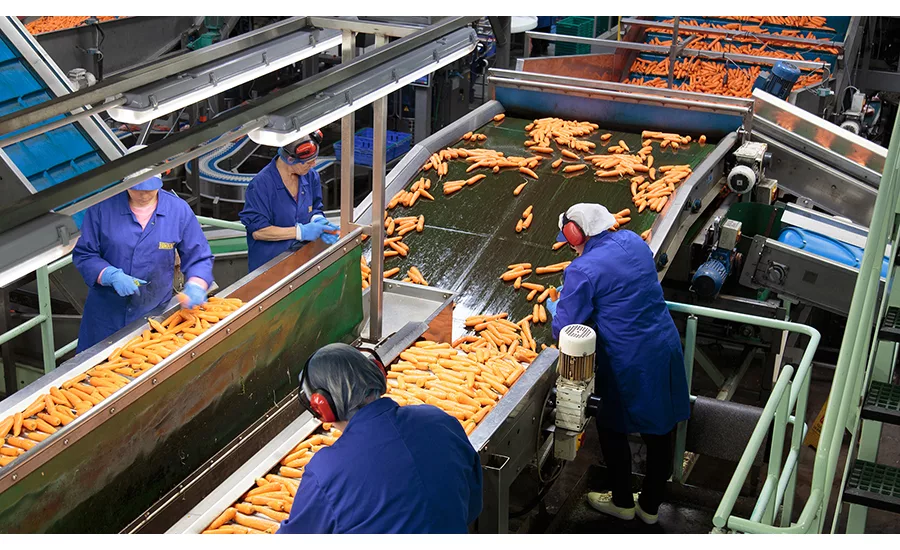
washing carrots

Huntapac washes and packs up to 400 tons of carrots a day, of which around 5% are used to make powder. Image courtesy of HRS Heat Exchangers

December 8, 2022

Established near Preston in northern England by William Hunter in 1942, Huntapac initially grew a range of crops for fruit and vegetable markets in the Northwest before starting to supply leading supermarkets almost 50 years ago. The company was a major producer of root crops (carrots and parsnips), salads and brassicas (such as cauliflower and broccoli) until a few years ago, when it decided to rationalize its operations and concentrate solely on the root crops. 

The business grows more than 1,300 hectares of carrots and parsnips across the UK, from Suffolk to Scotland, all of which are taken to the company’s factory at Holmes near Preston for washing and packing. With the increased focus on root crops, the company was keen to add value to 5% of the crop not suitable for its packing customers. After looking at a number of options, the company decided on the production of carrot powder.

“Five percent may not sound like a lot, but when you are washing up to 450 tons of carrots a day, it soon adds up,” says Huntapac’s commercial director Steven Kay. “We researched a few methods because there are lots of different drying techniques available, and we felt that the process that was right for use was to puree the carrots, put them over a drying drum and then mill the flake that results into a powder.”

In early 2020 plans began in earnest for the powder production line. As the first of its kind in the country, this took a lot of consultation between all the parties involved, including equipment suppliers such as HRS Heat Exchangers. 

The process begins when the carrots are diced and then pureed, after which they are fed into the heat exchanger. This consists of two HRS R Series rotary scraped surface heat exchangers placed in series, which raise the temperature of the carrot puree from 10°C to 60°C. As well as the heat exchangers themselves, HRS supplied two feed hoppers and an HRS BP Series positive displacement pump to feed the puree into the heat exchanger. The heat for the process is supplied from a dedicated steam boiler, and the line has a capacity of 500 kg of puree per hour. The warmed puree is then passed over a drying drum where it is dried to create a flaked product which is milled down into the finished powder.

“Pre-heating the puree before the drier performs two main functions,” explains HRS UK sales manager, Andy Ensor. “Warming the puree makes it easier to move through the line as it has less resistance, but the biggest benefit is that it reduces the amount of energy needed to dry the puree making the overall process more efficient.”

Production of carrot powder began in the first half of 2021, and the line now produces around 60 kg of dried finished product an hour. The carrot powder is produced under Feed Materials Assurance Scheme (FEMAS) accreditation and is used as an ingredient in animal feed. 

“With the tight margins involved in fresh produce, it is important to maximize the value of the crop which has cost you money to grow, and this line allows us to utilize the entire crop,” adds Kay. “The line has been designed to be able to handle other crops, but we have initially chosen to focus on carrots. And although we have had to make tweaks as you do with any new process, we are now very happy with the quality and of the product that we are producing.”

KEYWORDS: heat heat exchange heat exchanger produce produce processing equipment

Share This Story

Looking for a reprint of this article?
From high-res PDFs to custom plaques, order your copy today!
Recommended Content

JOIN TODAY
to unlock your recommendations.

Already have an account? Sign In

  • CJ Schwan’s Salina facility.

    Recipe for Growth: How CJ Schwan’s Powers Pizza Production with People and Automation

    Blending advanced automation with purposeful design, this...
    Plant of the Year
    By: Alyse Thompson-Richards
  • Paris Baguette rendering

    FOOD ENGINEERING’s 49th Annual Plant Construction Survey

    Food and beverage manufacturers continue to invest in...
    Plant Openings
    By: Alyse Thompson-Richards
  • Bottling machine

    How Optical and X-Ray Inspection Supports Bottling Safety and Quality

    By transitioning from legacy single-technology systems to...
    Food Safety
    By: Dan McKee
Manage My Account
  • eMagazine
  • Newsletter
  • Online Registration
  • Manage My Preferences
  • Customer Service

More Videos

Sponsored Content

Sponsored Content is a special paid section where industry companies provide high quality, objective, non-commercial content around topics of interest to the Food Engineering audience. All Sponsored Content is supplied by the advertising company and any opinions expressed in this article are those of the author and not necessarily reflect the views of Food Engineering or its parent company, BNP Media. Interested in participating in our Sponsored Content section? Contact your local rep!

close
  • Stainless steel conveyor system transferring cut food pieces—likely pasta or fries—through an enclosed industrial processing line using a flexible hose and screw conveyor in a manufacturing facility.
    Sponsored byHapman

    What’s Slowing Down Your Bulk Material Handling Process?

  • AI-enhanced technology in CIP operations
    Sponsored byEcolab

    Using AI to unlock new value from your CIP processes

Popular Stories

Ferrero Nutella Peanut

Ferrero Opens Nutella Peanut Production Line in Illinois

Walmart Milk Processing TX

Walmart Opens Third Milk Processing Facility

A man is working food safety monitoring on a desktop with three monitors. An open laptop is on the left side of the desk.

Number of Food Recalls Up: Bad or Good?

Promo for the 2026 Plant of the Year: CJ Shwan

Events

June 17, 2025

Refrigerated & Frozen Foods’ State of the Cold Chain

On Demand Kelley Rodriguez, Editor in Chief of Refrigerated & Frozen Foods, will be joined in this 60-minute webinar by industry experts to help unpack the latest research.

July 23, 2025

Decarbonizing Process Heat: What You Should Know and Next Steps

On Demand Driven by climate goals, business risk, client interest, and resilience considerations, food and beverage companies are increasingly turning their attention to decarbonizing their production processes.

View All Submit An Event

Products

Recent Advances in Ready-to-Eat Food Technology

Recent Advances in Ready-to-Eat Food Technology

See More Products

June 3 Webinar: Integrating Heating and Colling in Food Production


CHECK OUT OUR NEW ESSENTIAL TOPICS

Alternative ProteinAutomationCleaning/SanitationFabulous Food Plants

Food SafetyMaintenance StrategiesOEE

PackagingSustainability

Related Articles

  • Powder/bulk heat exchanger

    See More
  • APM Steam heat exchanger

    APM Steam Highlights Heat Exchanger Assessment and Testing Service

    See More
  • APV Plate Heat Exchanger FastFrame

    SPX FLOW Introduces Plate Heat Exchanger

    See More

Events

View AllSubmit An Event
  • May 22, 2019

    Key Essentials to Powder Handling: Increasing Consistency and Efficiency in High Shear Mixing

    ON DEMAND: Getting a consistent and seamless flow of powder ingredients from your powder handling equipment to your mixing equipment can be a challenge. Product quality, capacity and energy use all suffer as a result of inconsistencies in powder flow. Inconsistencies can affect future steps in the production process and lead to unnecessary down time.
View AllSubmit An Event
×

Elevate your expertise in food engineering with unparalleled insights and connections.

Get the latest industry updates tailored your way.

JOIN TODAY!
  • RESOURCES
    • Advertise
    • Contact Us
    • Food Master
    • Store
    • Want More
  • SIGN UP TODAY
    • Create Account
    • eMagazine
    • Newsletter
    • Customer Service
    • Manage Preferences
  • SERVICES
    • Marketing Services
    • Reprints
    • Market Research
    • List Rental
    • Survey/Respondent Access
  • STAY CONNECTED
    • LinkedIn
    • Facebook
    • YouTube
    • X (Twitter)
  • PRIVACY
    • PRIVACY POLICY
    • TERMS & CONDITIONS
    • DO NOT SELL MY PERSONAL INFORMATION
    • PRIVACY REQUEST
    • ACCESSIBILITY

Copyright ©2026. All Rights Reserved BNP Media, Inc. and BNP Media II, LLC.

Design, CMS, Hosting & Web Development :: ePublishing