Events
GRAS, Food Additives and Sustainability Emerge at IFT FIRST 2025
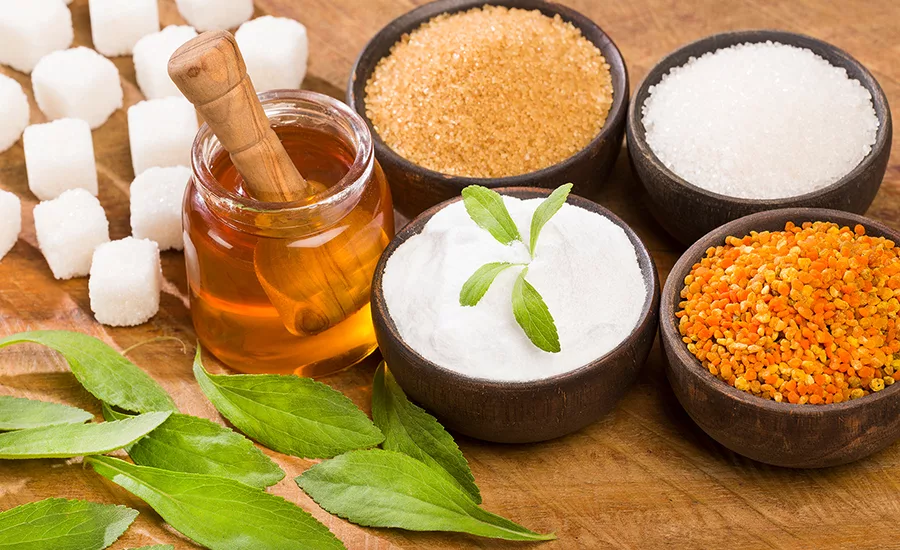
Photo courtesy of GettyImages/Luis Echeverri Urrea.
Sustainability, food additives and the future of the GRAS process – a few of the most pressing issues facing food ingredients – took center stage at IFT FIRST, which was hosted July 13-16 at McCormick Place in Chicago.
GRAS Regulations
Carly Pavia and Alexa Gallagher, managing consultants with Ramboll US Consulting, covered the generally recognized as safe (GRAS) designation during their presentation, “GRAS: Regulations and New Food Ingredients in the U.S. Market.”
If a product is approved as GRAS, then it does not need to go through FDA testing before it can be used. However, the product and/or its ingredients still require research. Pavia and Gallagher reiterate the data used in the GRAS exception must be publicly available, even if the research is performed by the company who makes the product, which can extend the timeline for receiving the exception.
The GRAS application has many parts, including the product’s characteristics, proposed use and dietary exposures. Even with the GRAS exception, a product still must meet standards of identity, meaning it needs to align with what consumers expect of it based on its name or category area.
“Especially here in the U.S., consumers do not always follow dietary guidelines, so any issues with a certain amount being consumed need to be communicated,” Gallagher says.
Once the GRAS exception application has been completed, companies can submit it to the FDA for approval or go to an expert panel outside of the FDA, which is referred to as self-GRAS.
“The self-GRAS process is usually quicker than the FDA, but it depends on the experts’ schedules,” Pavia says.
United States Secretary of Health and Human Services Robert F. Kennedy Jr. has said that he wants to eliminate the self-affirmed GRAS pathway, citing transparency of product ingredients. Removing the self-GRAS pathway would have an impact on the industry, as companies would need to notify the FDA of its products’ ingredients prior to their release. This would give the FDA more influence over which products are considered GRAS.
Food Additives
The GRAS exception was also covered in the keynote session “Food Additives: Reformulation and Regulatory Challenges.” In addition, the panel discussed the Make America Healthy Again agenda, which Kennedy Jr. has promoted.
The biggest question about the Make America Healthy Again agenda for food manufacturers is how they will make their products if synthetic colors are banned.
“There are not enough natural colors in the world right now to replace synthetic colors,” says panel member David Schoneker of Blue Diamond Regulatory Consulting. “On a one-to-one scale, there are currently not enough natural colors, but then when you factor in different weights to get the same amount of synthetic color, there are even less.”
Another question for food manufacturers is how much time it will take to reformulate products if they replace synthetic colors with natural colors.
“Consumers are resistant to change,” says panelist Lisa Navarro of Ramboll. “The No. 1 reformulating challenge is taste, but when you include supply chain and packaging challenges too, it could take at least a few years to reformulate products for these requirements.”
The panel also mentioned the Make America Healthy Again agenda in regard to the current administration’s handling of food products. Martin Hahn of Hogan Lovells LLP, one of the panel members, mentions that there is a different process than previous administrations, as companies now must look at both state and federal regulations.
“Companies should not base their ingredient decisions strictly on today’s regulations,” Hahn says. “They are constantly changing, especially with this administration.”
To close, the panel looked at what could improve the food additive industry and help both companies and consumers. Suggestions included the FDA reviewing more products to reduce states’ legislation challenges and making it mandatory for the FDA to review GRAS products. However, all five of the panel members agree that using technology and investing in food science would help the industry beat its challenges.
Food Efficiency
Kathleen Alexander, cofounder and CEO of Savor, led the session “Food Without Agriculture.” The session focused on how the current food system is inefficient since it does not use all the energy that goes into it. Crops require sunlight to grow, and they are then turned into food products or given to animals used for food products. However, not all the energy from sunlight that goes into the ground is used in photosynthesis to help crops grow, which makes the system inefficient.
“Beef is 0.05% efficient, and chicken is 0.15% efficient,” Alexander says. “The most efficient food product is palm oil at a 3% efficiency, which is still 97% inefficient.”
Alexander compares the food system’s efficiency with other industries, such as construction and auto, and finds that the food system’s efficiency is far lower. Most of the food industry’s improvements may not increase the food system’s efficiency, as it still requires sunlight and photosynthesis. Also, farming requires some emissions, which hurts the environment in the process.
However, there are other ways to create food that improve the food system’s efficiency. Any method requires carbon, hydrogen and oxygen, which narrows the possibilities. Starting with fossil carbon, waste carbon or captured carbon are the three most likely options, but not all of them have the capacity and/or current research to know that they would work. Captured carbon has the best system in place of the three, and it is what Savor uses. Compared to the current process, Savor’s way can reduce emissions by 98% with lower land and water use.
Sensory Analysis
Caroline Cotto, director of NECTAR, gave a sensory analysis of alternative meat products. NECTAR conducts blind taste tests and publishes reports on alternative meat products, and the company also hosts the TASTY Awards.
According to NECTAR’s 2025 research, which includes omnivore consumers, more people disliked plant-based products than liked them. However, some areas and products were more liked than others. For example, NECTAR’s research showed that plant-based bacon products were the least-liked category. Few of NECTAR’s studies focused on plant-based chicken products, as that area is further along in its development than other plant-based product categories.
“There are still opportunities for category leaders in plant-based areas,” Cotto says. “However, more research and development are needed for plant-based products before they can become the same or more-liked than non-plant-based products.”
NECTAR’s studies showed that plant-based products need to have a taste that consumers like to get their support, and consumers find it more important than being available at a lower price than non-plant-based products. Overall, soy-based products performed better in NECTAR’s research than mushroom- and mycelium-based products.
Looking for a reprint of this article?
From high-res PDFs to custom plaques, order your copy today!