Agentic AI: Should it Make Your Processing and Business Decisions?
In the AI world, the latest buzzword is “agentic AI,” which replaces — rather than augments — human decision making, but the data AI needs to make such a decision may not yet exist in many facilities.

AI agents use large language models (LLMs) and are often referred to as LLM agents. According to IBM, traditional LLMs produce their responses based on the data used to train them and are bounded by knowledge and reasoning limitations. In contrast, agentic AI technology uses tool calling on the backend to obtain up-to-date information, optimize workflows and create subtasks autonomously to achieve complex goals. Its end goal is to be trusted enough to do the total (autonomous) decision making whether it be retail operations, maintenance systems, forecasting and inventory control — and even food production systems.[1]
Autonomous agentic agents learn to adapt to user expectations over time, and their ability to store past interactions in memory and plan future actions without human intervention broadens the possibilities for real-world applications. Applications, for example, might include better control of supply chains, maintenance systems and industrial processes.
While agentic AI will dramatically upskill workers and teams — enabling them to manage complicated processes, projects and initiatives — the orchestration and governance of autonomously acting AI software entities will require advanced tools, sensors and strict guardrails.
As a recent McKinsey Report, “One year of agentic AI: Six lessons from the people doing the work,” says, AI agents can do a lot, but they shouldn’t necessarily be used for everything. Too often, leaders don’t look closely enough at the work that needs to be done or ask whether an agent would be the best choice to perform that work. [2]
In this article, I ask experts from companies with AI practices in retail, trade and tariff management, manufacturing workflows and industrial control for their varied experiences with agentic and embedded AI.
Today’s Agentic AI Plays Primarily an Assistant Role
AI is an ever-evolving technology, and while agentic AI programs are already taking the helm in some applications, in many cases, agentic AI serves as an assistant to human operators — not yet earning their trust for total control.
“Agentic AI is designed for autonomous action by equipping agents with the data and context needed to act on signals,” says Christopher Selden, senior director, product, Crisp. “Today, it functions best as an assistive layer under human judgment, oversight and control. Its strength lies in reducing latency — shortening the time from signal to decision to execution — through scheduling, alerting and suggested next steps that help teams move faster with confidence.”

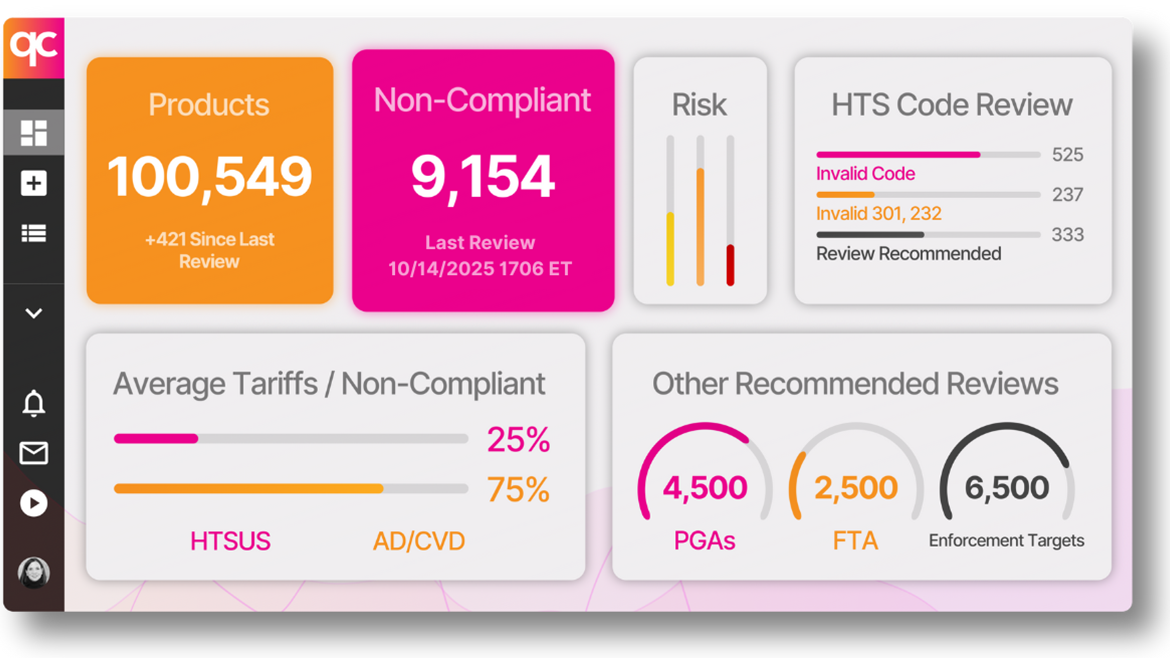
“Embedded AI in compliance systems today largely acts as an early warning system,” says Joe Morales, Quickcode.ai CTO & founder. “It scans product data, compares it against changing tariff schedules or agency requirements and alerts human teams to act. While manufacturers still make the final decisions on sourcing or supplier strategy, AI ensures they have timely, accurate insights to base those decisions on. In many ways, embedded AI is already acting as a digital compliance officer, ensuring that trade and regulatory risks are identified before they ripple through production or distribution.”
“The role of embedded AI today is really about amplifying human intelligence and expertise rather than replacing it, and I think that’s exactly where it should be at this stage of maturity,” says Glynn Newby, SAS global marketing manager for industry solutions. “When we look at how AI is being deployed in manufacturing environments right now, it’s fundamentally acting as an incredibly sophisticated pattern recognition and decision support system that processes information at a scale and speed that humans simply cannot match.”
Think about what happens on a modern production line, Newby adds. You might have hundreds or thousands of sensors generating data every second, and embedded AI systems can continuously monitor all of that information, identify subtle correlations between parameters, detect early warning signs of quality issues or equipment degradation, and flag conditions that require attention. The AI might recognize that a particular combination of temperature, pressure and vibration readings has historically preceded a bearing failure, allowing maintenance teams to schedule intervention before a breakdown occurs. But here’s the important part: the maintenance planner still makes the final call about when and how to address it based on production schedules, parts availability and their understanding of that specific equipment’s history.
“What embedded AI does exceptionally well is eliminate the noise and present actionable insights,” Newby says. “It can run thousands of scenario simulations to recommend optimal process parameters, forecast demand with greater accuracy by considering more variables than traditional statistical methods, and provide real-time alerts when conditions deviate from normal operating ranges. Embedded AI’s value comes from allowing experts to focus their time and cognitive energy on decisions that truly require human judgment rather than spending hours sifting through data looking for patterns.”
“We’re seeing early steps toward autonomy in areas like advanced process control and predictive maintenance,” adds Shahzad Khan, Yokogawa global system consultant, Life Business Unit.
Food and beverage operations depend on consistency, for example, in pasteurization and clean-in-place cycles, Khan says. “Embedded AI helps operators by identifying trends and suggesting adjustments to maintain compliance and reduce waste. A practical example is predictive maintenance using vibration sensors and analytics. In one case, AI detected abnormal trends weeks before a failure, allowing intervention that prevented costly downtime.”
Looking ahead, AI will evolve into agentic AI for tasks that require rapid, data-driven decisions, Khan says. “Supply chain scheduling and energy optimization are next in line, enabling manufacturers to respond to demand shifts without manual intervention. For now, its role is advisory; agentic AI is laying the groundwork for full autonomy.”
Agentic Control — How Soon?
Gartner Group suggests that by 2028, 33% of enterprise software applications will include agentic AI, up from less than 1% in 2024. [3] Is this realistic? What applications (e.g., business, PLM, maintenance or controls) will benefit the most from agentic-based AI implementations?
That 33% figure by 2028 seems realistic, especially as many applications already embed agentic capabilities (for example, customer support chatbots), says Crisp’s Selden. “The key question is effective, durable use across teams, which is achievable within that time frame, provided some important requirements are met. Agentic AI develops best in structured, repetitive, data-rich workflows where it can continuously learn and become more flexible and responsive to data inputs.”
“Yes, Gartner’s projection that a third of enterprise systems will use agentic AI by 2028 feels realistic,” says Quickcode’s Morales. In food and beverage, compliance is a prime candidate for early adoption. Unlike production processes, which involve physical risks, compliance involves rules, codes and documentation, which are all highly suited to agentic automation. The areas that stand to benefit most are:
- Trade compliance and ERP integration: Agents can automatically update classification codes in ERP systems when regulations change.
- Supply chain resilience: Agents can flag tariffs or regulatory risks before goods ship, enabling rerouting or supplier changes.
- Planning and forecasting: Tariff shifts can change landed costs dramatically; agentic AI ensures planning systems adjust in near real time.
“I think Gartner’s prediction is realistic if we’re careful about what we mean by ‘include agentic AI,’” says SAS’s Newby. “The key word there is ‘include’ — it suggests these capabilities will be present in the software, but that doesn’t necessarily mean organizations will be running these systems in fully autonomous mode. We’re more likely to see graduated levels of autonomy where the agentic AI capabilities exist and are being used, but often with varying degrees of human oversight depending on the risk profile of the decisions being made.”
“Where I see agentic AI making the fastest and most meaningful inroads is in supply chain and planning systems,” Newby adds. “These applications are ideal candidates because decisions are generally reversible, the risk profile is more about efficiency and cost than safety or compliance, and there are clear metrics to measure performance. The financial impact of a suboptimal decision in this domain is usually manageable, and you can course-correct relatively quickly, which makes it a good testing ground for more autonomous AI.”
“I think Gartner’s projection is realistic,” says Yokogawa’s Khan. “The complexity of modern manufacturing makes autonomous decision-making not just possible but necessary in certain areas. The biggest gains will come in advanced process control and predictive maintenance, where decisions often need to be made in milliseconds based on thousands of variables.”
In the food and beverage industry, maintaining consistent quality during pasteurization or cleaning cycles under changing conditions is challenging, Khan adds. “Agentic AI can learn and adapt in real time, reducing waste and improving compliance without waiting for human input. Beyond controls, planning and ERP systems will also benefit. When production schedules, inventory and maintenance plans are connected through AI, manufacturers can respond faster to demand fluctuations and avoid bottlenecks.”
Tools like Yokogawa’s OpreX Collaborative Information Server make this integration practical by centralizing data and workflows, which is critical for scaling agentic AI, Khan says. It’s not about replacing people; it’s about freeing them from repetitive tasks so they can focus on higher-level decisions. As these systems mature, supply chain optimization and energy management will follow. Agentic AI isn’t a silver bullet, but it’s a strong step toward making operations more resilient and sustainable.
Needed: Many and Good Quality Inputs
The decades-old computer axiom, garbage in → garbage out, holds truer than ever for agentic AI — but it’s even more critical, whether in retail, business or controls applications. “There are notable gaps to address for agentic AI-based controls, particularly around data quality, completeness, cleanliness and timeliness,” says Crisp’s Selden. “Poor inputs degrade outputs, control and recommendations — which are among the most compelling aspects of agentic AI —but these require well-structured data to be triaged effectively.”
“Organizations are increasingly aware of the data foundation required for AI controls to function,” Selden adds. A retail data platform like Crisp automatically ingests, normalizes and harmonizes a brand’s retail and distributor data. Ensuring that first-party sales and inventory data are sufficiently organized improves decision-making across functions, including supply-chain optimization. Similar data infrastructure and quality practices should be applied to other manufacturing domains — maintenance, production and quality control — to ensure reliable signals and actions.
For compliance data, inputs are improving but not always harmonized, says Quickcode’s Morales. “Many manufacturers rely on brokers or siloed spreadsheets, which limits visibility and speed. Agentic AI requires clean, centralized data to act effectively. At Quickcode, we’ve addressed this by automating ingestion of HTS updates, PGA requirements and tariff measures, ensuring the data foundation is both current and consistent. For manufacturers, the next step is ensuring this compliance data flows seamlessly into ERP, PLM, and supply chain systems, so agents can act on it without human bottlenecks.”
Agentic and Embedded AI Work in Progress
Crisp recently launched its AI Agent Studio for Retail. The Studio is built on Crisp’s structured retail data foundation and leverages deep industry expertise, providing the context agentic AI needs to perform reliably. The platform offers pre-built AI Agents to address retail’s most pressing challenges, including Monday Morning Reporting, which customizes and delivers sales reporting to teams and individuals at a preferred cadence; Category Management for assortment optimization and space planning; Promotional Planning and Execution for precision retail media marketing and measurement; as well as Supply Chain Monitoring and Alerting, and other critical retail functions to optimize resources. These solutions help teams navigate an industry marked by disruptions, tariffs and intense competition. The AI Agent Studio embeds LLM technology for conversational analysis by technical and non-technical teams alike, surfacing insights from vast retail datasets in seconds.
— Christopher Selden, Sr. Director, Product, Crisp
At Quickcode.ai, we apply agentic AI to one of the most overlooked but critical aspects of manufacturing operations, global trade compliance and tariff management. Our AI-powered platform automates information retrieval for HS/HTS code classification and continuously monitors regulatory changes across CBP, PGAs, and the USITC. For food and beverage manufacturers, this is essential. Every product entering or leaving the United States must be properly classified and compliant with evolving regulations, from FDA requirements to Chapter 99 tariffs. Agentic AI enables us to not only help classify SKUs quickly and consistently, but also proactively flag regulatory changes that impact supply chains, ensuring ERP and planning systems always work with compliant, up-to-date data.
— Joe Morales, CTO & Founder, Quickcode.ai
SAS has been in the analytics and AI space for 50 years, and our role in manufacturing has evolved considerably as these technologies have matured. At our core, we provide the foundational analytics platform that manufacturers use to make sense of their data and drive intelligent decisions. Our SAS Viya platform has become the backbone for many manufacturing organizations looking to implement machine learning, deep learning and increasingly, generative AI capabilities across their operations.
What’s particularly relevant today is how we’re embedding AI directly into manufacturing workflows rather than treating it as a separate analytical exercise. We’ve built industry-specific solutions that address real manufacturing challenges—things like process optimization, predictive maintenance systems and demand forecasting capabilities that feed into broader supply chain planning. These aren’t just theoretical tools; they are production-grade systems handling real-time data from sensors, MES and enterprise applications.
— Glynn Newby, Global Marketing Manager for Industry Solutions at data and AI provider, SAS
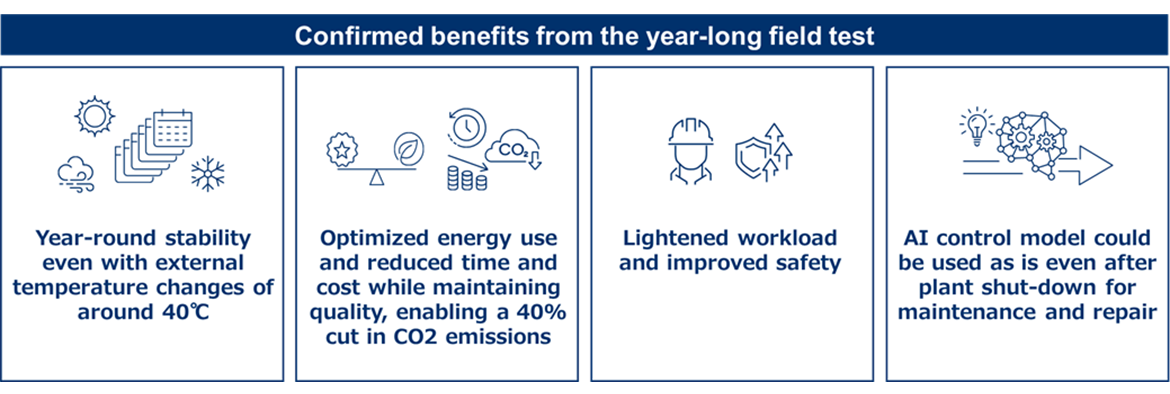
Yokogawa’s role is to help companies move from reactive operations to autonomous systems. For example, our reinforcement learning algorithm, Factorial Kernel Dynamic Policy Programming (FKDPP), achieved a world’s-first autonomous control deployment at ENEOS Materials’ plant, and it has been maintaining quality and optimizing energy for over two years without human intervention. That project showed how agentic AI can go beyond advisory roles and actively manage complex processes. The same FKDPP AI algorithm was also recently used to devise control models for the fermentation process of a craft beer in Japan, reducing fermentation time by about 30% without impacting the taste or quality.
In food and beverage, similar principles apply to temperature and flow control, where precision is critical for safety and compliance. But the potential goes further. We’re now extending AI into forecasting, planning and enterprise resource planning (ERP) integration. When real-time production data is combined with AI analytics, manufacturers can predict demand fluctuations and optimize inventory, reducing waste and improving responsiveness. In product lifecycle management (PLM), AI agents can analyze historical performance and consumer feedback to recommend design improvements or process adjustments, accelerating innovation cycles.
— Shahzad Khan, Global System Consultant, Life Business Unit, Yokogawa
Harnessing Data Tougher in Some Industries
The reality is that data infrastructure maturity is all over the map in manufacturing, says SAS’s Newby. “You have some organizations, particularly in semiconductors, pharmaceuticals or automotive, where sensor instrumentation is incredibly sophisticated and data quality is quite good. Then you have others, even large manufacturers, where data collection is spotty, inconsistent or siloed in ways that make it difficult to build reliable AI systems on top of it.”
The fundamental challenge with agentic AI is that it’s only as good as the data it receives, and it needs that data to be timely, accurate and contextually rich, Newby says. “If you’re going to let an AI system make autonomous decisions about process parameters, maintenance actions or inventory levels, you need high-frequency, reliable sensor data with proper calibration and maintenance. We see too many situations where sensors are degraded, miscalibrated or simply not monitoring the right variables. There might be temperature sensors but not pressure sensors, or vibration monitoring on critical equipment but not on supporting systems that could provide early warning signals.”
What really needs to happen is a systematic assessment of data readiness before implementing agentic AI, Newby suggests. “Manufacturers need to map out what decisions they want the AI to make and then work backwards to understand what data inputs are required, at what frequency and with what level of accuracy.”
The good news is that this infrastructure investment has value beyond just enabling agentic AI, according to Newby. “Better data collection and integration improve decision-making across the board, whether humans or AI are making the decisions. But we need to be realistic that many manufacturers will need to make significant upgrades to their data infrastructure before they’re truly ready for autonomous AI systems. The organizations that have been investing in digital transformation and Industry 4.0 initiatives over the past five to ten years are in much better shape, while those that have deferred these investments will find that data readiness is a real barrier to agentic AI adoption.”
Security not an Afterthought
Security and governance are non-negotiable when deploying agentic AI, says Yokogawa’s Khan. “Autonomous agents need access to operational data and control networks, which demands zero-trust architectures, encrypted communication and strict role-based access. Security discussions often start late, but they need to be part of the design phase.”
“We integrate secure-by-design principles into control systems and enforce guardrails, so AI operates within safety limits even under sudden disturbances,” Khan says. “In food and beverage, similar measures will be essential, along with anomaly detection for cyber threats and compliance with food safety regulations. Continuous monitoring and clear governance frameworks are key. We need to define when AI acts independently and when human oversight is required. That balance ensures transparency and trust as we move toward more autonomous operations.”
“Data privileges and role-based access should limit agents to the minimum data and actions needed to achieve their objective,” says Crisp’s Selden. “Guardrails include human-in-the-loop approvals for high‑impact actions, along with thresholds and limits on actions and resource use.”
Observability is equally important: it is important to maintain full audit logs of agent prompts, tools invoked, decisions taken, timestamps and outcomes. Continuous evaluation and quality control can help catch data or model issues before they cascade.
Safe agentic AI begins with data governance at the core. Clear ownership, policies and controls across data access will help ensure that organizations can scale automation with accountability and trust, concludes Selden.
In compliance, the security risks are twofold: data integrity and decision execution, says Quickcode’s Morales. If an agentic AI were compromised, incorrect tariff codes could be assigned and lead to fines, shipment holds or even legal exposure. To mitigate this, we enforce:
- Audit trails: every decision is logged and explainable.
- Granular permissions: agents can classify and flag to a point but final classification and critical filings require human oversight.
- Continuous monitoring: both for system anomalies and for external regulatory changes.
Manufacturers can adopt agentic AI safely by ensuring compliance data is secured with the same rigor as financial or IP systems, Morales says.
Do You Trust Your AI Agent? Make Sure it’s Secure
When you move from AI that makes recommendations to AI that takes autonomous actions affecting physical processes, inventory movements, financial commitments or maintenance activities, you’re dramatically expanding the attack surface and potential consequences of cybersecurity breaches. This needs to be front and center in any agentic AI implementation strategy.
Let’s start with the most obvious concern: if an agentic AI system has the authority to adjust process controls, modify production schedules or make procurement decisions, then compromising that system gives an attacker direct ability to cause physical harm, disrupt operations or inflict financial damage. This is fundamentally different than breaching a system that contains data or provides recommendations.
The AI models themselves become critical assets that need protection. These models embody significant intellectual property; they’ve learned optimizations and patterns that represent competitive advantages. But they’re also potential vulnerabilities.
There is growing research around adversarial attacks on AI systems where carefully crafted inputs can cause models to make incorrect decisions or reveal information about their training data. In a manufacturing context, an attacker who understands how your AI models work could potentially craft inputs that cause the system to make decisions that benefit them (i.e., attackers). Imagine manipulating demand forecasts to cause overproduction of certain items or triggering unnecessary maintenance that creates production disruptions.
The integration points between agentic AI systems and operational technology create additional vulnerabilities. Traditionally, manufacturing control systems have been relatively isolated from IT networks and the internet, which provided some security through obscurity and isolation. But agentic AI systems need to connect to data sources across the enterprise and potentially external information sources. Every one of those connections is a potential entry point for attackers. We need to think carefully about network segmentation, secure APIs, authentication and authorization mechanisms, and monitoring of all these integration points.
There’s also the insider threat dimension, which becomes more concerning with agentic AI. If someone with authorized access to AI systems wants to cause damage or steal information, they may be able to do so in ways that are difficult to detect. They might subtly modify model parameters, inject biased training data, or adjust decision rules in ways that serve their purposes while appearing legitimate. We need comprehensive audit logging, separation of duties and anomaly detection that can identify suspicious patterns in how AI systems are being accessed and modified.
At SAS, our vision is to be the most trustworthy data and AI partner that powers the world’s decisions. We’re approaching these security challenges through multiple layers of defense. We’re building security into the SAS Viya platform itself with robust authentication, encryption and access controls. We’re developing monitoring and anomaly detection capabilities specifically designed to identify suspicious behavior in AI systems. And we’re helping customers implement governance frameworks that establish clear policies and procedures for managing AI systems securely.
This is an evolving challenge, and the security community is still developing best practices for agentic AI systems. Manufacturers who are implementing these capabilities need to work closely with their cybersecurity teams, engage with vendors who take security seriously, and be prepared to invest in security capabilities that go beyond traditional IT security.
The potential benefits of agentic AI in manufacturing are real and significant, but they can only be realized if we build these systems with security as a fundamental design principle rather than a feature we add on later.
— Glynn Newby, Global Marketing Manager for Industry Solutions at data and AI provider, SAS
References:
[1] “What are AI agents?” Anna Gutowska, AI Engineer, Developer Advocate, IBM, (accessed 28 Oct 2025)
[2] “One year of agentic AI: Six lessons from the people doing the work,” 12 Sept. 2025, Lareina Yee, Michael Chui and Roger Roberts with Stephen Xu, McKinsey (accessed 28 OCT 2025)
[3] “Top Strategic Technology Trends for 2025: Agentic AI,” 21 October 2024, Tom Coshow, Arnold Gao, et al., Gartner.
Nestlé Upgrades its Digital Core with AI and Automation at Scale


Nestlé has successfully completed the first part of a major upgrade of its global digital core with what’s said to be the world’s largest-ever SAP upgrade to SAP S/4HANA Cloud Private edition. This milestone in Nestlé’s digital transformation strengthens the company’s ability to drive growth by improving its operational efficiency and its responsiveness to evolving consumer trends. It will also free up resources to invest in Nestlé’s iconic global brands.
Nestlé’s upgrade to the next-generation SAP technology will enable the deployment of AI at scale to achieve better insights as well as the automation and improvement of processes across the company’s business operations. It includes embedding SAP’s AI copilot directly into Nestlé’s core business systems to help employees access insights, automate routine tasks, and make faster, more informed decisions. This will help Nestlé better respond to changing consumer trends and retailer needs and improve efficiency in areas such as supply chain management, procurement, order fulfilment for retailers and investment prioritization.
“Driving growth through innovation is a top priority,” says Anna Manz, Nestlé CFO and responsible for Integrated Business Services. “We are transforming our business to invest more boldly in the best opportunities. We need to combine great consumer insights and innovation with flexibility and scale to provide great quality products to consumers around the world when where and how they want them. This upgrade will help us build multi-year innovation pipelines, more agile production and digital-first marketing and sales platforms for areas like cold coffee, therapeutic pet food and modern cooking aids.”
The move means that 50,000 Nestlé users across 112 countries in the company’s Asia, Oceania and Africa region are already able to benefit from the new system’s capabilities. Thanks to Nestlé’s streamlined tech architecture, the company will be able to complete the upgrade across the rest of the Group within only two years, significantly faster than similarly sized peers.
The upgrade will also include:
- Next-generation intelligent order fulfillment for retail customers in-store and online, matching supply with demand in real time. With greater reliability and flexibility, it will ensure shoppers always find the products they want, when and how they want them.
- Real-time, data-driven decision-making for consistency across reporting and planning processes.
- Automated and standardized procurement processes in the cloud across global operations, meaning real-time spend visibility and significant cost savings.
Looking for a reprint of this article?
From high-res PDFs to custom plaques, order your copy today!