Waste Reduction
How Food Manufacturers Can Prevent Conveyor Carryback
Carryback presents not only a sanitation concern — it also leads to product loss and maintenance challenges. Here are some strategies for recovering product and keeping conveyors running smoothly.
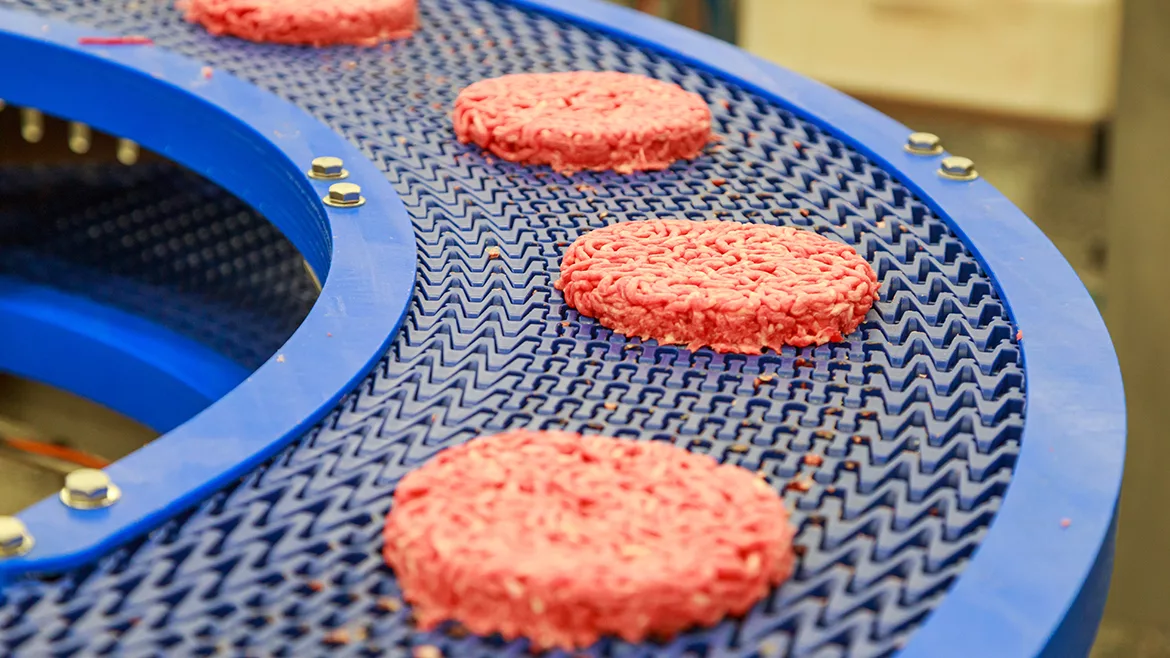
Conveyor carryback is more than just an inconvenience for cleaning and sanitation teams to clear out at the end of their shifts. Instead, it is a significant problem that, if left unaddressed, can halt operations across your entire food processing facility.

Ryan Jackson
Product Manager, Flexco. Image courtesy of Flexco
When conducting site walkthroughs of food processing facilities, one thing becomes apparent: many are not prepared to tackle carryback at their current production levels.
In short, those without a plan in place to remove carryback from their belts are destined for unscheduled downtime. So, how can operators better ensure that they are prepared for the effects of carryback? Through intentional, preventative maintenance measures.
What Is Carryback and Why Does It Matter?
“Carryback” is the term used when product being conveyed sticks to the belt surface beyond the point of discharge. Quite literally, it is “carried back” away from the head of the conveyor toward the rear, instead of to the next part of the conveying process.
Carryback is indiscriminate — no matter what kind of food product is being conveyed, or what type of belting is being used, it is everywhere. From slimy chicken skin to sticky pastry frosting, unaddressed carryback can find its way into every nook and cranny of the conveying system.
Often, the biggest challenge with carryback is that, eventually, gravity takes over. As a result, the material that was stuck to the return side of the belt either falls to the floor below or becomes lodged into conveyor components such as rollers and bearings. Once that material gets to the return side, it is typically unusable for its intended purpose and loses considerable value, along with reducing the plant’s production volumes and profitability.
EXPLORE MORE


Even in scenarios where the food product falls into a secondary location such as a pan or basin, hygiene concerns often mean that product is only good for secondary processes/products or rendering. For example, what was going to be grocery-store quality chicken breast now turns into cheaper mix-ins for pet food, drastically diminishing its end-user value. Maximizing throughput has become especially important today as food costs and the global population continue rising, emphasizing the importance of minimizing carryback and eliminating product loss.
While the problem exists on nearly all conveyors, the solution tends to be quite varied. There is no silver bullet for solving carryback, but intuitive conveyor design and proactive aftermarket maintenance with state-of-the-art solutions have become common remedies for production facilities.
Carryback Reduction Methods
In terms of production efficiency, carryback is generally broken down into two categories: product recovery and product removal.
Product recovery is preferred, as the goal is to keep 100% of food product moving through production and onto the next stages. This helps maximize production efficiency and operating profit and theoretically minimizes unscheduled downtime periods.
Product removal occurs when the processor is not concerned with having food byproduct continue through the system and simply wants it removed from the belt, rather than recycled into fresh product. This typically involves placing a catch pan beneath either the transfer point or somewhere along the return side of the belt so that as product is removed it does not fall onto the floor to be later removed, as well as the pan replaced.
While this method can effectively keep product off the floor, it periodically requires extra labor throughout shifts to remove excess product from the pan and prevent overflow. Most processors would rather allocate this labor for other pressing tasks that keep the plant humming along.
One Solution: Belt Scrapers
Another frequently used tactic for carryback prevention is the installation of a scraper at or near the discharge end of the conveyor, or somewhere along the return side.
Typically made from stainless steel, plastic and/or other food-grade materials, scrapers take on a variety of forms, ranging from simple, stationary bars of UHMW to engineered, fully tensioned products.
Static cleaners offer the lowest upfront cost, and as such, maintenance teams typically use these simple types first. The primary issue with static or homemade scrapers is the fact that, after short run time periods, the blades wear and no longer touch the belt or remove product with the initial efficiency.
Consequently, these scrapers require constant maintenance attention (which rarely happens), resulting in product that is not adequately removed. Static cleaners also use different types of fasteners that are often in the flow of the product and do not offer appropriate hygiene standards, thus creating another complication for operators to consider.
The Most Effective Approach
Simply put, the most effective belt scrapers are intentionally engineered models. Many such solutions utilize specially profiled blades offered in a variety of materials, maximizing cleaning effectiveness across different food types.
For example, a metal-detectable UHMW blade may be used to clean dried chocolate from a PU belt via chiseling action, while a polyurethane blade (one with a softer tip) may be better suited to clean wet or oily materials and residues.
These engineered cleaners achieve superior performance through a key factor: their tensioning systems.
Integrated tensioners maintain constant contact between the blade and the belt, enabling the tip to function as a squeegee or a chisel as needed. Tensioners are generally the only way to maintain constant contact between the blade and belt.
Maintaining contact becomes even more challenging when using a plastic modular belt, as the effective diameter varies as the plastic modules travel around the sprockets, making continuous contact impossible with a static-mounted solution.
Taking Action Against Carryback
The effects of carryback have long hindered plant managers, as finding the right solution has been a challenge, at least until the last decade or so.
With increased visibility of engineered cleaner solutions, investment in dedicated belt conveyor development teams, and an ever-expanding network of conveyor solutions providers and distributors, access to belt cleaning technology has never been easier.
For the most effective deployment of belt cleaning solutions, operators should utilize the experts around them: find key gaps across your belt conveying process alongside your technicians, research the solutions available to you through your suppliers, and install the belt cleaner that makes the most sense for your application.
Whether the goal is to reduce unscheduled downtime, increase yield or provide safer and more sanitary working environments, proactively taking measures against carryback protects you, your workers and the communities that you feed.
Looking for a reprint of this article?
From high-res PDFs to custom plaques, order your copy today!