Cross-Functional Food Safety: Breaking Silos to Drive Safe Food Manufacturing
July 14, 2026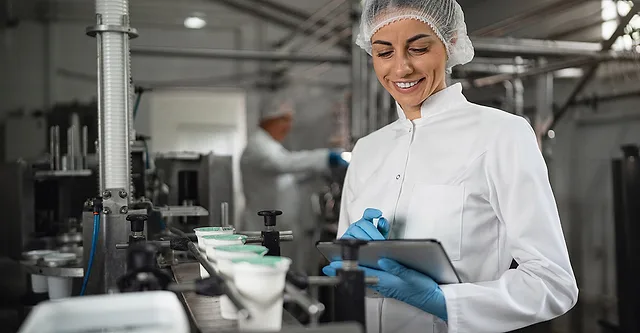
Cross-Functional Food Safety: Breaking Silos to Drive Safe Food Manufacturing
July 14, 2026
Food manufacturers are required and expected to operate in a clean and safe environment, but how and why they pursue food safety is shifting.
Though regulatory and customer demands continue to tighten, recalls and outbreaks of foodborne illnesses often drive an increased focus on safety, says Bonna Cannon, president, owner and principal consultant for Bonnafide LLC.
"It definitely has evolved, but I will preface that," Cannon says. "When I say it's evolved, it's not always been a voluntary revolution or evolution. I feel, unfortunately, it's really driven out of that reactive notion to recalls (and) death counts, unfortunately."
And while food safety is often the responsibility of quality teams, food safety and quality are not one in the same.
"Some manufacturers (a lot of them) still do point to quality for food safety, and while there is a movement to more of a shared ownership of food safety as a fundamental responsibility of the business, there are still many leaders that need to learn more to make this a broader reality," says Dr. Angela Anandappa, president and CEO for the Alliance for Advanced Sanitation.
Taking a comprehensive, cross-functional approach to food safety can not only improve operations, enhance product safety and strengthen compliance, but it also gives employees the tools to carry out safety measures across departments and processes.
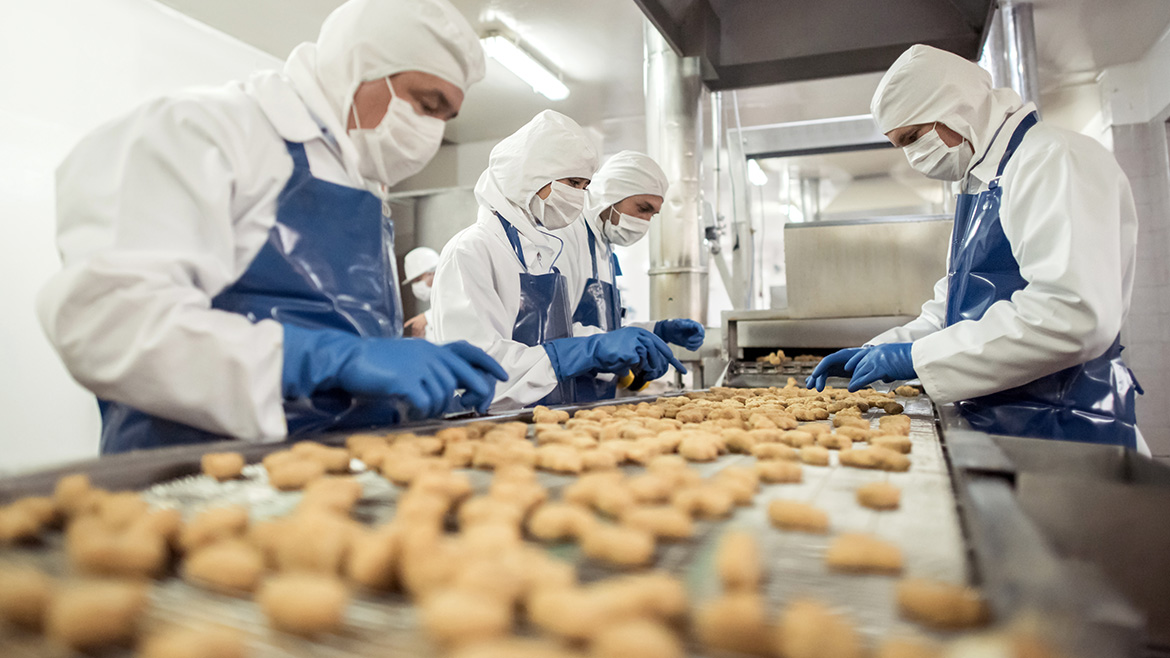
Photo courtesy: andresr / Getty Images
Building a Culture of Food Safety
When it comes to across-the-board food safety acceptance and advancement, it starts at the top. Manufacturing leadership must understand the "why" behind food safety measures and invest in their implementation — not only to avoid costly recalls but to earn buy-in from all employees.
"I've seen some amazing examples of operations leaders that walk the talk, and they're actually now food safety officers in their company," Cannon says. "By the same token, if you continue down that mindset of siloism, not empowering people across the board, because, for example, if I'm in a company and I'm a food safety leader, I am a pretty bad leader for that company if I see efficiency and operations issues and I just keep my mouth shut because that's not my area. That's unfathomable. You're costing the company money. We've got to get that cross-functional mindset going with people. In doing that, again, we continue to break down those barriers."
Looking for a reprint of this article?
From high-res PDFs to custom plaques, order your copy today!
Food manufacturing leadership must also be open to receiving feedback from employees — and even welcoming it — even if what they report is painful or expensive.
"Creating a culture of inclusion where team members see themselves (all stakeholders from the different functions) as part of one team is a cultural shift that can help teams really involved," Anandappa says. "When reporting structures and budgets are at odds with each other, there is friction, and a loss of cohesion."
Additionally, food safety and sanitation teams need to be brought into product development and facility design phases from the very beginning — not toward the end — to ensure all bases are covered.
"In my experience, many C and VP-level leaders still fail to include the sanitation team in leadership decisions, in including them in product development discussions often due to a lack of resources and personnel availability," Anandappa says. "This is a failure in leadership. The true barrier is the failure of leaders to properly resource their teams and failure to hire for the long term."
Practical Solutions
Food safety must be considered long before production begins, says Dr. Kantha Shelke, principal, Corvus Blue LLC. It must begin with product development.
"Map the full hazard spectrum — biological, chemical, physical and allergenic — against the formulation itself, not as an afterthought," Shelke says. "Intrinsic factors like water activity, pH and preservative systems are simultaneously safety controls and quality levers; one adjustment can move both shelf life and risk."
Ingredients themselves present risks, Shelke says. Manufacturers should test for economically motivated adulteration, contaminant and lot-to-lot variability, along with gaps in documentation and various certifications. Undeclared allergen cross-contact, whether the fault of the supplier or the manufacturer, is also a major concern.
"With undeclared allergens continuing to be the leading cause of FDA food recalls, one cannot afford to ignore them," Shelke says. "What further confounds this complicated issue is that an allergen is the one hazard one cannot cook out. There's no kill step, so control is entirely preventive, entailing validated changeover cleaning, smart production sequencing, rework discipline and verified incoming ingredients. Critically, the label itself becomes a safety control, fusing quality and safety into one. Almost always, allergen recalls are preventable and when they happen, they are essentially failures of process."
Shelke also recommends considering the environmental changes and potential hazards products will face during transport and at the point of sale.
"Anticipate how the product will behave under real-world temperature and fluctuating humidity abuse in distribution and on shelf," she says. "Building in safety at the bench is more cost-effective than reformulating or recalling post-launch. This is particularly important with emerging ingredients becoming the norm rather than the exception in new food and beverage products."
At the facility level, food safety and sanitation teams need to be involved from the beginning of any expansion, optimization or greenfield project.
"It needs to be considered from the start," Anandappa says. "Thinking about pests, humidity, utilities, airflow, weather patterns, designing with traffic and transportation in mind during expansion and design are just the start but so important in the end point and food safety outcomes."
Cannon agrees, noting control engineers should also be included in food safety conversations, since they often fully understand production processes and how they’re connected.
"It's a time investment to bring them along on the journey, but they understand the intricacies of the inside of processes in large, highly automated plants to a degree, in some cases, nobody else in the plant understands it that well," she says. "They're definitely an often overlooked powerhouse, in addition to your project managers, your mechanical engineers that design the process overall, or your chemical engineers."
Beyond engineering and operations teams, all employees on the plant floor should feel empowered and supported to follow food safety protocol, even under time and cost pressures.
"People, especially if I'm the operations leader, are going to notice if I push off a kill step or something like that, just this one time to make production," she says. "If they see me very thoughtfully making the right decision, and it may take several instances of that, they're going to know when they make those decisions, they're going to be supported. Because normally these things don't happen nine to five. It's going to happen on swing shift, on the midnight shift. If you've set that expectation and people know they'll be supported and doing the right thing, they're going to have your back."
Advanced automation and artificial intelligence (AI) solutions can help food manufacturers collect and analyze data in support of food safety programs, but manufacturers must have a solid foundation before these tools become beneficial, Cannon says.
"There is still a lot more opportunity to grow," she says. "We've got some amazing tools now that we've never had in our wheelhouse with AI to look at data in ways we've never looked at it previously. And so that might be the next step into getting us into a more proactive mode rather than a reactive mode."
While it takes time, effort and understanding to develop a cross-functional food safety culture, it’s worth the effort, Cannon says.
"I would like to see more cross-functional engagement — decentralization of that function so that it lives across the organization," she says. "I don't think we'll ever get away from the quality and food safety departments. We need those just like we need the operations department, supply chain, etc., but I would just like to see it more integrated so that it works and it flows with the business as a whole. Because at the end of the day, it also can make or break your profit margin. And definitely there are organizations out there that have discovered that and embrace it wholeheartedly."