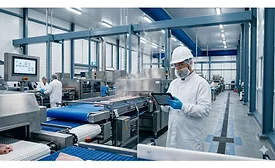
With the virtual twin in place, teams can “fly through” the factory before it exists, test different layouts, and watch the flow of parts, people and robots to see where space, time or energy will be wasted.
Regulatory bodies say you need to monitor temperature in your cold storage facilities and leave a lot of leeway in how and when to do it. Fortunately, the most rudimentary capabilities of today’s wireless temperature devices and data collection systems more than meet regulatory demands.
The AI-powered robot uses advanced sensors and real-time data collection to detect equipment and safety risks, helping keep operations running smoothly while protecting the people behind them.
For its 10th annual State of Smart Manufacturing Report, Rockwell Automation surveyed 1,560 manufacturing leaders about the internal and external challenges they face and how they’re using technology to address them.
Food producers have worked on a very specific problem: How can we crack, separate and prepare thousands of eggs per hour — without adding another 20-ft. machine to the production floor?
Achieving a high OEE score has been elusive in the past as processors grapple with where to begin in troubleshooting OEE issues. The future of OEE, with the help of AI technology, will help manufacturers find the most miniscule of line problems and be on top of their game.
Today’s filling machines can achieve extremely accurate and precise fills, and real-time monitoring and maintenance prevent wasteful overfills, underfills, and sporadic and inaccurate fills.