Food Safety & Quality Management: The Overarching System You Can’t Be Without
Food safety and quality management systems are well established, and they can automatically document key data points and prepare/print audit reports.
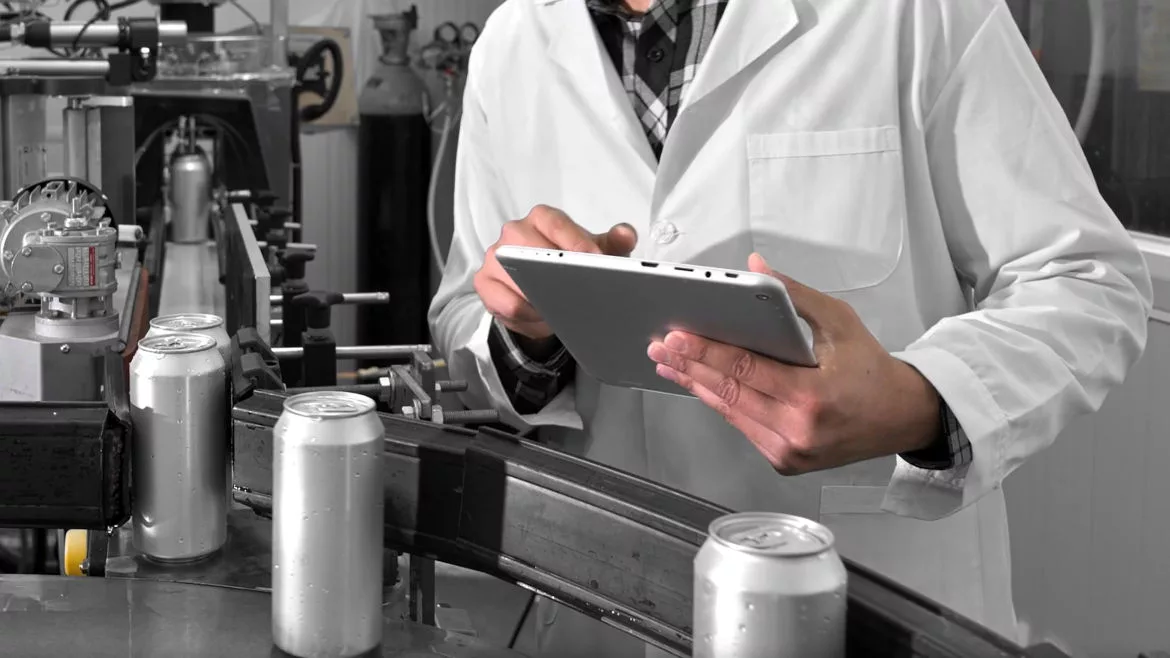
Downeast Cider, with the help of the Revolution Group system integrator, changed its mode of operation from 50 spreadsheets to run its business to Plex MES, which provided a single source of data visibility, reduced inventory carrying costs by 10% and reduced the cost of good sold by 17%. After just one month of adoption in 2023, the company reported it highest sales month ever. Plex lets operators get control of the entire process from wireless or wired equipment.
Food Safety and Quality Management (FS/QM) (aka FS/QA) systems help manufacturers get a handle on their process, improving real-time decision making, increasing traceability, recording corrective action, and automating documentation and audit readiness for FDA, USDA and other regulatory agencies.
Many of the quality processes in FS/QMs are not new. According to Steven Burton, Icicle Technologies founder and CEO, functions like in-line checks, GMP/GHP observations, sanitation validations and automated deviation alerts have been fully digitized in Icicle for nearly a decade.
“From day one, Icicle’s core design philosophy has been to eliminate fragmented data by capturing operational and quality data at the source and integrating it into a centralized, real-time ‘single source of truth,’” Burton says. “This approach enables dynamic traceability and actionable intelligence throughout the organization.”

For example, inventory transactions recorded during production or logistics automatically power instant recall reports, Burton adds. Quality checks integrated with IoT devices support real-time monitoring and automatic generation of Certificates of Analysis, reducing manual work and human error.
Digitizing quality processes on the plant floor addresses the critical challenge of fragmented data and labor-intensive, paper-based audits that slow down quality management and increase the risk of compliance issues, says Jim Bresler, director of product management, food and beverage, at Plex by Rockwell Automation.
“Plex’s Quality Management System (QMS) enables manufacturers to streamline these processes by integrating real-time data capture from machines, measurement devices, digital check sheets and connected plant floor systems,” Bresler says. “This reduces manual data entry errors, supports real-time decision-making and provides instant visibility into quality metrics.”
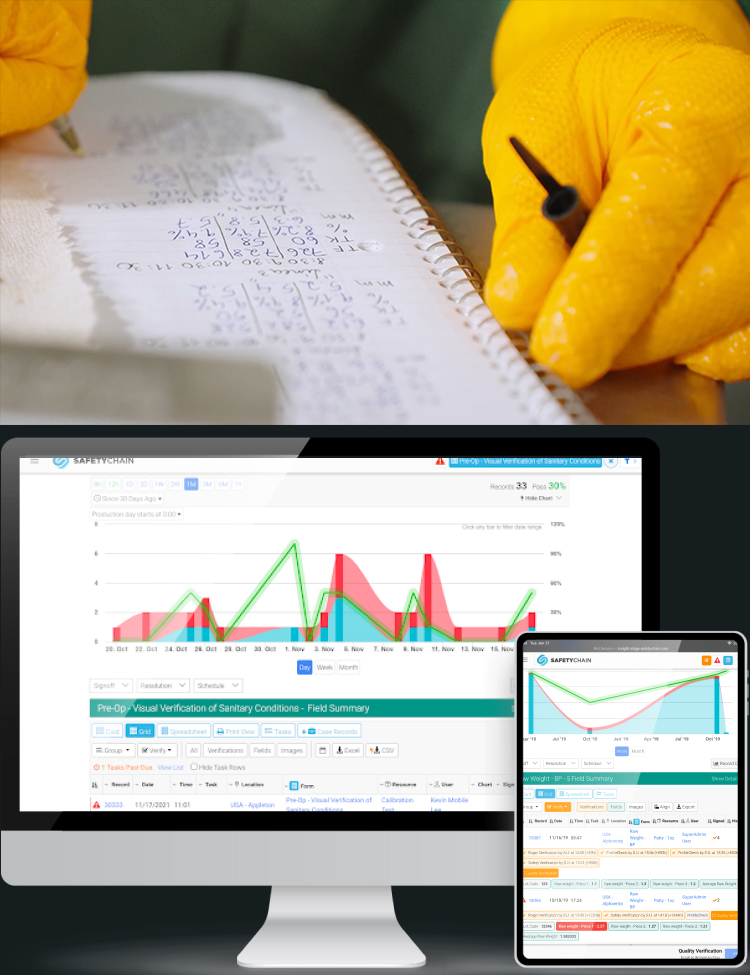
“What’s new is the ability to digitize any process within the four walls of your facility and beyond using a single digital plant management platform,” adds Ruth Bitterman, SafetyChain continuous improvement coach. Digitization is no longer just about replacing paper — it’s about transforming how food and beverage manufacturers manage risk, improve productivity and drive profitability.
“For example, a digitized sanitation program will identify if a check got missed, sending an automated alert for corrective actions,” Bitterman adds. This minimizes risk by focusing immediate attention directly on a potential issue before it becomes a serious problem down the line. It also allows for trending of data to spot potentially problematic areas, e.g., assisting in preventing biofilm and harborage areas from forming. In addition, digitization lowers the cost of compliance by reducing the time and resources needed to prepare for audits because the required compliance data is accessible in just a couple of clicks.
Processor Uses Plex QMS to Address Traceability and Audit Readiness
Shank’s Extracts, a specialty ingredient, flavors and extracts manufacturer, implemented Plex QMS to address challenges related to traceability and audit readiness. Before adopting the system, they relied on manual data entry, which often resulted in errors and inconsistencies. With Plex QMS, they centralized over 2,400 active formulas and more than 3,300 SKUs in a single system, achieving 99.9% inventory accuracy through real-time tracking. This transformation enhanced their audit readiness and operational efficiency by eliminating manual processes and improving data accuracy.
Additionally, Shank’s Extracts reported increased production efficiency due to the system’s real-time alerts and automated workflows, allowing them to respond more quickly to quality deviations. This proactive approach to quality management has strengthened their ability to meet stringent regulatory requirements while maintaining consistent product quality.
Food Manufacturers Slow on the Uptake
So, with all these benefits in reducing paperwork and manual labor, why are processors slow to install digital systems? According to the “2024 CRB Horizons Digital Age of Food Manufacturing Report,” only 5% of more than 300 food and beverage company respondents reported they had fully adapted digital facilities with autonomous and self-optimizing operations, while 5% were still totally manual with no automation. The rest are in between.
The CRB report found that 17% of food and beverage manufacturers reported digital islands with non-integrated automation; 41% said they had connected facilities incorporating some automation and integration; and 32% of manufacturers noted they had digital and integrated facilities with predictive, real-time analytics.
EXPLORE MORE


In the same report, productivity, which pertains to operations, was ranked highest (70%) among benefits of automation and Industry 4.0 with quality at 55% (second highest).
FS/QM Suppliers Have Done Their Homework
To make adoption of digital FS/QM systems easier, suppliers have taken several approaches to make the change faster, easier and affordable.
“We learned early on that even the most advanced food safety and quality software won’t gain traction if FS/QA teams are hamstrung by limited budgets,” says Icicle’s Burton. “So instead of building a tool just for compliance, we built a platform that delivers daily value across the entire operation, from production and logistics to maintenance and sanitation. This enterprise-wide approach drives ROI on the profit side—not just the compliance side—making adoption a strategic win for the whole company.”
By fostering cross-departmental alignment, FS/QA teams gain the internal support they need to fully leverage features like automated generation of HACCP, HARPC, TACCP, and VACCP plans, adds Burton. These tools help processors get up and running quickly and confidently with globally recognized standards.
SafetyChain has prioritized facility-wide accessibility in a variety of ways, Bitterman says. “First, our pricing model removes per-user and facility limits. Our platform can also run on any device, mobile or desktop, which accelerates deployment and supports paperless monitoring of preventive controls, even across multiple locations. The platform can even run off-line for locations without a Wi-Fi connection, then sync once a connection is established. We have integration capabilities with a variety of ERP and other software systems. Additionally, we accelerate onboarding through pre-built templates such as HACCP, GFSI (like BRC and SQF), and FSMA compliance, which are customizable in a no-code environment.”
“Adoption hinges on ease of integration, user-friendly interfaces and scalability,” Bresler adds. Plex QMS is designed to seamlessly integrate into existing manufacturing environments through open APIs and modular deployment options, which means food processors can start small and scale as their needs grow. The cloud-native architecture of Plex QMS also makes it accessible from anywhere, allowing teams to access real-time data on quality, compliance and production metrics from any device.
To lower the barrier to adoption, Plex also offers industry-specific templates and pre-configured workflows that address common quality and compliance challenges in the food and beverage sector. This reduces the setup time and ensures that the system can quickly start adding value without extensive customization.
“While we’re focused on delivering the best technology in the market, not the cheapest, we’ve developed a flexible pricing model that scales from artisanal producers to multinational enterprises,” Burton says. Features like unlimited users per facility support named user accountability without penalizing collaboration, which is critical in a highly regulated environment.
Toward a Unified FS/QM, Production, ERP and Maintenance System
ERP systems handle business; MES, manufacturing; SCADA, processing; Inventory systems manage the warehouse; CMMS, maintenance; and FS/QM, food safety and quality management/assurance. Seems like a lot of fragmentation — with wholesale integration needed to build a unified system. But realistically, what can be expected of a FS/QM system? Is it possible to unify any of the above functions within FS/QM?
There’s a clear trend toward unified platforms that combine quality assurance, maintenance and production management, says Plex’s Bresler. “It just makes sense — why have three separate systems when one integrated platform can give you real-time visibility across the entire process?”
“Absolutely,” says SafetyChain’s Bitterman. Unified platforms that integrate quality, maintenance and production are becoming a requirement because of the need for better operational visibility: When data flows across departments, it uncovers the root causes of downtime, defects and delays. It helps to reduce inconsistencies in facilities because the results are data driven — not driven by assumption or supposition.
“I’d go even further, it’s not just beneficial to unify quality assurance with production, maintenance, logistics, procurement and sales. It’s essential,” says Icicle’s Burton. “You simply can’t have a truly functional food safety or quality system without full operational integration. In our view, you must actually be an ERP to make it work.”
Unifying ERP, PM and FS/QM/FS/QA systems
Why not unify ERP, PM and FS/QM/FS/QA systems? It’s surprising how few in the industry are taking this approach. Most FS/QA systems on the market don’t touch procurement, sales or even core production processes. On the flip side, most ERP systems barely graze food safety or quality control. The result is a fragmented ecosystem where critical data remains siloed, creating blind spots, manual workarounds and delayed decision-making.
The advantages of true unification are game-changing. When departments operate on a shared data backbone, you unlock real-time feedback loops that improve performance across the board. A production deviation can instantly trigger a quality alert, initiate a maintenance task and hold affected inventory, all without human intervention. Preventive maintenance is no longer tied to static schedules but adapts dynamically based on actual production and sanitation cycles. Quality assurance shifts from reactive policing to proactive prevention, freeing FS/QA professionals to spend less time with clipboards and more time solving problems on the floor.
When it comes to integration, ERP vendors often have centralized infrastructure but lack food industry depth. FS/QA software companies, on the other hand, understand the regulatory landscape but frequently lack the architectural scope to unify operations. Icicle bridges both worlds. We combine deep food safety expertise with the openness and extensibility of an ERP, making real unification not just possible, but practical.
— Steven Burton, founder & CEO, Icicle Technologies
The advantages of a unified system are many, Bresler says. For example, preventive maintenance scheduling can be integrated into the production scheduling process. Better coordination in scheduling means that required maintenance execution is more likely to happen on time, which in turn supports quality objectives. Integration of quality and production is not just advantageous, it is essential. In Plex, all quality testing requirements are embedded into the Control Panel where operators work, so that execution of required checks is mandatory for the process to continue. That is quality by design. Quality exceptions can automatically trigger problem control workflows and workflows for exception signoffs.
The overall advantage of such systems is data continuity, as integrating these functions into a single platform eliminates data silos and provides a holistic view of operations, Bresler adds. “This leads to more efficient root cause analysis, better cross-functional collaboration and faster decision-making.”
SafetyChain’s platform ties together real-time data from sensors, operator inputs and compliance programs. Unlike traditional ERPs, which often lack configurability and require costly customization, SafetyChain is purpose-built for food and beverage plants, offering flexibility with a faster time-to-value. The downside to unification? Unification requires change management — but when done right, it improves collaboration, speeds up audits and eliminates redundant data entry. Lincoln Premium Poultry used this approach to bring QA, maintenance and safety into one system — boosting both efficiency and employee engagement.
Lincoln Premium Poultry Brings QA, Maintenance and Safety into One System
Like many facilities, LPP faced inefficiencies using outdated paper-based systems and spreadsheets. In one program, only a single user could be logged in at a time, creating barriers to collaboration and productivity. There was also a lack of user-friendly features and visibility; data silos and clunky systems added time and extra work for hourly team members and management alike.
Recognizing an opportunity to streamline their processes, LPP decided to leverage SafetyChain’s Digital Plant Management, starting in their Quality Assurance (QA) department. The success they witnessed there led them to deploy training and development programs powered by SafetyChain, and ultimately, they applied digitization nearly everywhere.
“Now, we use it across the plant, including our production team, maintenance team and safety,” says Director of Organizational Development Cindie Serrano. “We use it at the feed mill, at the hatchery, and at our live sites — even out on the farms.”
Data empowers people to make decisions on the spot and creates transparency so everyone can access performance insights. Virtually any type of data can be collected and tracked in SafetyChain.
Here are a few examples of the metrics LPP collects:
- Quality: Antibiotic usage, animal welfare audits, scale calibrations, product grading, microbial testing, bird quality, including health and weight
- Compliance: HACCP checks, USDA audits (including a secure profile for onsite auditing), label verifications
- Safety: Safety observations & Inspections, safety checks at the feed mill and hatchery, sanitation pre-op checks
- Operations: Yield; efficiency, with daily floor controls and hourly goals reports; machine effectiveness; SOP reviews; maintenance data (including operator checks, startup and tear-down checklists, downtime tracking) and payments to growers
Since beginning the new program, LPP has seen its yield loss originally measured at 24%, decrease to 6%, resulting in $230,000 in lost revenue saved per month. In addition, LPP’s maintenance team has been able to decrease downtime from 800 to 500 hours per year.
Source: Driving Change Through Digitization: How Lincoln Premium Poultry Built a Positive & High Performing Culture; SafetyChain (2024)
Toward an AI/ML Future
AI/ML, already under exploration, promises many benefits to FS/QM systems. Icicle has deployed AI extensively. One of the most exciting areas is hazard identification and risk assessment, Burton says. “We’ve deployed AI to help identify potential biological, chemical, physical and radiological hazards — particularly in new ingredients — where manual review is time-consuming and error-prone. Icicle’s AI not only flags potential risks but also assists in drafting standard operating procedures (SOPs) to control them, accelerating compliance and enhancing food safety outcomes from the ground up.”
Icicle has AI-enabled document generation to support multi-lingual regulatory documentation. This not only simplifies compliance but also helps open new markets and better serve bilingual regions like Quebec, where regulatory requirements often demand documentation in multiple languages. In collaboration with Amazon AWS, Burton says Icicle has an active project underway to use AI for enhancing sales forecasting, a move that will help its customers optimize production planning and reduce waste. AI in conjunction with edge devices enables real-time quality assurance and PdM.
Plex QMS is exploring AI/ML capabilities, particularly around corrective action and root cause analysis, says Bresler. This involves analyzing data from various sources — such as historical quality data, environmental factors and equipment performance — to quickly identify the root causes of quality issues and automate corrective actions. In the future, AI is likely to play a larger role in real-time decision-making, helping manufacturers automate quality checks, optimize production workflows and improve overall product consistency.
Predictive models help anticipate equipment maintenance needs based on trends in downtime or performance, improving OEE, says SafetyChain’s Bitterman. The future of AI in food safety is predictive compliance: systems will not only alert you to failures but warn you of risks before they become problems. Think real-time decision support based on historical trends, environmental factors and supplier performance.
Looking for a reprint of this article?
From high-res PDFs to custom plaques, order your copy today!