The Future of Cold Storage: Innovations in Energy Efficiency
Why energy efficiency matters now more than ever

In an era marked by rising energy costs, shifting regulations and a growing demand for sustainable business practices, the cold storage industry stands at the crossroads of innovation and necessity. Energy efficiency is no longer a bonus — it’s a mandate. For businesses that rely on walk-in coolers and freezers, which range from restaurants and grocery stores to pharmaceutical labs and food distribution centers, future-ready refrigeration means embracing smarter, greener and more efficient technologies.
Cold storage is an energy-intensive necessity. With compressors running 24/7 and temperature consistency being critical to product integrity, refrigeration systems account for a substantial portion of operational energy use. As utility rates continue to rise and environmental standards become more stringent, operators must find solutions that reduce energy consumption without sacrificing performance.
Today’s innovations are redefining what’s possible. By investing in insulation, intelligent controls and renewable energy integration, businesses can cut costs and carbon footprints — while gaining long-term peace of mind.
Insulation: The Unsung Hero of Efficiency
At the heart of every energy-efficient walk-in lies effective insulation. Think of insulation as the first line of defense against energy loss. Traditional polyurethane foamed-in-place (FIP) panels, still widely used across the industry, degrade over time and are prone to absorbing moisture. Refrigeration systems must work harder to compensate for thermal leakage, leading to higher energy usage.
Enter next-generation materials, like extruded polystyrene (XPS) and vacuum-insulated panels (VIPs). XPS insulation offers exceptional thermal resistance, moisture resistance and long-term durability, maintaining its performance over decades. Vacuum-insulated panels take benefits a step further — offering five to 10 times the thermal efficiency of conventional materials in ultra-thin panels. These solutions extend compressor life and help reduce energy bills year after year.
Smart Temperature Control Systems: Intelligence Meets Efficiency
Traditional refrigeration systems often run on fixed cycles regardless of demand, leading to wasted energy and excessive wear. Smart temperature control systems change the game. Leveraging IoT-enabled sensors, these systems adjust cooling operations based on real-time factors, such as usage patterns, ambient conditions and storage loads. Additionally, this real-time data tracking allows operators to fine-tune performance, ensuring optimal temperature with minimal energy waste.
This level of control doesn’t solely improve efficiency — it also enhances reliability. Predictive maintenance alerts, automated system adjustments and remote monitoring capabilities provide a layer of transparency and control that was previously unattainable.
Manufacturing Efficiency: Built Right from the Start
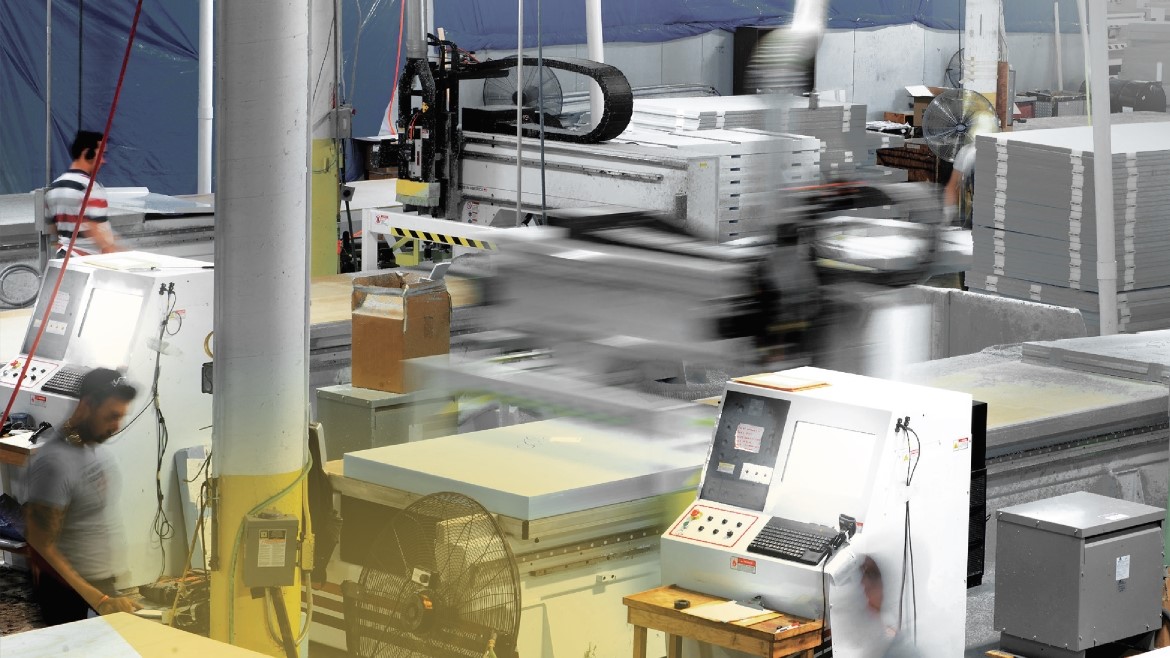
Energy efficiency isn’t achieved solely through the finished product — it also begins on the factory floor. Advanced manufacturing facilities are increasingly turning to automation to improve precision, reduce material waste and ensure airtight seals that prevent thermal leaks. In-house, CNC-milled panel production ensures tight tolerance and perfect fits, further supporting a cooler’s energy integrity.
The efficiency of a cooler is measured by more than the energy it saves during use; how little energy and material are wasted in its production is also taken into consideration. Efficient manufacturing practices contribute to both lower costs and reduced environmental impact.
Cold storage manufacturers are also investing in emerging technologies that are redefining cooling. Phase change materials (PCMs), for instance, store and release thermal energy as they transition between solid and liquid states. This stabilizes interior temperatures and reduces compressor cycling. Integrated solar refrigeration systems are also gaining traction, especially in regions with high sunlight exposure, offering a renewable path for power-hungry equipment.
Mobility is also evolving. Portable refrigeration units, like modular, hybrid walk-ins, now feature streamlined refrigeration components, integrated thresholds to minimize thermal exchange and energy-saving construction materials — bringing efficiency to job sites and pop-up operations that require rapid deployment and relocation.
 Amerikooler
Incentives and Payback: Making the Switch Worthwhile
A common misconception is that energy-efficient cold storage costs more upfront. While advanced components may carry a slightly higher initial price tag, the return on investment is clear. Lower utility bills, fewer maintenance calls and longer-lasting performance contribute to substantial savings over time.
Government incentives also sweeten the deal. Energy Star-certified equipment can qualify for federal and state rebates, tax credits and grants — offsetting the initial costs and speeding up payback periods. Businesses investing in energy efficiency can now quantify and capitalize on their choices.
Outlook: Sustainability Meets Smart Technology
Beyond compliance and cost savings, energy-efficient cold storage offers a competitive edge. Businesses that invest in sustainable infrastructure demonstrate long-term thinking, environmental stewardship and operational excellence — traits that resonate with consumers and stakeholders alike.
In high-demand industries, like foodservice, pharmaceuticals and hospitality, a reliable and energy-efficient refrigeration system can be the difference between business continuity and costly downtime. It’s not just about cold storage — it’s also about business resilience.
The next frontier in cold storage lies at the intersection of sustainability and smart technology. Innovative manufacturers are already investing in AI-driven cooling algorithms, adaptive energy optimization and advanced insulation materials to create systems that are not only more efficient, but also more responsive to changing operational needs. By prioritizing innovation and continuous improvement, these industry leaders are helping to set new benchmarks for reliability, sustainability and business resilience.
Sustainability isn’t just about meeting regulations — it’s also about future-proofing business models. As cold storage evolves, those who embrace energy-efficient practices today will be better positioned to thrive tomorrow.
 Amerikooler
Embracing Innovation for a Sustainable Cold Storage Future
As the cold storage industry faces increasing pressures from rising energy costs, regulatory demands and sustainability goals, the imperative to adopt energy-efficient technologies has never been clearer. Innovations in advanced insulation materials, smart temperature control systems and precision manufacturing are transforming how businesses manage refrigeration — delivering not only cost savings, but also enhanced reliability and environmental responsibility.
Looking ahead, the integration of intelligent controls and renewable energy solutions will continue to redefine industry standards, enabling cold storage operators to optimize performance while minimizing their carbon footprint. These advancements represent a fundamental shift toward smarter, more resilient cold storage infrastructure that supports long-term business continuity and growth.
For organizations across the foodservice, healthcare, retail and industrial sectors, investing in energy-efficient cold storage solutions is a strategic decision that aligns operational excellence with sustainability commitments. By embracing these innovations today, businesses position themselves to meet tomorrow’s challenges with confidence and agility.
Looking for a reprint of this article?
From high-res PDFs to custom plaques, order your copy today!