Considerations for Food Plant Strainer Selection
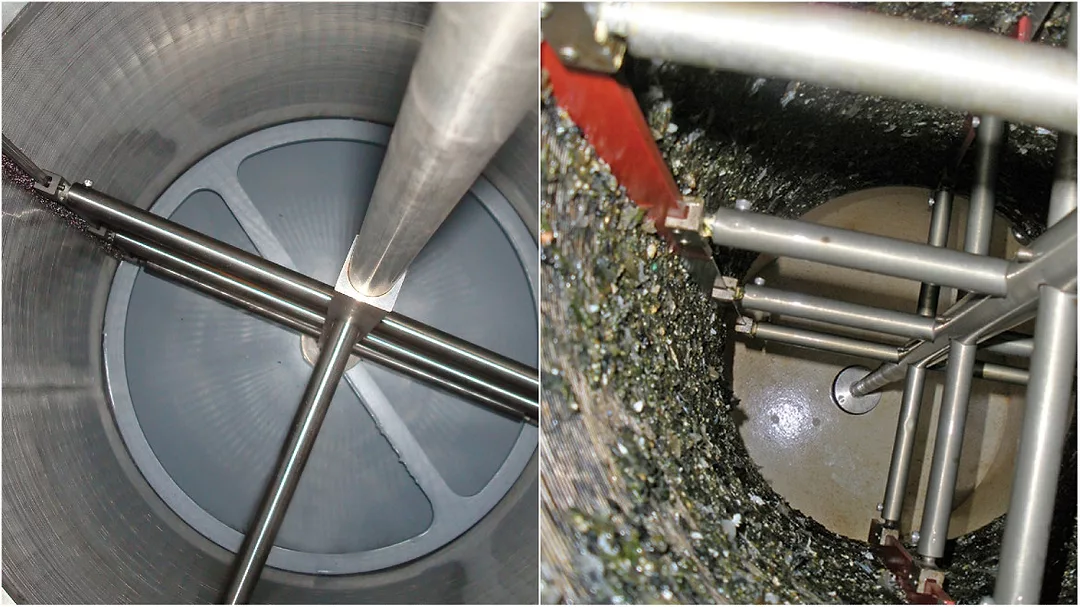
Scraper strainers allow the solids to accumulate at the bottom of the vessel, where the blowdown valve will open periodically to clear them out.
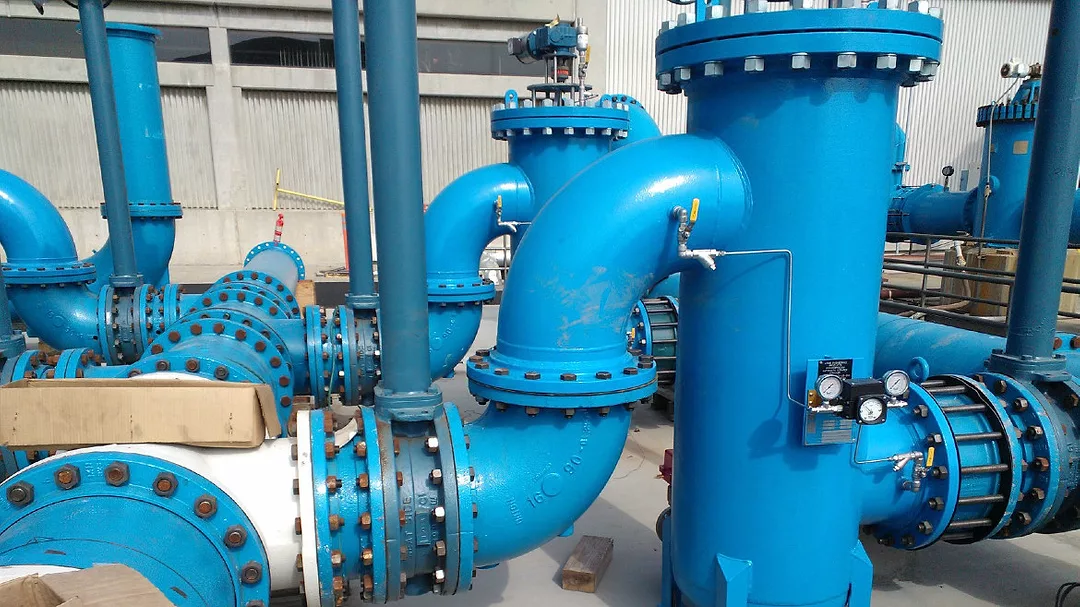
By offering a self-cleaning design that functions under a range of conditions, automatic scraper strainers provide advantages over traditional filters.
Food plant engineers are responsible for ensuring that production systems run safely, efficiently and in full compliance with hygiene and food safety standards. They oversee multiple processes that depend on reliable, contaminant-free water.
In this environment, even minor impurities can compromise product quality or trigger costly recalls. That is why advanced water filtration is vital. Automatic scraper strainers are self-cleaning systems that remove solids from water lines without disrupting flow, helping to protect critical equipment, maintain sanitary conditions and ensure consistent product quality in a highly regulated industry.
For food processors, removing suspended solids such as fats, grease, grit, contaminants and leftover process materials from liquids is necessary to comply with regulations like the EPA’s Clean Water Act, which sets wastewater standards for industry and national water quality criteria for pollutants in surface waters.

To remain compliant, processors often use clarifiers, also known as settling tanks or settlers. In the industry, automatic scraper strainers, a separation technology designed to tolerate variability, are increasingly being used after clarifiers and before further processing when reliable, economic, low-maintenance water treatment is necessary. Automatic scraper strainers offer advantages over traditional choices such as backwash filters and basket strainers.
Backwash strainers and manual basket strainers are accepted technologies and are often the default option during specification. However, conventional strainer designs can present reliability challenges and require frequent maintenance, particularly in applications where large debris or high volumes of suspended solids are present.
In contrast, automatic scraper strainers — cleaning the screen through direct mechanical contact using brushes and blades — are less commonly known. Self-cleaning systems utilizing mechanical brushes are available. These mechanical scraper systems offer a simpler design and eliminate the need for auxiliary piping or external water sources.
“Automatic scraper strainers are frequently overlooked due to limited familiarity, leading to default specifications of backwash or basket strainers — even in scenarios where a scraper strainer would offer superior performance,” says Philippe Ellison, project manager, Acme Engineering Products, a North American manufacturer of industrial self-cleaning strainers.
Strainer Selection and Sizing
Selecting the appropriate strainer begins with understanding the application’s process requirements, including the type and size of solids, solid loading and what needs to be filtered.
Strainer sizing involves balancing flow rate, particle size and solid concentration. Higher solid loading requires a larger filtration area and vessel size. As flow rate and particle concentration increase, so must the strainer’s capacity. Proper data on particle size distribution and operational conditions is critical for accurate equipment selection and sizing as well.
“Backwash strainers are sometimes specified in applications where the solids are large, sticky, or difficult to remove – conditions that backwash systems struggle to manage effectively,” Ellison says. “In these cases, scraper strainers are the better option, as their mechanical cleaning action is specifically designed to handle challenging debris.”
Oversizing backwash strainers can also reduce cleaning efficiency. Correct flow rate and pressure data are essential for designing effective backwash systems.
In addition, no fluid processing or filtration system remains static. Treatment conditions continually change due to variable factors such as pressure, particle size, solids loading and the presence of sticky biologicals.
“Flow rate and the amount of suspended solids in a fluid can vary significantly based on production demands, equipment in use, time of day, day of the week and even seasonal conditions,” Ellison says. “A properly selected strainer must be able to handle the full range of operating conditions to ensure consistent and reliable performance.”
Manual Basket Strainers
Basket strainers are manual filters used to remove large solids or debris from a fluid stream, typically in water or process piping systems. They consist of a pressure vessel housing that contains a perforated or mesh-lined basket. The basket acts as a screen to capture and retain particulates while allowing the fluid to pass through.
In water filtration applications, basket strainers are used to remove coarse materials such as leaves, sand, rust, scale and other solids that may be present in the water. This helps protect downstream equipment such as pumps, valves, meters and more sensitive filters from clogging or damage.
In continuous flow processes that cannot be shut down for cleaning purposes, duplex basket strainers are often installed. This type of strainer employs two distinct chambers that function independently. When one chamber needs cleaning, the flow is seamlessly diverted to the alternate chamber, enabling the removal and cleaning of the first basket.
Cleaning is a messy, laborious process that involves equalizing pressure between the baskets, diverting flow to the off-line chamber, opening the cover, manually removing the clogged basket and cleaning it before refitting the basket, ensuring the seal, and tightening the fasteners.
If an operator fails to adequately clean the basket strainers for any reason, both strainers can become clogged at the same time. This can result in quality issues or unexpected downtime until the problem is resolved. For many processors, this can occur simply due to having insufficient personnel to keep basket strainers clean, along with their other duties.
Backwash Systems
Backwash filters are used in water filtration systems to remove suspended solids, sediment and other particulate matter from water. They are designed to operate continuously with minimal manual intervention by automatically cleaning themselves through a backwashing process.
In normal operation, dirty fluid flows through the filtration screen, trapping suspended solids and allowing the effluent to pass through the outlet. Over time, these trapped particles accumulate and begin to restrict flow, increasing the pressure drop across the strainer.
To restore performance, the backwash process is initiated. During backwashing, the drain valve opens, causing a reverse in flow across the section of the screen which is isolated by the backwash cleaning mechanisms openings. This dislodges the accumulated solids, which are then pulled into the backwash cleaning mechanism and flushed out through a drain. Once the filtration screen is clean, the system returns to normal filtration mode.
Backwash filters rely on a substantial amount of flow and constant pressure, which can compromise reliability if not always available. “Backwash units do not operate well in backwash mode below 30 PSI. To compensate, some utilize complex, pressure-inducing tactics, but these do not always resolve the issue,” Ellison says.
Backwashing is not ideal for removing large solids from the screen elements. The problem is that the backwash arm must be quite close to the screen to function properly, and that prevents the passing of larger particles.
Backwash systems are also more complex and require additional control valves, instrumentation and sometimes external water sources. Scraper strainers eliminate these needs and operate more flexibly through programmable control panels.
Automatic Scraper Strainers
Automatic scraper strainers do not rely on a pressurized backwash to remove solids from the screen. Instead, blades and brushes provide more reliable cleaning under varying conditions.
The automatic scraper strainer from Acme Engineering is a motorized unit designed to continuously remove both large and fine suspended solids. This process is managed by a fully automatic control system.
These scraper strainers are offered with three screen types, selected based on the specific application. Reverse-formed wedge wire screens are the standard choice, valued for their durability and compatibility with brush cleaning systems. For applications requiring finer filtration, multilayer sintered metal mesh screens are recommended. In fibrous processes perforated screens with round holes provide optimal performance.
Four blades/brushes rotate at 8 RPM, resulting in a cleaning rate of 32 strokes per minute. The scraper brushes get into wedge-wire slots and dislodge resistant particulates and solids. This approach enables the scraper strainers to resist clogging and fouling when faced with large solids and high solids concentration.
Scraper strainers allow the solids to accumulate at the bottom of the vessel, where the blowdown valve will open periodically to clear them out. Blowdown occurs only at the end of the intermittent scraping cycle when a valve is opened for a few seconds to remove solids from the collector area. Liquid loss is below 1% of total flow.
For applications with high solids loading that are prone to clogging, a macerator can be installed upstream of the automated scraper strainer to break down large solids into smaller fragments.
While standard carbon steel or stainless steel construction is suitable for typical applications, corrosive environments such as those involving seawater, erosive slurries or aggressive chemicals can degrade conventional equipment. This deterioration can create risks related to safety, quality and regulatory compliance, as well as cause production downtime due to the need for premature replacement of strainer components.
When the chemical properties and temperature of the process fluid raise concerns about material compatibility, automated scraper strainers are available in other materials such as Monel, D2205, SD2507 and fiber-reinforced plastic (FRP). The internal mechanism and wetted components can be manufactured from super duplex or similar high-performance steels.
Cost Comparison
Manual basket strainers are the lowest-cost option but require frequent human intervention. Scraper strainers are a mid-priced solution and operate automatically. Backwash strainers are typically the most expensive due to system complexity, additional control valves, instrumentation and sometimes external water sources.
According to Ellison, the cost-benefit ratio of scraper strainers should factor into reduced infrastructure requirements, wear item replacement costs and ongoing maintenance.
An automated scraper strainer can replace multiple manual basket strainers as well as the associated piping. Basket strainers require regular maintenance, with manual models requiring cleaning several times daily.
The frequency of part replacement often depends on the severity of the conditions and how often cleaning is required for the application.
Food plant engineers face increasing pressure to deliver systems that are not only high-performing and cost-effective but also reliable and low maintenance. The adoption of advanced scraper strainer technology represents an opportunity to meet these demands.
Looking for a reprint of this article?
From high-res PDFs to custom plaques, order your copy today!