Food Engineering logo
search
cart
facebook twitter linkedin youtube
  • Sign In
  • Create Account
  • Sign Out
  • My Account
Food Engineering logo
  • NEWS
    • Latest Headlines
    • Manufacturing News
    • People & Industry News
    • Plant Openings
    • Recalls
    • Regulatory Watch
    • Supplier News
  • PRODUCTS
    • New Plant Products
    • New Retail Products
  • TOPICS
    • Alternative Protein
    • Automation
    • Cannabis
    • Cleaning | Sanitation
    • Fabulous Food Plants
    • Food Safety
    • Maintenance Strategies
    • OEE
    • Packaging
    • Sustainability
    • More
  • EXCLUSIVES
    • Plant Construction Survey
    • Plant of the Year
    • Sustainable Plant of the Year
    • State of Food Manufacturing
    • Top 100 Food & Beverage Companies
  • MEDIA
    • Podcasts
    • Videos
    • Webinars
    • White Papers
  • FOOD MASTER
  • EVENTS
    • Food Automation & Manufacturing Symposium and Expo
    • Industry Events
  • RESOURCES
    • Newsletter
    • Custom Content & Marketing Services
    • FE Store
    • Government Links
    • Industry Associations
    • Market Research
    • Classified Ads
  • EMAGAZINE
    • eMagazine
    • Archive Issue
    • Advertise
  • SIGN UP!
Manufacturing News

Considerations for Choosing Electromagnetic Vibratory Feeders for Food Applications
By Linda Mioduszewski
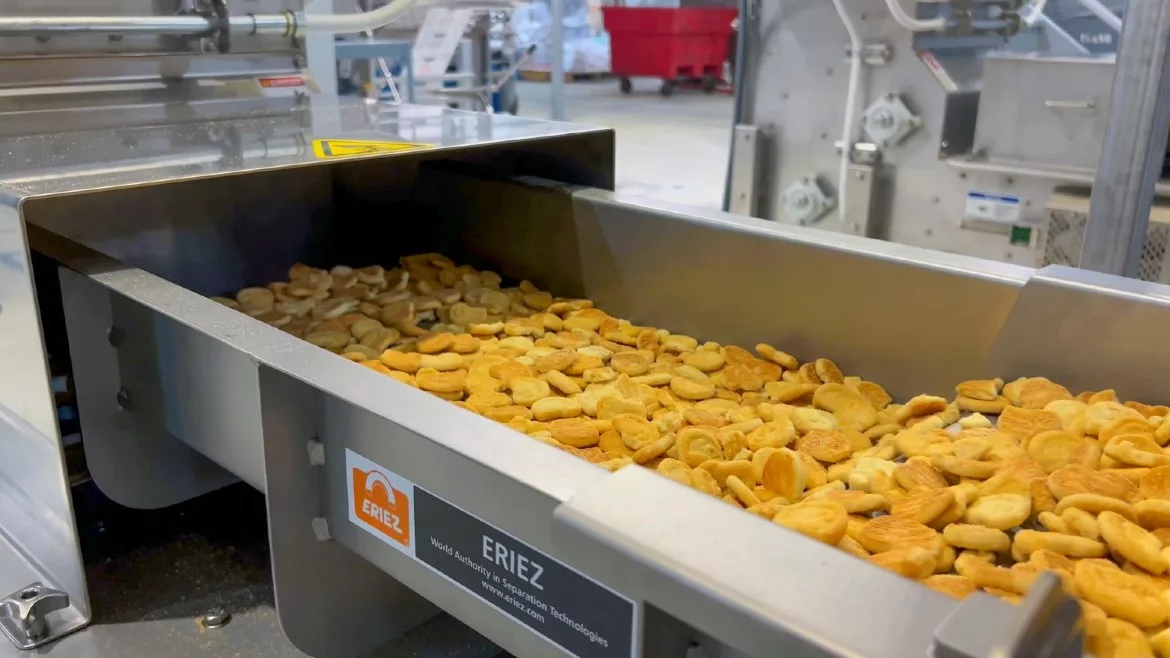
Vibratory feeder
Eriez
December 15, 2025

The versatility of vibratory feeding equipment makes it an indispensable tool in efficiently handling a diverse array of food products, ranging from fine powders and tacky materials to granular substances and bulk products. Feeders are also used to assist in adding ingredients to mixers and blenders, metering to downstream process equipment, screening oversized or fine debris from final products, and sprinkling salt, sugar or various seasonings.  

Manufacturers continue to advance the design of vibratory feeders to evolve and meet the food industry’s needs and regulatory challenges. These include the following guidelines for Safe Quality Foods (SQF), Good Manufacturing Practices (GMP) and sanitation requirements. 

There are multiple areas along the food processing line where electromagnetic vibratory feeders are utilized: 

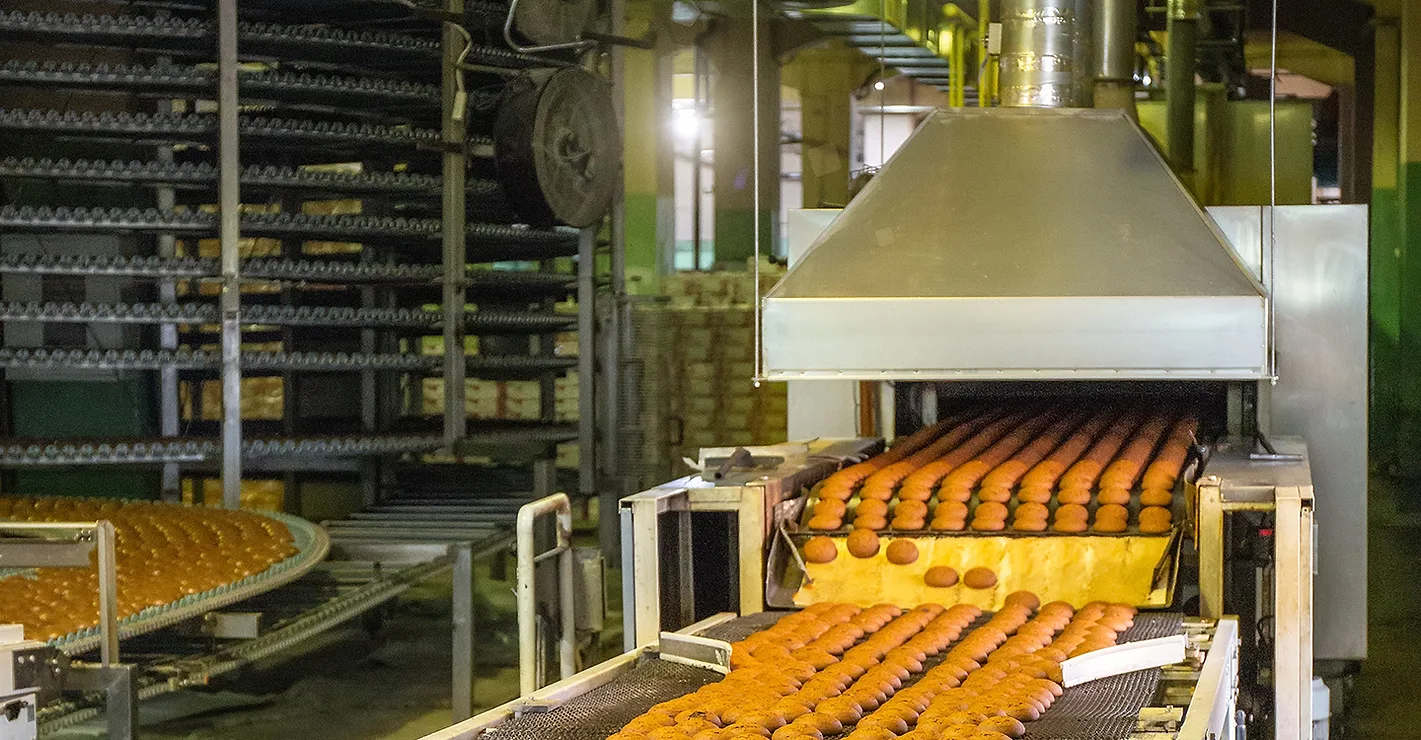
  • Baking or freezing: Feeder models are available for high-temperature installations with ambient temperatures approaching 300°F and cold temperatures approaching 20 to 32°F.
  • Screening for fine debris and oversized material removal: Vibratory equipment adapts to the addition of a screening function during the conveying process. Common applications include “scalping” or removing oversized material from the product and “de-dusting” or removing fines from the product.
  • Metering material at a controlled rate: In a food processing plant, vibratory feeders are commonly used to meter material into downstream processing equipment. The vibratory feeder acts as the bulk metering device to provide material at a controllable, easily adjusted rate.
  • Cleanliness and sanitation: One of the primary benefits of vibratory feeders in the food industry is the simple construction of the feeder tray. With no complex geometric barriers, trays can be easily and quickly wiped down or washed out for product changeover. 


Choosing the Right Feeder 

Each vibratory feeder is designed with a different amplitude, frequency and angle of deflection to move different materials at specific rates. The design is based on many factors, including the food material being processed, flow rate of the process, nature of the environment, need to start and stop the process, cost to operate the equipment and likelihood of repairs.  

With those factors in mind, choosing the right feeder in food processing applications comes down to several types of models: 

  • High-speed feeders are an excellent choice for applications where fast travel speeds and frequent starts and stops are necessary. These units are ideally suited for food packaging.
  • High amplitude/low frequency feeders are the typical choice for handling light and bulky, fine powdery and flexible products, including cereal, flaky and powder spices, potato chips, raisins, gummy candy and more. These units are the preferred choice for adding a screening function to the conveying process.
  • Low amplitude, high frequency feeders are ideal for use with free-flowing materials that have a bulk density above 20 pounds per cubic foot.  

Consistency and quality of a finished product is integral in the food industry. Electromagnetic feeders offer food processors several opportunities to improve their facility’s efficiency. 

  • Electromagnetic feeders under a hopper allow for ingredients to be supplied to blenders and mixers with ease.
  • Electromagnetic scarf plate feeders can sprinkle granular material like salt, sugar and seasoning onto snack food or baked goods traveling on a belt conveyor, ensuring consistent coating on the product.  
  • Adding a hopper above an electromagnetic feeder, also known as a volumatic feeder machine, can be used with weigh scales, batch operations and operations where additive feeding is performed either continuously or intermittently. 


Customizable Tray Designs 

The shape, length and width of feeder trays are practically limitless. Customers can order trays with features to satisfy their unique food process requirements. Every configuration of flat, curved, v-channel and tubular designs is available. Trays are typically fabricated from stainless steel for food applications. 

Trays that include features such as a tray cover or screen deck incorporate quick-release fasteners that enable removal of these components without tools. Once fasteners are loosened, the component simply lifts and disconnects from the tray for easier cleaning. 

Technology advances make electromagnetic vibratory feeding solutions applicable to food industry environments. Sanitary construction, ease of cleaning, low maintenance and latest design features make these units an ideal choice for facilities where greater product purity, energy cost savings, decreased equipment maintenance expense and streamlined manufacturing operations are desired.

KEYWORDS: equipment feeder

Share This Story

Looking for a reprint of this article?
From high-res PDFs to custom plaques, order your copy today!
Linda Mioduszewski is technical sales representative for Eriez.

Recommended Content

JOIN TODAY
to unlock your recommendations.

Already have an account? Sign In

  • 2025 Top 100 Food and Beverage Companies

    FOOD ENGINEERING’s 2025 Top 100 Food and Beverage Companies

    While sales were largely down under dynamic economic and...
    Top 100 Food & Beverage Companies
    By: Alyse Thompson-Richards
  • Bottling machine

    How Optical and X-Ray Inspection Supports Bottling Safety and Quality

    By transitioning from legacy single-technology systems to...
    Food Safety
    By: Dan McKee
  • Bread baking in oven

    The State of Food Manufacturing in 2025

    Food and beverage manufacturers are investing in...
    Manufacturing News
    By: Alyse Thompson-Richards
Manage My Account
  • eMagazine
  • Newsletter
  • Online Registration
  • Manage My Preferences
  • Customer Service

More Videos

Popular Stories

alternative protein products

Alternative Protein in 2025: Key Trends and Technologies

The Campbell's Company logo

Campbell’s Terminates Exec Over Alleged Disparaging Comments

circular packaging material for frozen and chilled food packaging

Sustainable Barrier Coatings Replace PFAS, PE and other Plasticized Materials in Packaging

State of Maufacturing 2025

Events

June 17, 2025

Refrigerated & Frozen Foods’ State of the Cold Chain

On Demand Kelley Rodriguez, Editor in Chief of Refrigerated & Frozen Foods, will be joined in this 60-minute webinar by industry experts to help unpack the latest research.

July 23, 2025

Decarbonizing Process Heat: What You Should Know and Next Steps

On Demand Driven by climate goals, business risk, client interest, and resilience considerations, food and beverage companies are increasingly turning their attention to decarbonizing their production processes.

View All Submit An Event

Products

Recent Advances in Ready-to-Eat Food Technology

Recent Advances in Ready-to-Eat Food Technology

See More Products

CHECK OUT OUR NEW ESSENTIAL TOPICS

Alternative ProteinAutomationCleaning/SanitationFabulous Food Plants

Food SafetyMaintenance StrategiesOEE

PackagingSustainability

Related Articles

  • Baker Perkins ServoForm Mini wth Jelly Cook Lift

    Considerations for choosing candy cookers

    See More
  • Electromagnetic Vibratory Feeders

    See More
  • Hapman PosiPro

    Considerations for Selecting Dry Bulk Material Feeders

    See More

Related Products

See More Products
  • Functionalizing Carbohydrates for Food Applications

  • statical.jpg

    Statistical Process Control for the Food Industry: A Guide for Practitioners and Managers

  • composites.jpg

    Composites Materials for Food Packaging

See More Products
×

Elevate your expertise in food engineering with unparalleled insights and connections.

Get the latest industry updates tailored your way.

JOIN TODAY!
  • RESOURCES
    • Advertise
    • Contact Us
    • Food Master
    • Store
    • Want More
  • SIGN UP TODAY
    • Create Account
    • eMagazine
    • Newsletter
    • Customer Service
    • Manage Preferences
  • SERVICES
    • Marketing Services
    • Reprints
    • Market Research
    • List Rental
    • Survey/Respondent Access
  • STAY CONNECTED
    • LinkedIn
    • Facebook
    • YouTube
    • X (Twitter)
  • PRIVACY
    • PRIVACY POLICY
    • TERMS & CONDITIONS
    • DO NOT SELL MY PERSONAL INFORMATION
    • PRIVACY REQUEST
    • ACCESSIBILITY

Copyright ©2025. All Rights Reserved BNP Media.

Design, CMS, Hosting & Web Development :: ePublishing