How to Combat Sanitation Challenges with Conveyors

In the food production industry, sanitation and food safety are critical. Contamination or equipment malfunctions can lead to recalls, legal issues and damage to brand reputation. Facilities must stay in regulatory compliance and meet strict hygiene standards while also maximizing efficiency and production uptime.
What is on the line for food production facilities? The average direct cost of a food recall can total millions of dollars, with indirect costs like legal fees and lost sales pushing those losses even higher. The FDA estimates that there are about 48 million cases of foodborne illness annually — that’s about 1 in 6 Americans. The 2024 IFIC Food & Health Survey showed that confidence in food safety dipped to 62%, down 8% from the previous year.
For the food production industry, these safety challenges are a very real threat to the bottom line. How can operations best address costly equipment contamination and the downtime that can result? One answer is to choose solutions that are designed to not only improve efficiency but also help meet stringent sanitary requirements.
Top Food Safety and Contamination Challenges
EXPLORE MORE


In food production, manufacturers face several critical challenges that can impact the operation’s throughput and finances. These include safety, regulatory pressures and overall equipment effectiveness. In addition, labor shortages and the skills gap — with experienced maintenance staff retiring and fewer new employees taking their place — result in longer training times and maintenance cycles.
As the manufacturing workforce ages out, retention has been a challenge for the food production industry and many others. When an experienced worker retires, they often take accumulated institutional knowledge of the equipment in a facility and other expertise with them.
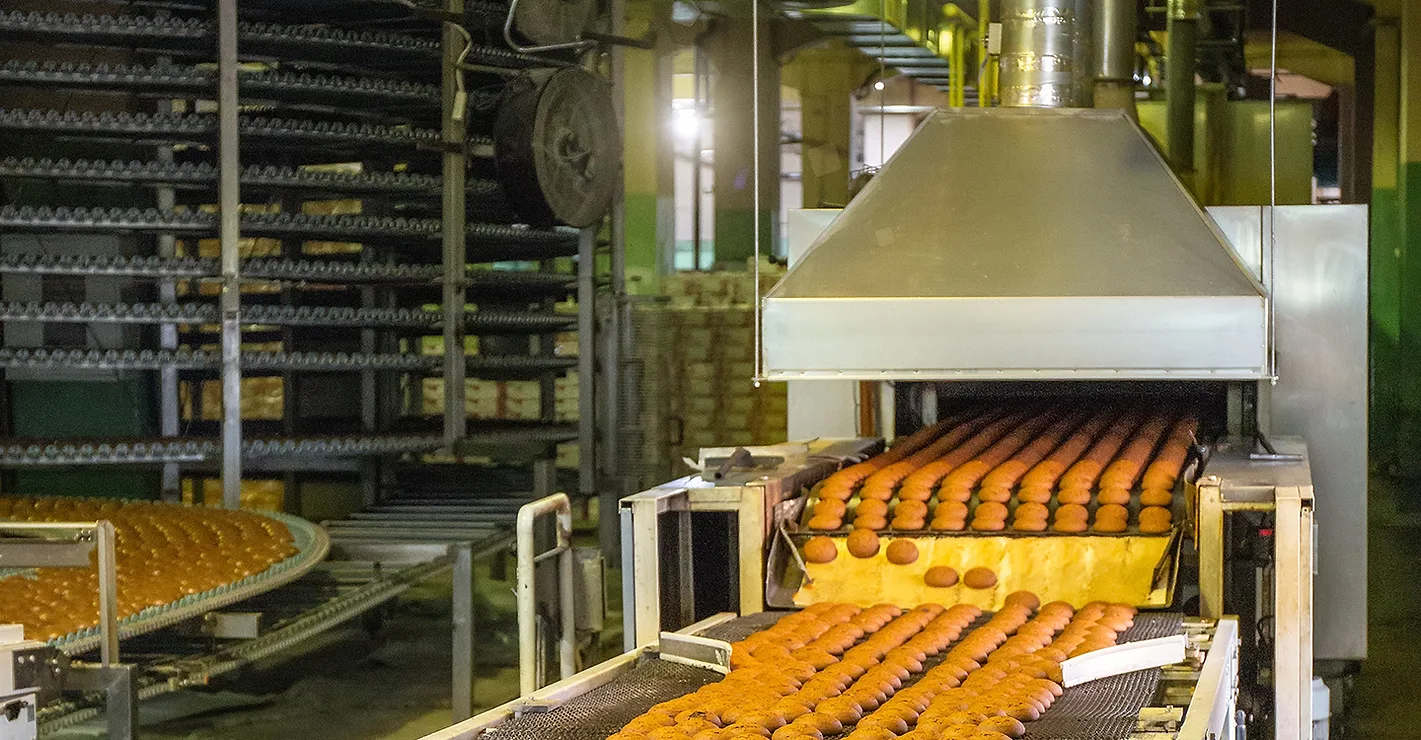
The conveying system and how it is maintained can play a key role in addressing several of the critical challenges that facilities face, including safety and labor shortages. A common contamination point in the food production cycle is the contact surface or conveyor belt where the product is transported. Any nooks, crevices or horizontal flat surfaces can be potential sources of food debris or oil buildup.
Depending on what the facility is producing, standards for maintenance and washdown cycles may vary greatly. For example, one customer that produces a cake covered in caramel was spending more than five hours per day disassembling and cleaning the conveyor. Any food production that involves raw products like eggs or meat typically also requires an intensive sanitation cycle. In many cases, this washdown to prevent contamination is a manual, labor-intensive process.
How the Right Conveying System Can Help Prevent Contamination
When choosing equipment and conveying systems, there are several factors that can help facilities reduce maintenance downtime and prevent contamination and the possibility of food recalls.
1. Choose the best material for the operation.
The material used for a conveyor line and its related components can impact production outcomes. Options range from base materials to premium materials, and each type has its pros and cons. For example, high-quality stainless steel components offer greater corrosion resistance and eliminate the likelihood of rust or flaking material contaminating the product. Stainless steel also holds up well, even with frequent washdowns or caustic cleaning materials.
2. Consider a robust, highly engineered system.
Some conveying systems are designed to eliminate or reduce the characteristics that can contribute to contamination or safety issues. The welding pattern used on the conveyor belt, for example, can help eliminate open surfaces or cracks that can collect debris. Look for a system that is engineered to deliver robust performance, reliability and life.
3. Think about the specific application and environment.
Different applications and environments determine the best component and conveyor choice for the job. Metal chain options, for example, offer open surfaces for easier cleaning. Some modular belt chains have a tighter profile and pitch that allows for smaller product transfer. While monolithic belts offer easy-to-scrub flat surfaces, their installation over rollers makes them difficult to re-tension and reassemble — often a multi-person, time-consuming task for facilities already faced with labor challenges. Think about what would work best for the specific application in making the choice.
4. Tap into the benefits of technology.
Condition monitoring and predictive maintenance systems can help facilities identify issues that could lead to contamination or unscheduled downtime, taking the guesswork out of these issues for the maintenance team. These systems can monitor critical components, such as the gearbox, motor and bearings, for vibration and heat to alert maintenance teams before mechanical failure. This helps facilities avoid unplanned downtime or system performance issues that could result in damaged products or the introduction of contamination. Predictive maintenance directly supports sanitation efforts by ensuring smooth, continuous operation. The potential for automating some tasks can also help facilities improve productivity and reduce the need for manual intervention in certain processes like equipment sanitation.
5. Work with an experienced partner for system design.
The right design partner can help navigate solutions to achieve hygiene and sanitation standards required for many food production facilities. Look for a partner that brings engineering expertise for the design stage and can tailor conveyor solutions to help meet specific challenges. For example, designing a system with components that reduce the need for specialized installation and maintenance tools reduces the time and expertise required for the maintenance team.
Key Design Principles for Washdown-Ready Equipment
Food production facilities must be hyper-focused on food safety as well as productivity and efficiency. Thoughtful conveyor system design plays a key role in addressing these priorities. Systems that provide easy access for cleaning and help prevent debris buildup to avoid contamination and recalls often share these features:
- Minimal horizontal surfaces: Conveyors with fewer flat surfaces help reduce collection points for food and debris that can lead to contamination challenges.
- Full accessibility and an open frame: A system where every surface is accessible for cleaning and spraying is much easier to wash down and maintain, reducing the time it takes to get the conveyor to a sanitary level. Look for a system where the components come off easily so they can be run through a washer or disinfecting system and then quickly put back together.
- Tool-free installation and assembly: Cleaning a standard conveyor is a major task that requires an experienced maintenance person with tools, and it can take hours to disassemble the conveyor. The components need to be washed by hand and then reassembled, and there is a risk of losing parts. A system with a tool-free design means that maintenance teams can quickly get into the system to clean and sanitize, which allows for more uptime while meeting daily sanitization requirements. It also addresses the issue of labor shortages because the maintenance procedure is fast and doesn’t require a lot of manual work.
- Modularity: A conveyor system with modular flexibility allows facilities to reconfigure and optimize their footprint as they change operational strategies. To meet changing production needs, look for an engineered system that provides easy modularity in lieu of a single fixed system. This means companies don't have to continuously reinvest capital to meet changing consumer expectations.
Prioritizing Safety and Cost Savings
The right conveying system solutions can help food production facilities meet dynamic market and workforce demands. Conveying systems that are designed to minimize the threat of contamination and offer ease in washdown can deliver cost savings and improve sanitation by reducing labor, minimizing unplanned downtime and avoiding the immense costs and brand damage associated with product recalls.
Looking for a reprint of this article?
From high-res PDFs to custom plaques, order your copy today!