Is Listeria Monocytogenes Slipping Through Your Door?
It’s one thing to keep a 175-lb. hell-bent individual out of your plant, but blocking this invisible microbial enemy from sneaking in can be a real challenge

Making readt-to-eat (RTE) products not only depends upon bacteria-free ingredients, but also a facility that has appropriate and approved sanitation procedures in place coupled with a clean environment that doesn’t promote the growth of pathogens.
Keeping Listeria Monocytogenes (Lm) or any harmful food bacteria out of a ready-to-eat (RTE) facility comes down to humans following best practices in building, equipment and personal cleanliness.
USDA’s Food Safety Inspection Service (FSIS) found a litany of inadequate sanitation procedures at the Boar’s Head Jarratt, Va. plant, and went on to find similar issues with other Boar’s Head facilities. While FSIS inspections revealed several problematic human food safety practices, the bulk of issues related to buildings and equipment.
FSIS noted several instances of noncompliance with sanitation standard operating procedures and sanitation performance standards, such as the presence of meat and fat residue from the previous day’s production on equipment; condensation in the RTE processing area; and structural issues such as cracks, holes and broken flooring that could hold moisture. Other documented conditions included rust, beaded condensation, conveyor belt cracks, paint chips from motors and pumps and peeling caulk — and the list goes on.

Food safety consultants can certainly point out potential Lm harborage issues. However, architectural and engineering firms not only have specialists that can spot these problems and recommend cures, but also can fix them if they go above and beyond the capabilities of a plant’s maintenance department or local contractors.
For example, CRB offers comprehensive food safety consulting services focused on facility and equipment design, construction and maintenance. These services include:
- Good manufacturing practices (GMP) compliance and review of existing documents, records and procedures
- Design and construction for new facilities to surpass regulatory standards, exceed client expectations and ensure operational excellence
- Document review and preparation support for food safety programs and related compliance needs
In addition to the design of food-safe facilities, Hixson offers an array of sanitary design expertise and food safety consulting, including clean-in-place (CIP) optimization, facility evaluations, EH&S consulting and OSHA and regulatory compliance consulting.
“I help companies plan for and execute capital projects and programs — safely, efficiently, on time and on budget,” says David Ziskind, Mach Global Advisors managing partner. “As an owner’s advisor, I provide capital project oversight, including project management and design/engineering reviews, with particular focus on sanitary design and constructability. This independent third-party perspective helps prevent food safety issues before they occur. For clients requiring detailed food safety assessments, I collaborate with specialized partners to provide comprehensive solutions.”
Gleeson provides complete design-build services dedicated exclusively to the food industry, says Ronald L. Rens, P.E., president. “Our work includes new facility construction, major renovations and the conversion of non-food-grade buildings into sanitary, production-ready environments. Because we specialize in heavy industrial food manufacturing, our design approach always prioritizes food safety, human safety, constructability, operational efficiency and long-term maintainability.”
Gleeson’s engineering and construction teams understand where contamination risks hide —harborage points, airflow deficiencies, improper slopes, delamination and structural vulnerabilities — and design solutions that correct these issues and prevent them from recurring.
Don’t Wait for a Problem to Occur
It would seem that some facilities wait until they have an insurmountable problem before they call for help, whereas others have an ongoing relationship with an engineering and architectural firm so they typically avoid serious last-minute problems that need a “quick cure.”
“We work with food manufacturers to both address urgent issues and build long-term partnerships,” says CRB’s Pablo Coronel, senior fellow, food process & safety | associate. Since the introduction of the Food Safety Modernization Act (FSMA), processors have become more proactive about food safety. Our role is to help companies be prepared when an inspector arrives.
“During our pre-assessment, we identify potential weak points in their food safety plans and procedures,” Coronel adds. “Our integrated approach allows us to provide them with engineering solutions to solve the issues and improve their performance. While quick fixes can be necessary, our focus is on prevention and readiness rather than last-minute solutions.”
Quick fixes or long-term solutions? “We see both, but most of our clients are proactive,” Rens says. “When a food safety or sanitation issue goes beyond what their in-house maintenance or sanitation teams can manage, they bring us in to diagnose the root cause and implement the corrective action.”
“We also work with many clients on a continuing basis, addressing immediate concerns, executing planned infrastructure improvements and designing new construction projects with food safety built in from the beginning,” Rens adds. “Whether it’s an urgent repair or a long-term upgrade, we help ensure the facility remains compliant, efficient and safe.”
“It depends on the facility,” says Derek Wojcikowski, R.A., CDT, LEED AP O&M at Hixson. “Some only reach out when a problem has escalated, as in the case of one client where we were called in after positive microbial hits revealed a perfect storm of environmental issues: cracked floors, flaking walls, dripping condensation. In those situations, we’re often brought in reactively, and the fixes may be more intensive. More commonly, though, we have ongoing relationships where we’re already on-site for other reasons and can flag potential concerns early, whether it’s floor damage, air filtration gaps or harborage points. That proactive engagement allows us to suggest improvements before problems are realized.”
On the process side, it’s often a recurring microbial contamination issue that prompts a call, says Warren Green, P.E., Hixson vice president and manager, process engineering. “Facilities might struggle to pinpoint the source, and after trying a few fixes, they’ll ask us to investigate and potentially redesign equipment or the system. In other cases, Hixson provides an additional engineering resource to help with root cause investigation and resolution. Our role really flexes between prevention, diagnosis and redesign, depending on how early we’re involved with the project.”
What’s the better solution for the long-term? “Prevention is much better, in terms of cost, time and ultimately safety,” says Mach Global’s Ziskind. Plus, once an issue occurs it is almost assuredly a reputation risk and a PR nightmare. A proactive approach with regular reviews can prevent a problem from occurring in the first place. Once a problem does occur, while it is important to immediately address the issue at hand, it is also critical to follow up and establish a robust plan to prevent those problems from occurring again.
“My approach focuses on established regular review cycles and proactive monitoring systems —catching potential issues before they become dangerous, costly crises,” Ziskind adds.
Persistent and Resident Lm a Building Closer — but Not the Only Problem
While specific percentages vary, Listeria concerns drive a significant portion of facility assessments — particularly in RTE environments, Ziskind says. “However, I’ve seen a full spectrum of issues: mold and spore concerns in dry ingredient facilities, cross-contamination risks in allergen-sensitive operations and various pathogen challenges depending on the product type. The common thread is that most issues stem from moisture management, inadequate drainage, compromised facility envelopes or equipment maintenance gaps.”
A significant portion of building-related issues stem from conditions that increase the risk of Listeria or other bacterial contamination — moisture infiltration, standing water, improper airflow, delaminated surfaces and structural failures, says Gleeson’s Rens. In nearly every case, the underlying cause is linked to building condition, not just sanitation practices.
Explore More Essential Content


Facility Issues Beyond the Plant Maintenance Staff
Food manufacturing environments, Rens says, are extremely demanding on buildings, and many issues exceed what in-house teams can address. Common problems requiring construction crews include:
- Ponding water and incorrect floor slopes requiring re-sloping or full floor replacement
- Delaminated walls, ceilings, floors or failed caulk lines allowing moisture infiltration
- Harborage points created by cracks, holes, gaps or broken surfaces that cannot be cleaned
- Improper vapor seals, air imbalance or lack of pressurization causing condensation
- Failing or unsealed doors allowing moist air and contaminants to infiltrate
- Structural wear on roofs, walls and floors typical of aging food plants
These require specialized construction knowledge specific to sanitary design — not simple maintenance patchwork.
There’s another reason facility owners may not be able to fix some of these issues on their own — and that has to do with regulatory documentation or jurisdictional approvals, says Hixson’s Green. For example, some of these include failures of floor finishes or door seals, poor room pressurization, harborage, voids or ventilation design. These often tie into USDA and FDA compliance, building codes or structural engineering sign-off.
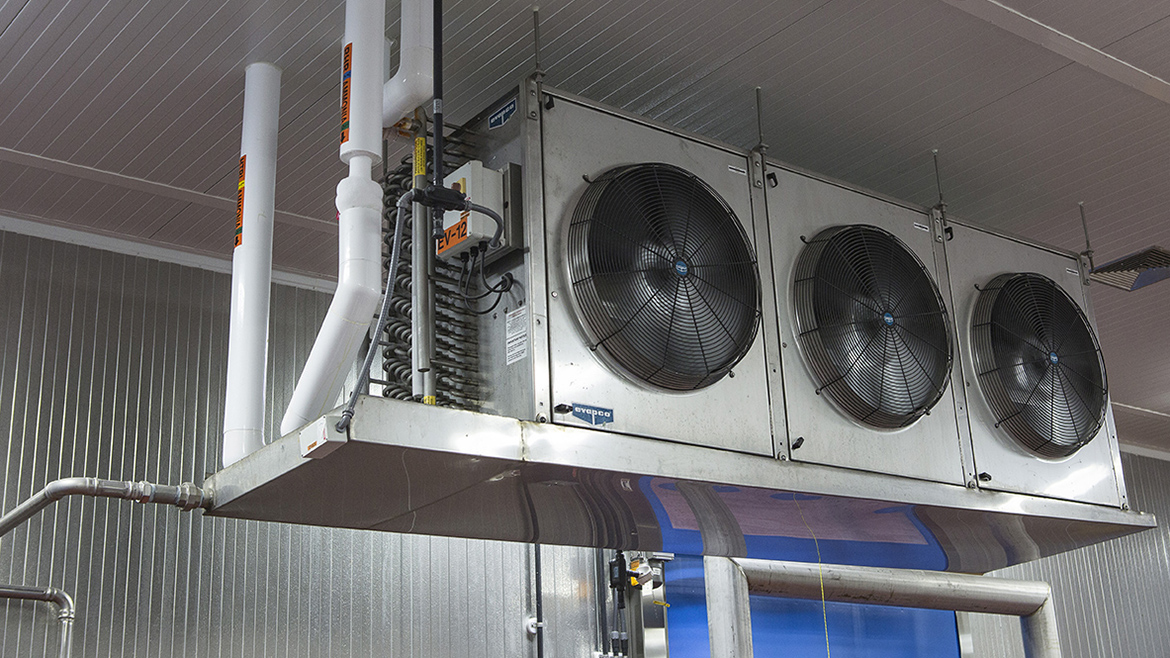
With all the problems mentioned above, Ziskind recommends digging deeply to identify root causes. For example, why is there ponding water in the same place day after day? If it’s coming from an evaporator, why? Is the drip pan overflowing? Is the condensate drainage pipe clogged? Why?
“Beyond physical repairs, I often recommend engineering solutions that minimize or eliminate reliance on human controls — interlocking doors, automatic timing systems for cleaning, redesigned traffic flow patterns,” Ziskind adds. While engineering controls have their place, physical barriers and automated systems provide more reliable, long-term protection.
The Infamous Floor Drain
“As one plant manager told me: ‘I know I have Listeria in my drains — I just need to keep it there!’” Ziskind says.
“I’ve encountered drains tied into bathroom systems — a disaster requiring complete drainage rework,” Ziskind adds. In another case, a facility designed their entire sanitation protocol around an inadequate drainage system’s limitation rather than fixing the underlying problem.
In older facilities, once a drain problem is identified, a complete assessment is needed to determine the corrective actions and the time, resources and construction involved, says CRB’s Coronel. “This process requires a disciplined approach and a thorough risk assessment to determine the appropriate solution. Unfortunately, there is no silver bullet.”
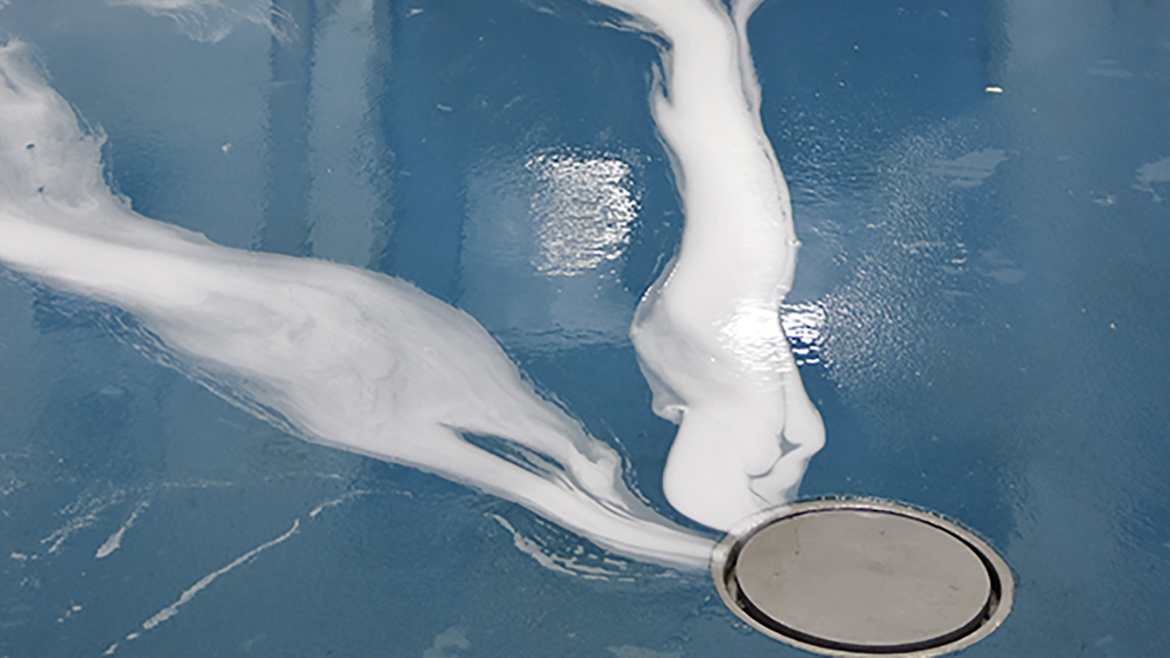
A drain functions correctly only when the floor slopes properly, says Gleeson’s Rens. “Local repairs are sometimes possible using urethane toppings if the surrounding slab is structurally sound. However, when we see widespread cracking, low spots or slab delamination, the entire floor typically must be removed and replaced to eliminate underlying harborage points.”
Floor drain issues in wet processing environments are notoriously tricky, especially because drains are typically associated with Listeria risk, says Scott Wever, Hixson manager, manufacturing engineering. Depending on the original installation and the condition of the underground piping, some drains can be repaired or replaced, especially if the area can be properly segregated during the work. Food safety during demolition is critical, since any disruption risks spreading bacteria throughout the facility.
Camera inspections can help assess the extent of damage and what materials are in place, says Wever. “Whether a full floor removal is necessary depends on what you find during scoping. If the underground infrastructure is sound, you may only need to remove a small section to access and fix the problem. However, if you’re dealing with outdated materials or extensive corrosion, full replacement may be the safest and most effective route.”
Processing Equipment Issues
Processing equipment issues can include a long list of problems. “Some of the most common issues we encounter involve conveyor systems, and in particular, metal fragments from worn components and belt degradation,” says Hixson’s Wever. These problems have led to multiple recalls, including recent cases where metal from conveyors entered product streams. Continuous belts like thermoplastic belt systems are frequent culprits due to wear and poor tracking. If belts aren’t aligned properly or are rubbing against metal rails or shafts, they can shed material into the product. Fixing these issues starts with rigorous preventative maintenance: inspecting belt tracking, checking for wear points and replacing components before they fail.
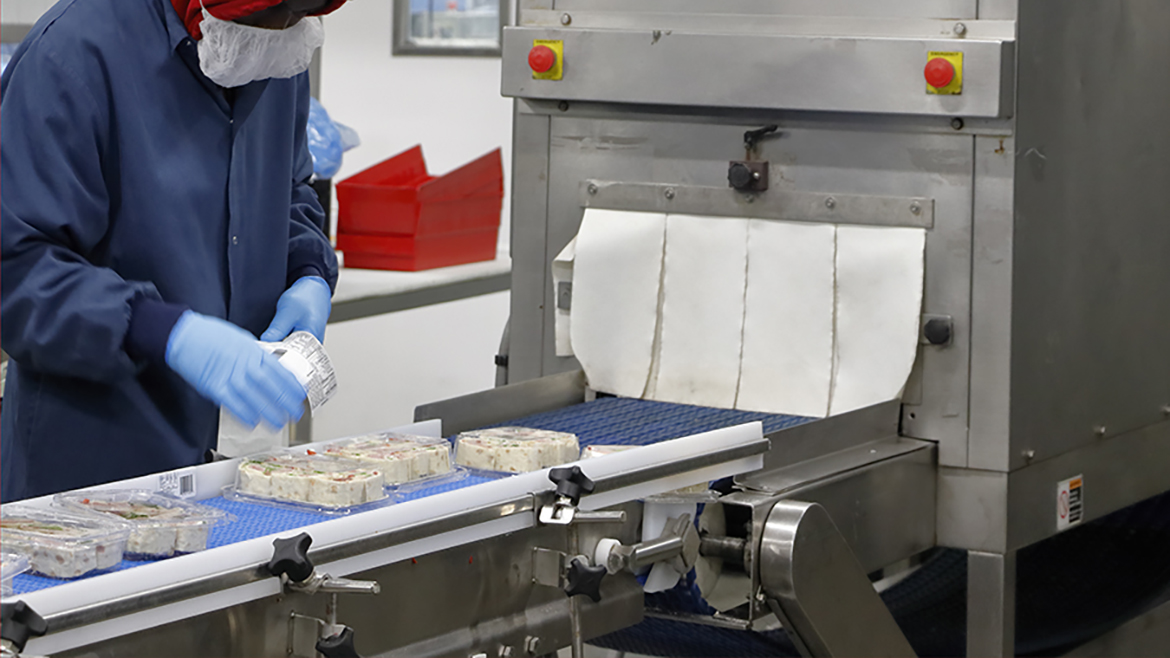
Keeping maintenance up to date also means that sanitation protocols must be aligned with equipment design, Wever says. In addition, facilities must prioritize routine quality control (QC) checks and maintenance programs, e.g., documenting inspections and training staff to recognize early signs of wear, ensuring that CIP equipment is operating at correct pressures, temperatures and flow rates — and that clean out of place (COP) procedures are followed.
Regular interval inspections paired with third-party audits are essential, but the system for documenting and addressing findings is equally critical, Ziskind says.
Operators must be trained to identify critical issues and empowered to stop production when food safety is at risk. Technology can help: historian for temperature monitoring and CIP logging with automatic alerts to management when parameters drift.
Most importantly, food safety must be a standing agenda item in daily production and maintenance meetings, as well as top level management meetings — not something discussed only when problems arise, Ziskind says. This keeps it top of mind, enables addressing the issue proactively and ensures accountability at all levels.
CIP and COP
Sanitation of equipment is essential for food safety, and sanitation standard operating procedures (SSOPs) are critical for good sanitation, says CRB’s Coronel. These procedures must be verified and reviewed frequently to ensure compliance. Besides the process equipment, all aspects of the facility including tables, floors, equipment exteriors, walls, light fixtures and ceilings must be cleaned and sanitized to the level required.
CIP takes the human element out of cleaning, but it may not always be practical. “The decision between CIP and COP requires a comprehensive review,” Coronel says. In some cases, the replacement of equipment that cannot be cleaned otherwise may be deemed necessary. Not all equipment can be cleaned without disassembly; even partially and the fixed items in a factory require manual cleaning.
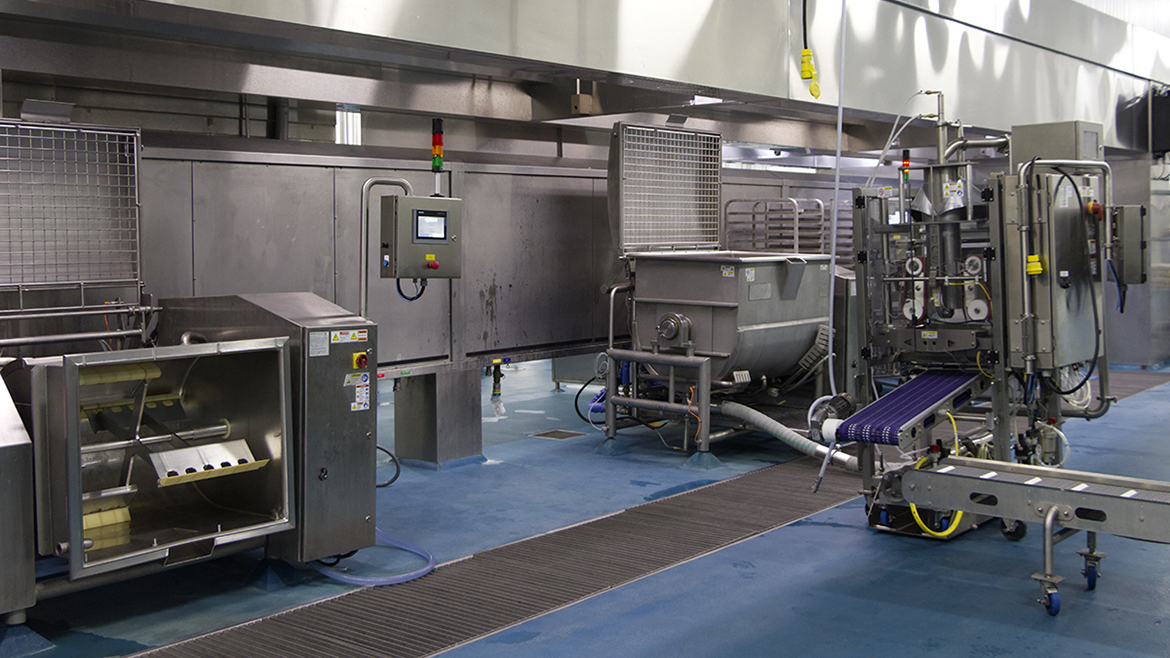
According to Gleeson’s Rens, CIP systems are ideal when equipment is:
- Difficult to access
- Confined or elevated
- Hazardous for manual cleaning
- Complex in geometry, such as ovens or spiral freezers
In these cases, CIP improves cleaning consistency, reduces labor risks and enhances inspection capability. While the investment can be significant, the long-term gains in food safety, labor efficiency and downtime reduction typically justify the expense.
Automated CIP with data logging can significantly reduce human error compared to manual cleaning, says Mach Global’s Ziskind. For human cleaning operations, implement as many automated controls as possible: temperature monitoring, chemical pH verification, flow monitoring.
The key is real-time data capture, Ziskind says. Modern historians and even chart recorders are superior to clipboard-based handwritten documentation, which creates opportunities for missed issues or delay detection. The upfront investment in automation typically pays for itself through reduced risk, improved consistency and documentation that proves compliance.
Food Safety Key Principles
Food safety requires a systems approach with multiple layers or protection. The stakes are too high — illness, death and irreparable brand damage — to rely on reactive measures. Ultimately, you will better protect the public, your consumers and your brand, Ziskind says. Always follow these three safety principles:
- Design food safety in during engineering and design phases of a capital project.
- Maintain vigilance. Regular reviews by independent third parties catch issues early.
- Communicate upward. Food safety findings must reach management immediately when a potential problem is spotted. Viewing food safety as a cost center rather than a risk-mitigation investment is a dangerous mistake that can lead to devastating consequences.
Looking for a reprint of this article?
From high-res PDFs to custom plaques, order your copy today!