Food Engineering logo
search
cart
facebook twitter linkedin youtube
  • Sign In
  • Create Account
  • Sign Out
  • My Account
Food Engineering logo
  • NEWS
    • Latest Headlines
    • Manufacturing News
    • People & Industry News
    • Plant Openings
    • Recalls
    • Regulatory Watch
    • Supplier News
  • PRODUCTS
    • New Plant Products
    • New Retail Products
  • TOPICS
    • Alternative Protein
    • Automation
    • Cannabis
    • Cleaning | Sanitation
    • Cross-Functional Food Innovation
    • Fabulous Food Plants
    • Food Safety
    • Maintenance Strategies
    • OEE
    • Packaging
    • Sustainability
    • More
  • EXCLUSIVES
    • Plant Construction Survey
    • Plant of the Year
    • Sustainable Plant of the Year
    • State of Food Manufacturing
    • Top 100 Food & Beverage Companies
  • MEDIA
    • Podcasts
    • Videos
    • Webinars
    • White Papers
  • FOOD MASTER
  • EVENTS
    • Food Automation & Manufacturing Symposium and Expo
    • Industry Events
  • RESOURCES
    • Newsletter
    • Custom Content & Marketing Services
    • FE Store
    • Government Links
    • Industry Associations
    • Market Research
    • Sponsor Insights
    • Classified Ads
  • EMAGAZINE
    • eMagazine
    • Archive Issue
    • Advertise
  • SIGN UP!
Alternative Protein

Cell-Cultured/3D Printed

When Food Meets Fermentation: Engineering the Next Revolution in Protein Production
By Andrew Buhrmann, Jeremy Owen
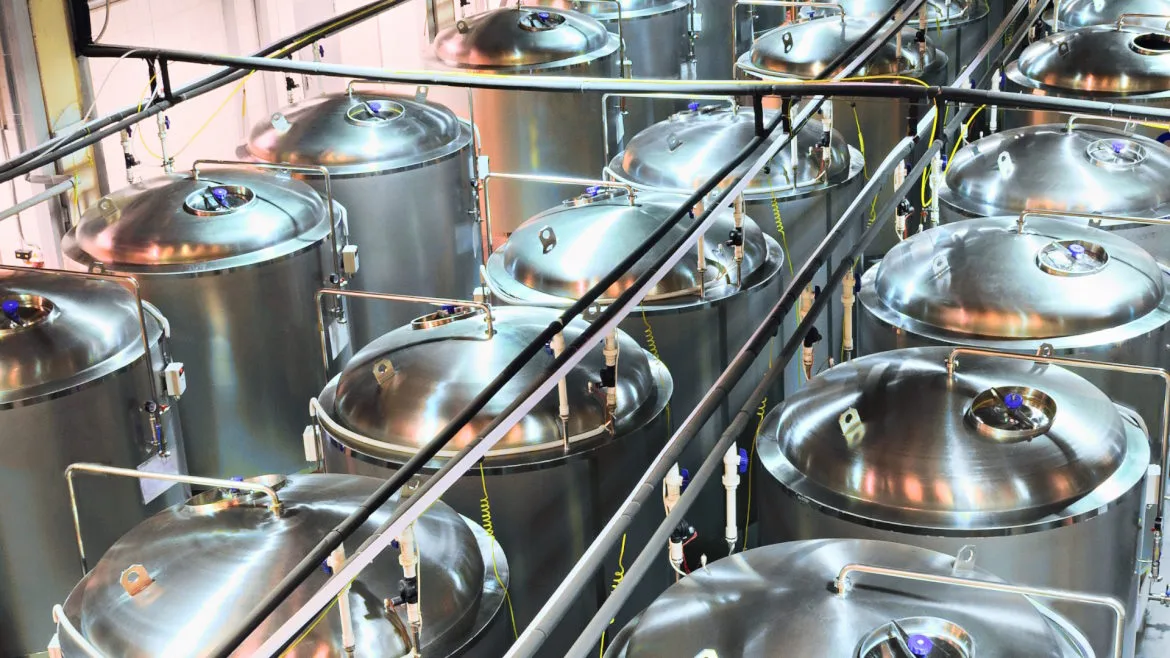
Fermentation processing

Image courtesy of New Wave Biotech

July 20, 2026

The conversation around alternative proteins has focused on scientific breakthroughs: from engineered microbes to precision fermentation and cultivated meat.

The next phase of growth is shifting from science to scale — infrastructure is required to produce these products with precision and consistency required of these systems. 

The basic idea behind fermentation is not new. What’s changed is what the organisms are producing and how we control their environment to reliably produce novel products.

In the alternative protein space, you might engineer yeast, bacteria or mycelium to convert feedstocks such as dextrose, methanol or glycerol into specific proteins. In some cases, it is desirable for those proteins to replicate the amino acid profile of animal protein. In others, they need to behave a certain way in food processing or match the taste and texture consumers expect. What makes this approach compelling is that these systems can convert feedstocks directly into protein, with organisms selected and developed to produce specific outputs. 

That’s where the scaling challenges appear.


From Lab to Kitchen Tables

Each step, from lab to kitchen table, requires more equipment, more infrastructure and more capital. Moving from pilot-scale vessels to demonstration and commercial production means investing in larger systems long before demand is proven, starting with thoughtfully designing or selecting scaleup facilities to prove out technology. This transition is critical, and success depends on getting early engineering and design decisions right.

Experts recognize commercial facilities are not exact replicas of pilot systems. Scaleup and testing are essential to navigate challenges that may not appear at lab scale. Unwanted co-products can emerge at low concentrations and only become visible when processes are run at larger volumes, requiring pilot and demonstration facilities to generate sufficient material for detection and mitigation through downstream processing or further organism development. For commercial facilities to be successful, they require high product selectivity and efficient throughput.
Alternative Protein

Explore More Alternative Protein

Even as the industry works through demand versus scaling and delivery, investment has not disappeared, though it is more selective. Going from a promising process on paper to a full commercial facility is a harder climb than it was five years ago.

That elevates the economics of these systems from a constraint to a competitive advantage, as achieving true cost competitiveness becomes critical to long-term success and sustained customer adoption beyond early market enthusiasm.


Technoeconomic analysis helps identify where the leverage points are to better understand factors like facility size, feedstock costs and equipment utilization. This analysis drives cost of goods and design decisions; it can just as importantly inform R&D priorities and guide project development, identifying key assumptions and risks early. For example, higher fermentation titers may not improve economics if they extend cycle times, and larger bioreactors do not always reduce capital costs if there is long turnaround time.


Furthermore, as the market has evolved, price has become a more significant factor in adoption, placing greater pressure on production costs and the need for scalable technologies that move beyond lab-scale proof of concept. A few years ago, it was different. There was the initial excitement around new products like the Beyond and Impossible Burger and shoppers were curious to try something new. However, consumer trends continue to shift and chasing the latest wave of demand adds risk, reinforcing the need for disciplined, strategic approaches to scaling production. 


New Category, New Costs

As consumer demands evolve, so do market prices and therefore production costs. Price matters. Perception matters. Long-term design matters. Solving the capital cost challenge for these facilities is critical to enabling broad production at scale. Success increasingly depends on viewing fermentation facilities as full lifecycle systems — leveraging lessons from past projects and integrating successful processes and facility designs early and grounding decisions in current, real-world conditions to control costs, manage risk and adapt as the market continues to change.

One pattern often seen with first-of-a-kind plants is over-engineering. When you are building something that has never been built at that scale, the instinct is to be conservative with extra instrumentation or additional equipment to cover any possible operating scenario.

If developers can narrow those design ranges and identify real operating conditions earlier, they can right-size equipment instead of building systems the facility may never need. Reducing uncertainty earlier in the design process by incorporating construction and execution considerations into design decisions and therefore reducing potential risk is the focus of modern tools at firms like Black & Veatch.

Artificial intelligence (AI) is also playing a role in this area in laboratories and pilot environments, accelerating the identification of target molecules and pathways and enabling faster screening and selection of organisms through lab automation. However, process scaleup and commercial facility design must keep pace to address current bottlenecks in production at scale. At Black & Veatch, those same tools help experts optimize layouts, monitor construction schedules and improve efficiency overall, reducing unnecessary over-building and controlling costs. That alone can significantly reduce facility capital requirements.


Over the Horizon

As for what the fermentation plants of the future will look like, the honest answer is that they may not look dramatically different from the ones being built today.

Technology startups are increasingly partnering with established manufacturers that already operate facilities and possess the necessary operational expertise. Others are looking at existing fermentation assets that have become available as industries evolve.

Large breweries provide one example. As facilities close, they leave behind fermentation vessels, utilities and infrastructure that, in some cases, could be repurposed. Some companies are beginning to explore whether these underutilized assets can help them get product into the market faster without building entirely new facilities, particularly where processes require lower oxygen and mixing demands and organisms that can tolerate more variable conditions.

The real shift isn’t how these facilities look; it’s what they make possible. For the first time, we can design protein production as an engineered system rather than something tied to land, livestock and growing cycles, constraints that often come with lower yields and higher water consumption.

Getting there will depend on engineering and the companies that learn how to design, finance and build these facilities efficiently, while also developing robust, scalable organisms and processes, will ultimately determine how quickly this industry moves forward.

Authors used AI tools to spell-check and review grammar. Final reporting and verification were conducted by the editorial team.

KEYWORDS: engineering fermentation

Share This Story

Looking for a reprint of this article?
From high-res PDFs to custom plaques, order your copy today!

Andrew buhrmann

Andrew Buhrmann is a fermentation and process engineering specialist with over 18 years of expertise spanning research and commercial production across diverse microbial platforms. He has demonstrated proficiency in process development, plant trials, CIP/SIP, design, validation and implementation of advanced systems tailored for pilot and large-scale production of bio-industrials, food, probiotic, postbiotic and alternative protein products. He has a track record in designing, constructing, commissioning and operating high-sterility precision fermentation and downstream processing facilities.

Jeremy owen black and veatch

Jeremy Owen is a solutions manager at Black & Veatch, where he leads bioprocess and scale-up projects in industrial manufacturing. With over two decades of experience managing complex initiatives, he specializes in bridging innovation and execution. Earlier in his career, Owen contributed to several startups by developing novel precision fermentation processes, building and operating demonstration facilities, and leading engineering design for first-of-a-kind commercial fermentation plants. At Black & Veatch, he now focuses on site development and process design for biomanufacturing projects, as well as modernizing agribusiness and food and beverage facilities.

Recommended Content

JOIN TODAY
to unlock your recommendations.

Already have an account? Sign In

  • CJ Schwan’s Salina facility.

    Recipe for Growth: How CJ Schwan’s Powers Pizza Production with People and Automation

    Blending advanced automation with purposeful design, this...
    Cross-Functional Food Innovation
    By: Alyse Thompson-Richards
  • Paris Baguette rendering

    FOOD ENGINEERING’s 49th Annual Plant Construction Survey

    Food and beverage manufacturers continue to invest in...
    Plant Openings
    By: Alyse Thompson-Richards
  • Bottling machine

    How Optical and X-Ray Inspection Supports Bottling Safety and Quality

    By transitioning from legacy single-technology systems to...
    Food Safety
    By: Dan McKee
Manage My Account
  • eMagazine
  • Newsletter
  • Online Registration
  • Manage My Preferences
  • Customer Service

More Videos

Sponsored Content

Sponsored Content is a special paid section where industry companies provide high quality, objective, non-commercial content around topics of interest to the Food Engineering audience. All Sponsored Content is supplied by the advertising company and any opinions expressed in this article are those of the author and not necessarily reflect the views of Food Engineering or its parent company, BNP Media. Interested in participating in our Sponsored Content section? Contact your local rep!

close
  • Worker in protective food-processing attire uses a tablet beside stainless-steel conveyor equipment in a modern food manufacturing facility.
    Sponsored bySafetyChain

    Your Biggest Losses Are Hiding in Data You Already Have

  • Stainless steel conveyor system transferring cut food pieces—likely pasta or fries—through an enclosed industrial processing line using a flexible hose and screw conveyor in a manufacturing facility.
    Sponsored byHapman

    What’s Slowing Down Your Bulk Material Handling Process?

Popular Stories

Nature's Bakery to shutter Hazelwood, MO plant

Nature's Bakery Closes Missouri Plant

Bauducco FL grand opening

Bauducco Opens Wafer Production Facility in Florida

Working in safety gear on her tablet.

Engineering Change: Discovering the Impact of Women Engineers in Food Manufacturing

Promo for the 2026 Plant of the Year: CJ Shwan

Events

July 23, 2025

Decarbonizing Process Heat: What You Should Know and Next Steps

On Demand Driven by climate goals, business risk, client interest, and resilience considerations, food and beverage companies are increasingly turning their attention to decarbonizing their production processes.

July 23, 2025

Decarbonizing Process Heat: What You Should Know and Next Steps

Driven by climate goals, business risk, client interest, and resilience considerations, food and beverage companies are increasingly turning their attention to decarbonizing their production processes.

View All Submit An Event

Products

Recent Advances in Ready-to-Eat Food Technology

Recent Advances in Ready-to-Eat Food Technology

See More Products

June 30 FE Webinar: Introducing Industrial Metaverse for Consumer Packaged Goods


CHECK OUT OUR NEW ESSENTIAL TOPICS

Alternative ProteinAutomationCleaning/SanitationFabulous Food Plants

Food SafetyMaintenance StrategiesOEE

PackagingSustainability

Related Articles

  • cultivated meat

    How Pumps Can Overcome Bioprocessing Challenges in Alternative Protein Production

    See More
  • Sow Good Screenshot.jpg

    Freeze-dried Fruits and Vegetables Could Be the Next Big Thing in the Nutritional Food Space

    See More
  • Texas A&M instructs the next generation of food engineers

    See More

Related Products

See More Products
  • food proces.jpg

    Food Process Engineering Emerging Trends in Research and Their Applications

  • food crime.jpg

    Food Crime: An Introduction to Deviance in the Food Industry

See More Products

Events

View AllSubmit An Event
  • September 29, 2011

    Food Plant of the Future: Anticipating the Next Generation

    On-Demand: Exclusively for thought-leaders in food and beverage processing facility management, Food Plant of the Future webinars are presented by Hixson, a leading design and engineering firm of food processing facilities in North America.
View AllSubmit An Event
×

Elevate your expertise in food engineering with unparalleled insights and connections.

Get the latest industry updates tailored your way.

JOIN TODAY!
  • RESOURCES
    • Advertise
    • Contact Us
    • Food Master
    • Store
    • Want More
  • SIGN UP TODAY
    • Create Account
    • eMagazine
    • Newsletter
    • Customer Service
    • Manage Preferences
  • SERVICES
    • Marketing Services
    • Reprints
    • Market Research
    • List Rental
    • Survey/Respondent Access
  • STAY CONNECTED
    • LinkedIn
    • Facebook
    • YouTube
    • X (Twitter)
  • PRIVACY
    • PRIVACY POLICY
    • TERMS & CONDITIONS
    • DO NOT SELL MY PERSONAL INFORMATION
    • PRIVACY REQUEST
    • ACCESSIBILITY

Copyright ©2026. All Rights Reserved BNP Media, Inc. and BNP Media II, LLC.

Design, CMS, Hosting & Web Development :: ePublishing