The Food Manufacturing Documentation Paradox: Audit-Ready Plants, Undocumented Know-How
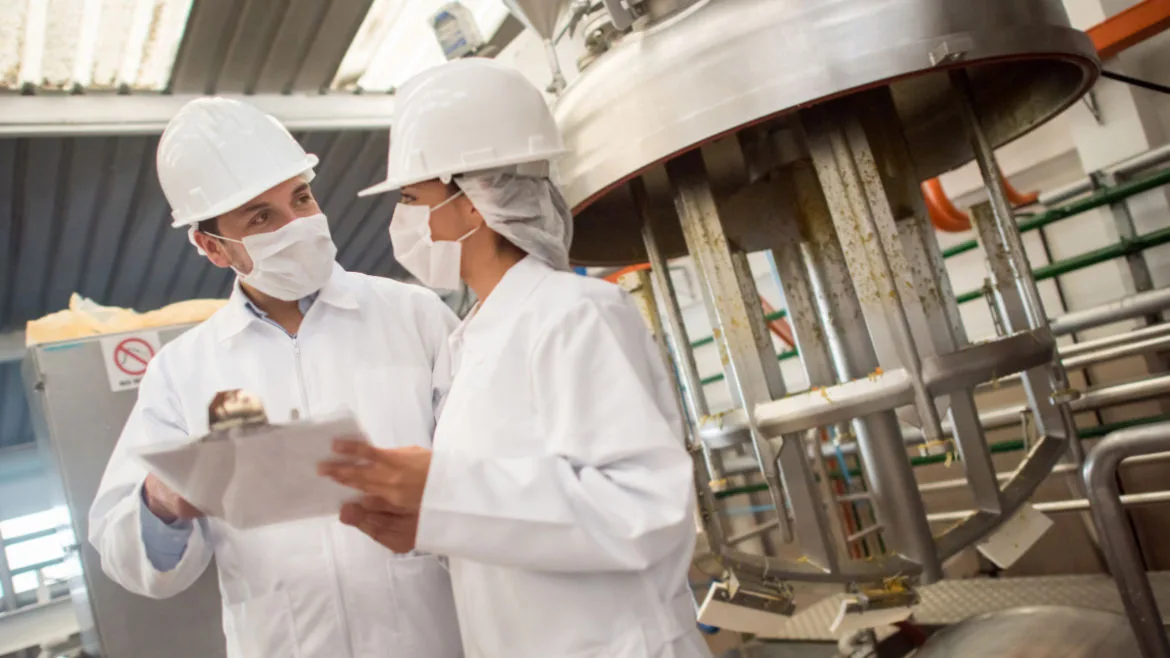
Getty Images Plus / andresr / E+
Food and beverage plants may be the most documented operations in all of manufacturing — HACCP plans, GMPs, sanitation SOPs, FSMA-required preventive controls with monitoring and verification records behind them). Walk into almost any mid-size plant and someone can show you the binder or the document system that satisfies the auditor every time.
Now walk to the filling line at 2 a.m. and watch what actually keeps the plant running.
Luis, a veteran operator from Venezuela, has spent more than 30 years on lines like these. He is the kind of person who arrives in the morning, and during setup, can tell something is wrong with a seamer just by listening to it, before it even starts running. None of what Luis hears is written down anywhere.
That gap is the paradox this industry lives with and rarely names. Documentation is written to demonstrate compliance. The knowledge that keeps lines producing safe product at rate lives somewhere else entirely: in the heads and hands of a shrinking group of veteran operators. And the workforce math says that arrangement is running out of time.
The Math is Not Subtle
One in four U.S. food manufacturing employees is already 55 or older, according to the U.S. Bureau of Labor Statistics. Total separations in manufacturing have run at rates equivalent to roughly a third of the workforce annually in recent years, and frontline food processing roles typically turn over faster than manufacturing as a whole.
North of the border, Canada's food and beverage processing sector expects to need about 142,000 new workers between 2023 and 2030, with 66,800 retirements in the same window, according to Farm Credit Canada. Across all of manufacturing, the Manufacturing Institute and Deloitte project as many as 1.9 million unfilled jobs by 2033.
Every retirement in those numbers takes something with it that no HACCP plan captures: the judgment layer. Not the critical limits, which are documented, but the accumulated sense of how this line, this product, this equipment behaves and what to do when it drifts.
Why Compliance Documentation Fails as Execution Documentation
It is written for the wrong reader. A preventive controls document is structured to show an auditor completeness and traceability. An operator mid-shift needs something else: what do they do at this step? What should it look like? How do they know it came out right? Those are different documents pretending to be one.
It is written from the wrong place. Most SOPs are drafted in an office from process specifications, not at the line from observation. In my fieldwork across food-adjacent machinery, marine and aerospace manufacturers, a traditionally written procedure captures roughly three-quarters of how experienced operators actually perform the job. The missing quarter is the judgment layer.
It is static. The process evolves between audits; the document is updated before the next one. In the months between, the floor learns that the paper is behind reality and employees stop consulting it. From that point on, training new hires means shadowing whoever is available, and with a more than 30% turnover, it is a treadmill that never stops.
And it often speaks the wrong language — literally. In plants where much of the workforce thinks in Spanish, an English-only SOP is a compliance artifact, not a work instruction. Bilingual content at body level, not a translated cover page, changes who can actually use the document.
The Second Layer: Operator-First Living Standards
The fix is not more compliance documentation. It is a second layer, built for execution, that coexists with and feeds the food safety system.
Capture at the line, with the veterans, during real production. Photograph every step at the actual station. When the veteran pauses to check something, that check enters the standard next to that step's photo, with a verification note: what "right" looks like. This is slow work measured in hours per procedure, and it is the only way the judgment layer gets on paper while the people who hold it are still on payroll.
Test what you captured. Hand the draft to a competent operator who does not run that line and watch them follow it. Every hesitation marks a hole. Fill the holes while the veteran is still there to fill them.
Then keep the document alive. Two feedback channels do the work: supervisors who periodically observe the job step by step against the standard and record deviations, and operator questions from the floor treated as revision fuel. A procedure that reaches its fifth or sixth revision within months is not evidence of bad writing. It is evidence that the floor uses it.
In our deployments, that observation data also separates four problems that otherwise look identical: one operator drifting (coach the person), everyone drifting at one step (fix the standard), new hires drifting everywhere (fix the training plan), and drift forced by the process itself (fix the process, not the paper).
What the Plant Gets Back
Faster onboarding, first. At food industry turnover rates, the speed at which a new hire becomes reliably productive is not an HR metric; it is a capacity metric. Training against photo-based standards of this plant's actual lines beats shadowing by weeks.
Less variability between shifts and crews, because "how we run this line" stops depending on who is on it.
And, quietly, better audits. When the execution layer matches reality and the floor actually uses it, the compliance layer sits on truth instead of aspiration. Auditors notice the difference between documents that describe the plant and documents that describe intentions.
Where to Start
Not with a plant-wide program. Pick one line, your most experienced operator on it, and the two procedures where their retirement would hurt most. Capture at the station during real runs. Run the second-operator test and count what is missing. That number, the share of a critical job that currently lives in one person's head, is the most useful risk metric most plants have never calculated. The workforce math above says the window for capturing it is measured in years, not decades. In Luis's plant, that risk has a first name.
AI tools were used to organize and summarize source material used in this article. Final reporting and verification were conducted by the editorial team.
Looking for a reprint of this article?
From high-res PDFs to custom plaques, order your copy today!



-Photo-by-George-Dagerotip-on-Unsplash.webp?height=200&t=1694540702&width=200 "A vertical farm")