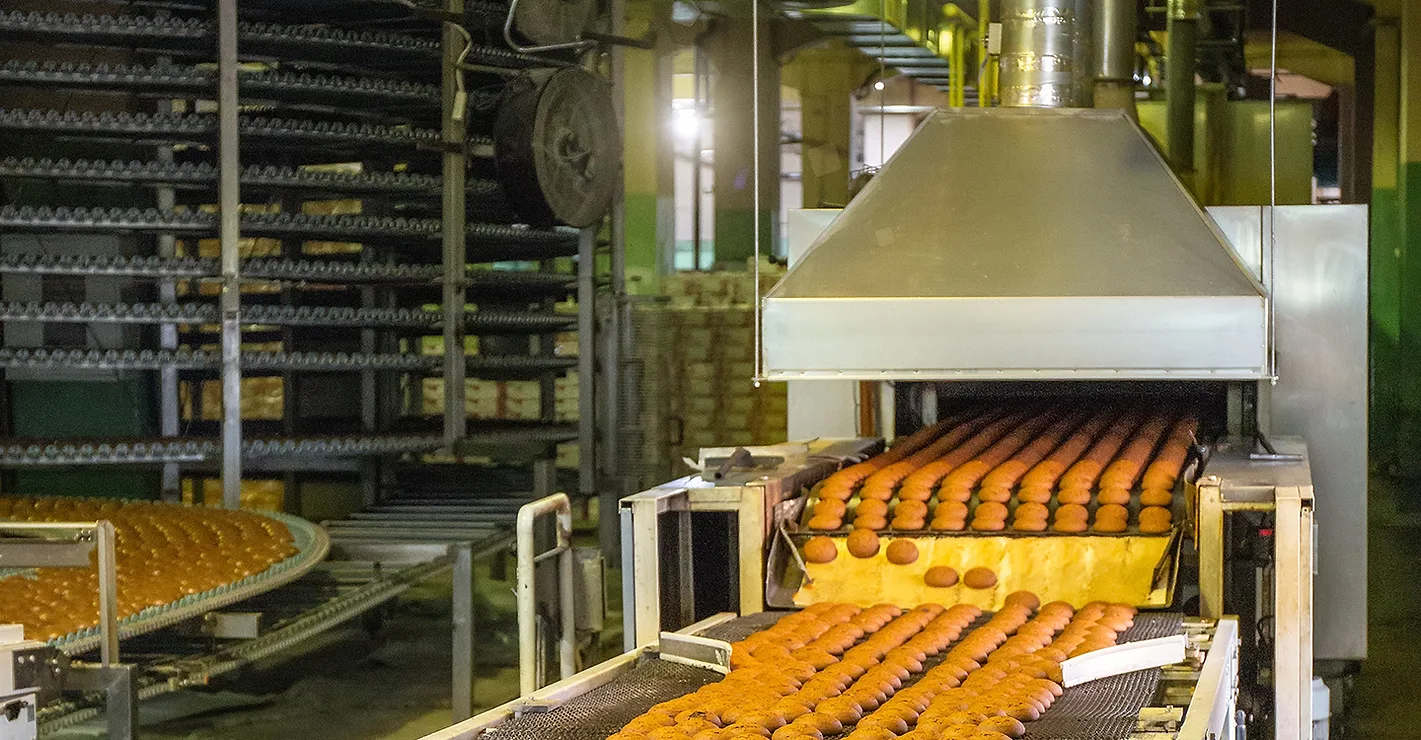
Smarter Line Design Improves Food Manufacturing Efficiency and Throughput

Food manufacturers face increasing pressure from every direction. Rising labor costs, tighter food safety requirements, expanding product portfolios, and growing consumer demand have created a difficult balancing act for operations teams. Manufacturers must increase throughput and maintain product quality while minimizing downtime and controlling costs.
While conversations about plant optimization often focus on processing equipment, robotics, or software systems, one critical component is frequently overlooked: the way products move through the facility.
Material handling and product conveyance play a central role in determining whether a production line operates efficiently or becomes prone to bottlenecks, product damage, sanitation challenges, and unplanned downtime. As facilities continue pursuing greater levels of automation and operational excellence, manufacturers are increasingly recognizing that smarter product handling strategies can have a significant impact on overall performance.
Why Product Flow Matters More Than Ever
Modern food facilities are expected to run faster and more efficiently than ever before. At the same time, product variety continues to expand as brands introduce new flavors, package sizes, and seasonal offerings to meet changing consumer preferences.
This increase in complexity creates numerous opportunities for disruption throughout the production process. A single bottleneck at packaging, accumulation, inspection, or palletizing can quickly impact upstream operations, reduce throughput and create costly downtime.
Many manufacturers focus on improving machine performance in isolated areas of the plant, but true efficiency comes from viewing the production line as an interconnected system. Product flow between processes must be consistent, predictable, and adaptable to changing production requirements.
When products move smoothly through a facility, manufacturers can better utilize equipment, improve labor efficiency, and reduce the risk of production interruptions.
Designing for Food Safety and Sanitation
Food safety remains one of the industry's highest priorities, and conveyance equipment plays a key role in maintaining sanitary operations.
Historically, production teams often viewed sanitation as a separate function performed after production. Today, manufacturers increasingly understand that hygienic design principles should be incorporated into equipment selection and plant layout from the beginning.
Conveyance systems that simplify cleaning procedures can help reduce sanitation time while supporting compliance with food safety programs. Equipment designed to eliminate difficult-to-clean areas, minimize product buildup, and withstand washdown procedures can contribute to more efficient sanitation cycles.
This becomes particularly important in facilities producing ready-to-eat products, dairy items, proteins, baked goods, and other applications where contamination prevention is critical.
By considering sanitation requirements during line design, manufacturers can improve both food safety outcomes and operational efficiency, reducing the time needed for cleaning while increasing available production hours.
Using Accumulation to Protect Throughput
One of the most common causes of efficiency loss occurs when a downstream process temporarily slows or stops.
Without a strategy for managing product flow during these disruptions, manufacturers often experience line-wide shutdowns that reduce productivity and create unnecessary waste.
Accumulation systems provide a solution by temporarily holding products while downstream equipment recovers. Instead of forcing the entire line to stop, accumulated products can continue moving through the system once normal operations resume.
This approach offers benefits beyond simply preventing downtime. Effective accumulation strategies can help manufacturers protect product quality, improve packaging efficiency, and reduce labor intervention during routine production fluctuations.
For food manufacturers working to maximize overall equipment effectiveness (OEE), accumulation often represents one of the most practical opportunities for improvement.
Supporting Automation Without Sacrificing Flexibility
Automation initiatives continue gaining momentum throughout the food industry. Robotic packaging, automated inspection systems, and intelligent production controls are helping facilities address labor shortages while increasing consistency.
However, many automation projects encounter challenges because supporting product transport systems were never designed for highly automated environments.
Successful automation requires precise, repeatable product presentation. Inconsistent spacing, uncontrolled product movement, or line instability can reduce the effectiveness of downstream automation systems.
Manufacturers evaluating automation investments should consider how products are transferred, accumulated, merged, and positioned throughout the line. Improvements in these areas often help maximize the performance of robotic and automated systems while creating a foundation for future expansion.
At the same time, flexibility remains essential. Consumer preferences continue evolving rapidly, requiring food manufacturers to adapt to production schedules and packaging formats more frequently than in the past.
Production systems that can accommodate these changes without extensive modifications help facilities remain competitive while improving long-term return on investment.
Reducing Product Damage and Waste
Product waste remains a significant challenge for many food manufacturers. While ingredient loss often receives the most attention, damage occurring during product handling can also contribute to reduced profitability.
Delicate bakery products, confectionery items, fresh produce, snack foods, and packaged goods may be susceptible to crushing, scuffing, tipping, or other forms of damage during transportation.
These issues can occur when product transfers are poorly designed; accumulation methods create excessive pressure, or line speeds exceed what the product can tolerate.
A thoughtful approach to product handling helps manufacturers reduce waste while maintaining product quality standards. Minimizing unnecessary product contact and ensuring smooth transitions between production stages can help protect both finished goods and brand reputation.
As consumers become increasingly focused on quality and consistency, reducing product damage offers benefits that extend beyond simple cost savings.
Taking a System-Level View of Production
The most successful food manufacturers often share a common characteristic: they evaluate performance from a system-wide perspective rather than focusing exclusively on individual machines.
When throughput challenges arise, the root cause is not always the piece of equipment operating at the slowest speed. In many cases, the problem originates from inefficiencies in product flow, accumulation management, sanitation processes, or line balancing.
A system-level approach allows manufacturers to identify opportunities that may otherwise go unnoticed. Small improvements in product movement can often create measurable gains across the entire operation.
Questions worth evaluating include:
- Where do bottlenecks occur most frequently?
- How much downtime results from product flow interruptions?
- Are sanitation procedures limiting available production time?
- Is accumulation being used effectively?
- Can the current line support future automation goals?
- Are products experiencing avoidable damage during transportation?
Answering these questions can help manufacturers uncover practical opportunities to improve efficiency without major facility expansions or complete line redesigns.
Building a More Resilient Food Production Operation
Food manufacturing continues to evolve at a rapid pace. Rising consumer expectations, labor challenges, food safety requirements, and increased automation are reshaping the way facilities operate.
As manufacturers look for ways to improve performance, material handling systems deserve greater attention within continuous improvement initiatives. Product movement impacts nearly every aspect of production, from sanitation and quality to throughput and labor utilization.
By focusing on smarter line design, effective accumulation strategies, hygienic equipment principles, and optimized product flow, food manufacturers can create more resilient operations capable of supporting future growth.
The facilities that view conveyance as a strategic component of production rather than simply a means of transportation will be better positioned to improve efficiency, protect product quality, and adapt to changing market demands in the years ahead. For more information on how you can achieve safer and more efficient product movement, please visit our website dornerconveyors.com.
Looking for a reprint of this article?
From high-res PDFs to custom plaques, order your copy today!