Food Engineering logo
search
cart
facebook twitter linkedin youtube
  • Sign In
  • Create Account
  • Sign Out
  • My Account
Food Engineering logo
  • NEWS
    • Latest Headlines
    • Manufacturing News
    • People & Industry News
    • Plant Openings
    • Recalls
    • Regulatory Watch
    • Supplier News
  • PRODUCTS
    • New Plant Products
    • New Retail Products
  • TOPICS
    • Alternative Protein
    • Automation
    • Cannabis
    • Cleaning | Sanitation
    • Cross-Functional Food Innovation
    • Fabulous Food Plants
    • Food Safety
    • Maintenance Strategies
    • OEE
    • Packaging
    • Sustainability
    • More
  • EXCLUSIVES
    • Plant Construction Survey
    • Plant of the Year
    • Sustainable Plant of the Year
    • State of Food Manufacturing
    • Top 100 Food & Beverage Companies
  • MEDIA
    • Podcasts
    • Videos
    • Webinars
    • White Papers
  • FOOD MASTER
  • EVENTS
    • Food Automation & Manufacturing Symposium and Expo
    • Industry Events
  • RESOURCES
    • Newsletter
    • Custom Content & Marketing Services
    • FE Store
    • Government Links
    • Industry Associations
    • Market Research
    • Sponsor Insights
    • Classified Ads
  • EMAGAZINE
    • eMagazine
    • Archive Issue
    • Advertise
  • SIGN UP!
Maintenance StrategiesManufacturing News

New technologies boost plant safety
September 10, 2012
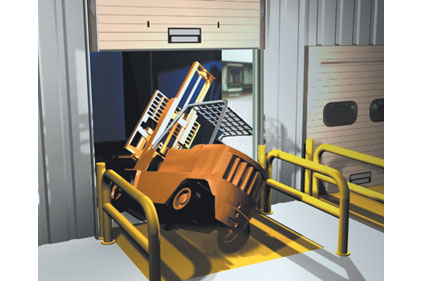
loading dock accidents
 

Loading dock accidents are very common, and many result in deaths, especially when the truck-trailer pulls away before the crew has finished loading. 
Source: Omron Scientific.

Plant explosions often grab the news headlines, but dust explosions in grain handling facilities and other plant mishaps don’t always make the national news.
Over the past 35 years, there have been more than 500 explosions in US grain handling facilities, killing more than 180 people and injuring over 675, according to OSHA statistics. Grain dust is the main source of fuel for explosions in grain handling. It is highly combustible and can burn or explode if enough becomes airborne or accumulates on a surface and finds an ignition source (such as lightning, a hot bearing, overheated motor, misaligned conveyor belt, heat or sparks from welding, cutting and brazing operations).
 
However, changes are being made to lessen these risks. Newer grain elevators tend to have an architecture that includes individual feeds, removing the older head house that served as a potential conduit to spread an explosion from one silo to another, says Walter Beattie, Insurance Services senior consulting engineer. Newer grain elevator systems also feature better grounding systems to shunt lightning to ground and minimize static buildup in loading and unloading operations. 
 

Problems with ammonia

It takes a lot of energy to set off an ammonia explosion, and indeed, ammonia explosions/fires are practically unknown, according to Tim Williams, Stellar Interactive Solutions senior project manager. However, a heavy dose of ammonia poisoning can kill an unprotected person within a minute or two. 
 
Anhydrous ammonia is used in closed refrigeration systems. The weakest link in an ammonia system is the maintenance and operation of it, and is largely a matter of training, says Williams. Therefore, processors should not wait for a total breakdown in equipment to repair it. 
 
Most ammonia systems use redundant safety valves on lines and provide safety controls and interlocks for the compressors. Typically, barring a catastrophic event, leaky pipes and/or joints can be quickly located and automatically shut down, explains Williams.
 

Forklifts and loading docks

With the frenetic pace around loading docks, it’s no wonder accidents happen, and they’re often forklift related. “Preventing workers from being crushed by a forklift or its load is currently done through the use of administrative controls,” says John Peabody, Omron Automation and Safety vice president major accounts. “But administrative controls consisting of personal protective equipment (PPE), warning signs, awareness barriers, process and procedure, and training are the least effective in the hierarchy of safety controls.” Peabody lists in order the three major components of the hierarchy of safety controls as:


1. Eliminating the hazard through design 

2. Engineering safety controls 

3. Applying administrative control.

Administrative controls are the least effective because they rely on human behavior, says Peabody. For example, these include designated pedestrian walkways, guard rails, visual and audible warnings and training on policies and procedures. 
 
At this time, Peabody claims, camera and vision systems do not increase operator awareness of pedestrian traffic any more than mirrors do. “Today, tightly enforced administrative controls are the only way to reduce the risk of forklift incidents in the warehouse.” 
 
However, the loading dock is one operation where more than administrative controls can be applied, says Peabody, specifically to prevent accidental drive-aways of trailers being loaded. If a trailer (truck) drives off while the trailer is being loaded, the forklift can fall off the dock and end up between the trailer and the dock, potentially resulting in a fatal injury. Trapped-key engineered controls, which don’t rely on human behavior, can ensure a trailer is locked in place before the loading dock door can even be opened. The controls also ensure the loading dock door is closed before the trailer is released. 
 

Lockout/tagout awareness

According to James W. Stanley, FDR Safety president, lockout/tagout is the number one safety issue in the industry simply because of the tremendous amount of machinery in the workplace and the amount of maintenance required to keep it going without losing production. 
 
OSHA requires the hazardous area of machines be guarded to prevent a worker from coming into contact with the hazards, explains Peabody. 
 
The most effective means to reduce risk is elimination. But if a hazard cannot be designed out or eliminated, engineered controls can be very effective when installed and used correctly, says Peabody. Monitoring systems such as safety PLCs, programmable safety controllers and monitoring safety relays are used in medium- to high-risk applications to monitor and maintain a designed safety circuit performance level. Presence-sensing devices can detect a person in the danger zone and send a stop signal to the machine. In the US, high-risk applications require a safety-related control system that is control reliable, meaning it is designed to send a stop signal to the machine even if the system experiences a failure, says Peabody.
KEYWORDS: plant safety

Share This Story

Looking for a reprint of this article?
From high-res PDFs to custom plaques, order your copy today!
Recommended Content

JOIN TODAY
to unlock your recommendations.

Already have an account? Sign In

  • Bread going through conveyor belt in manufacturing plant.

    The State of Food Manufacturing in 2026

    Food and beverage manufacturers encounter significant...
    Automation
    By: Alyse Thompson-Richards
  • FE Top100 Food & Beverage Companies hero, gold lettering with black background.

    FOOD ENGINEERING’s 2026 Top 100 Food and Beverage Companies

    See where the world’s leading food and beverage companies...
    Top 100 Food & Beverage Companies
    By: Alyse Thompson-Richards
  • CJ Schwan’s Salina facility.

    Recipe for Growth: How CJ Schwan’s Powers Pizza Production with People and Automation

    Blending advanced automation with purposeful design, this...
    Plant of the Year
    By: Alyse Thompson-Richards
Manage My Account
  • eMagazine
  • Newsletter
  • Online Registration
  • Manage My Preferences
  • Customer Service

More Videos

Sponsored Content

Sponsored Content is a special paid section where industry companies provide high quality, objective, non-commercial content around topics of interest to the Food Engineering audience. All Sponsored Content is supplied by the advertising company and any opinions expressed in this article are those of the author and not necessarily reflect the views of Food Engineering or its parent company, BNP Media. Interested in participating in our Sponsored Content section? Contact your local rep!

close
  • Illustration of businessman standing in the middle of a large scale, balancing between two green dollar signs at each end, one larger than the other. Blue background with very small white clouds.
    Sponsored by3-A Sanitary Standards, Inc.

    6 Questions: Before You Buy Food Processing Equipment

  • Construction crews use aerial lifts to install insulated wall panels inside an industrial facility.
    Sponsored byBurns & McDonnell

    Food Manufacturing’s Growth Calls for Integrated Project Delivery

  • Close-up of a group of freshly baked stuffed empanadas being transferred onto a conveyor belt.
    Sponsored byDorner

    Smarter Line Design Improves Food Manufacturing Efficiency and Throughput

Popular Stories

FE Top100 Food & Beverage Companies hero, gold lettering with black background.

FOOD ENGINEERING’s 2026 Top 100 Food and Beverage Companies

Maple Leaf Foods photo

Maple Leaf Foods to Consolidate Plant Protein Production

Smarties Mini

Nestlé Canada Invests $50M in Toronto Confectionery Factory

An image of baked bread on a conveyor belt with text promoting the 2026 State of Food Manufacturing report.

Events

October 15, 2026

Exploring FOOD ENGINEERING’s 2026 State of Food Manufacturing

The webinar will examine how these trends are impacting every stage of the manufacturing process, from research and development through production, distribution and fulfillment.

January 1, 2030

Webinar Sponsorship Information

For webinar sponsorship information, visit www.bnpevents.com/webinars or email webinars@bnpmedia.com.

View All Submit An Event

Products

Recent Advances in Ready-to-Eat Food Technology

Recent Advances in Ready-to-Eat Food Technology

See More Products
Promo for the 2027 Plant of the Year Award


CHECK OUT OUR NEW ESSENTIAL TOPICS

Alternative Protein Automation Cleaning/Sanitation Fabulous Food Plants

Food Safety Maintenance Strategies OEE

Packaging Sustainability

Related Articles

  • Birko-BOSS-system

    Boost plant efficiency by being clean, safe and savvy

    See More
  • Food Safety Concerns Spawn New Technologies

    See More
  • Pilz and WERMA's "Key-in-Pocket" signal for plant safety

    Pilz Introduces WERMA “Key-in-Pocket” Signal Tower Solution for Plant Safety

    See More

Related Products

See More Products
  • seafood.jpg

    Innovative Technologies in Seafood Processing

  • 9780367351052.jpg

    Food Process Engineering: Safety Assurance and Complements

See More Products
×

Elevate your expertise in food engineering with unparalleled insights and connections.

Get the latest industry updates tailored your way.

JOIN TODAY!
  • RESOURCES
    • Advertise
    • Contact Us
    • Food Master
    • Store
    • Want More
  • SIGN UP TODAY
    • Create Account
    • eMagazine
    • Newsletter
    • Customer Service
    • Manage Preferences
  • SERVICES
    • Marketing Services
    • Reprints
    • Market Research
    • List Rental
    • Survey/Respondent Access
  • STAY CONNECTED
    • LinkedIn
    • Facebook
    • YouTube
    • X (Twitter)
  • PRIVACY
    • PRIVACY POLICY
    • TERMS & CONDITIONS
    • DO NOT SELL MY PERSONAL INFORMATION
    • PRIVACY REQUEST
    • ACCESSIBILITY

Copyright ©2026. All Rights Reserved BNP Media, Inc. and BNP Media II, LLC.

Design, CMS, Hosting & Web Development :: ePublishing