Food and beverage manufacturers encounter significant challenges beyond simply delivering products, including tightening regulations, rising costs, and labor shortages. Despite these obstacles, they continue to prioritize investments in food safety, traceability, automation, and sustainability to enhance operational efficiency.
The upgraded refrigeration and compressed air systems are expected to reduce the facility's overall electricity use by more than 20%, or nearly 1.9 million kilowatt-hours annually.
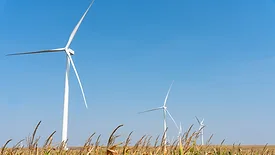
Cargill has entered into a virtual power purchase agreement (VPPA) for 87 megawatts (MW) of wind power from the Sweetland Wind project in South Dakota. The company also previously executed a long-term VPPA for the full output of the 85 MW Choctaw Fields Solar project in Oklahoma.
Manufacturers have a strategic opportunity to unlock operational efficiency, supply chain transparency and direct consumer engagement by taking tangible steps in their 2D barcode journey.
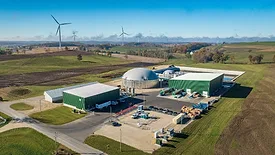
Upon closing, Generate Upcycle's anaerobic digestion facilities and advanced depackaging facilities operating across upstate New York and Ontario, Canada, are expected to join Vanguard Renewables' portfolio.
In addition to varied initiatives, Conagra Brands encourages developing plant-level sustainable practices with the annual Sustainable Development Awards.
Christine Daugherty, vice president and chief sustainability officer at Conagra Brands, discusses the company’s approach to developing goals for packaging, carbon reduction and water stewardship, as well as Conagra’s Sustainable Development Awards, which recognize innovative, plant-level efforts to operate more sustainably.
The shift toward a more circular economy has led to the adoption of mono-material structures. However, trade-offs exist on the road to improved sustainability for machinery and materials alike.
While research insights indicate that most companies have a low-to-moderate likelihood of increasing their use of reusable materials, recyclable materials continue to be the primary focus for packaging innovation and sustainability initiatives.
This program focuses on key growing regions where General Mills sources wheat from ADM for products sold through Walmart and Sam’s Club, demonstrating a shared commitment to strengthening supply chain resilience and farming communities.
Finding a secure way to manage waste in the food and beverage industry helps ensure that through every change of hands waste is handled discreetly and securely, mitigating brand risk.
Redesigns to reduce a package’s footprint and the production of thinner packaging are on the rise, but will legacy machinery be ready to handle the emerging materials?
 RSS
RSS