In addition to varied initiatives, Conagra Brands encourages developing plant-level sustainable practices with the annual Sustainable Development Awards.
Christine Daugherty, vice president and chief sustainability officer at Conagra Brands, discusses the company’s approach to developing goals for packaging, carbon reduction and water stewardship, as well as Conagra’s Sustainable Development Awards, which recognize innovative, plant-level efforts to operate more sustainably.
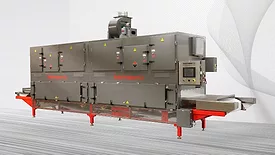
When exposing a product with an uneven moisture content (moist interior/drier exterior) to a rapidly oscillating RF field, the energy will preferentially target and remove moisture from the moist interior without overheating or discoloring the exterior surfaces.
An increasing number of North American food and beverage producers are focusing on the capture and liquefaction of carbon dioxide from their waste processes to reduce costs, generate additional revenue and reduce greenhouse gas emissions.
Companies delivering climate solutions have a vital role in enabling emissions reduction across the economy. But current frameworks don’t always reflect this, and if we fail to account for their positive impact, we risk slowing down the very progress we need to accelerate.
Faced with rising ESG expectations, carbon reduction mandates and consumer pressure for climate-conscious sourcing, companies are reevaluating every link in their supply chain. Yet one of the most fuel-intensive, labor-constrained and congestion-prone areas often goes overlooked: yard operations.
Depending on plant operation specifics, resources and the electricity emission factor, the eZero Dairy Evaporator can reduce energy consumption up to 60% and eliminates CO₂ emissions entirely.
Henkel Adhesive Technologies, in collaboration with Kraton Corporation and Dow Inc., has achieved a reduction in product carbon footprint for TECHNOMELT SUPRA 100 and TECHNOMELT SUPRA 106M.
Since electrification of trucking is a long way from becoming a reality, companies need to focus on quicker ways to reduce carbon emissions in the transportation industry.
The proposed project would cut 14,000 metric tons of carbon emissions per year for the factories that produce Ben & Jerry’s, Talenti, Magnum, Breyers and other brands.