How Carbon Dioxide Capture and Liquefaction Supports Food Industry Revenue and Sustainability
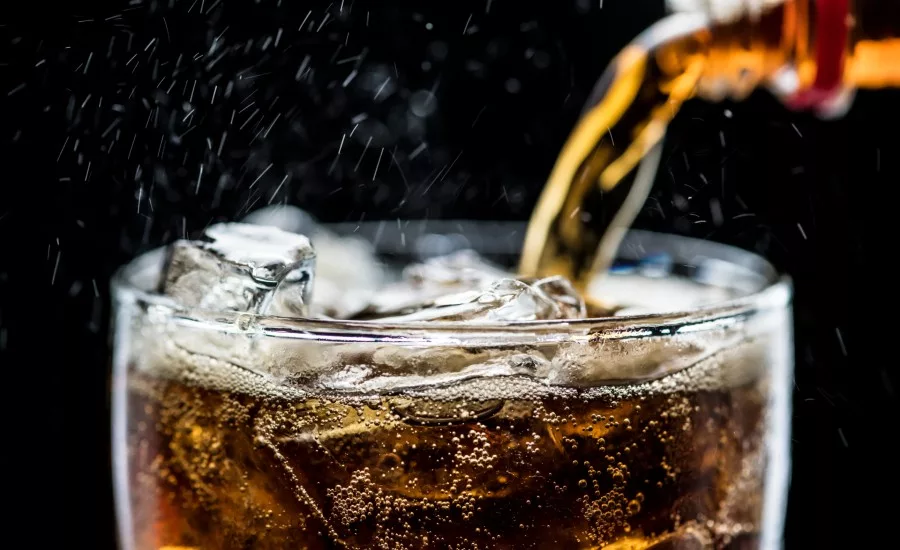
Image courtesy of freepik.
Converting to sustainable business practices is becoming more relevant for corporations in all sectors. A recent Kearney survey shows that 80% of buyers consider the environmental impacts of their purchases. Responding to this, companies continue to build sustainable practices into their operations, creating value for their customers and stakeholders.
For larger business operations, the integration of sustainability projects is more likely part of a broad strategy to optimize all facets of their business, from facility operations and process functions to manpower and distribution, while incorporating sustainable materials and procedures.
A crucial aspect of any sustainability initiative is minimizing a company’s carbon footprint. As global demand for energy rises, so does the need for solutions to minimize the influence of carbon dioxide (CO₂) released from fossil fuels and other unsustainable sources into the environment. Food and beverage manufacturing operations, as significant consumers of energy and a source of carbon emissions in the global economy, need to play a contributing role in partnership with sustainability.
CO₂ Capture and Liquefaction

While preventing carbon dioxide from being released into the atmosphere continues to be a key objective of sustainable practices, more recent decarbonization efforts have focused on CO₂ capture, with subsequent storage and/or reuse. Essentially, it involves capturing CO₂ from food and beverage manufacturing operations, then either sequestering CO₂ into deep underground storage, or converting it into reusable by-products.
Whether sequestering or repurposing CO₂, it first must be converted from a gaseous state to a fluid state to be transported and stored. The liquid state of carbon dioxide is typically between a temperature of -11°F (-24°C) and -18°F (-28°C), at a pressure between 206–261 PSI (g).
Repurposing Liquefied CO₂
Solutions providing repurposed and renewable liquefied CO₂ are becoming increasingly important in numerous areas of application, enhancing circularity, decarbonization, improving supply security and reducing transportation costs. The fact that liquefied CO₂ is needed in food and beverage production and storage is increasingly directing attention onto this renewable by-product as a valuable commodity.
Food Production and Preservation
The importance of pressurized CO₂ in the food industry cannot be understated. The food industry relies on this liquid gas for crop growth, refrigeration, preservation, storage and softening.
Crop Growth
CO₂ is used in agriculture to increase crop growth and photosynthesis and to minimize crop waste. Plants use CO₂, water, and sunlight to produce carbohydrates and oxygen through photosynthesis. Higher levels of CO₂ can improve the efficiency of photosynthesis, allowing plants to use light more effectively and produce more energy for growth.
This can also improve water conservation because carbon dioxide reduces the rate at which plants lose water through evaporation. Supplemental CO₂ in greenhouses can increase a crop's ideal temperature range, which can lead to higher production even in warmer temperatures.
Food Preservation
The food supply chain uses many strategies to increase food production, extend fresh food availability and shelf-life, and reduce waste.
CO₂ is used in controlled storage atmospheres as a cooling agent to reduce food spoilage and extend the shelf life of fruits, vegetables, meats, seafood and other perishable products. It inhibits the growth of certain bacteria and molds, which are common causes of food spoilage. By
creating an environment that slows down the degradation process, CO₂ ensures that food products remain fresh for longer periods.
Fresh fruits and vegetables are alive and continue to respire even after harvest. Fruit respiration is necessary for ripening. However, it has a downside: It can negatively affect internal and external fruit quality attributes. The higher the respiration rate, the more perishable the
produce is, so high respiration rates result in less shelf-life. CO₂ technology in produce preservation is a leading post-harvest method to preserve food quality and extend yield from the farm to retailer’s shelves. Carbon dioxide has three main functions in the post-harvest phases:
- Reducing respiration rate
- Reducing microbial and pest infestation
- Cryogenic cooling
CO₂ is effective in the storage of frozen foods. It can be used in combination with other gases to create a protective atmosphere around frozen items, further inhibiting the growth of spoilage microorganisms. This technique retains the color, flavor and texture of frozen goods for a longer time by limiting the formation of ice particles.
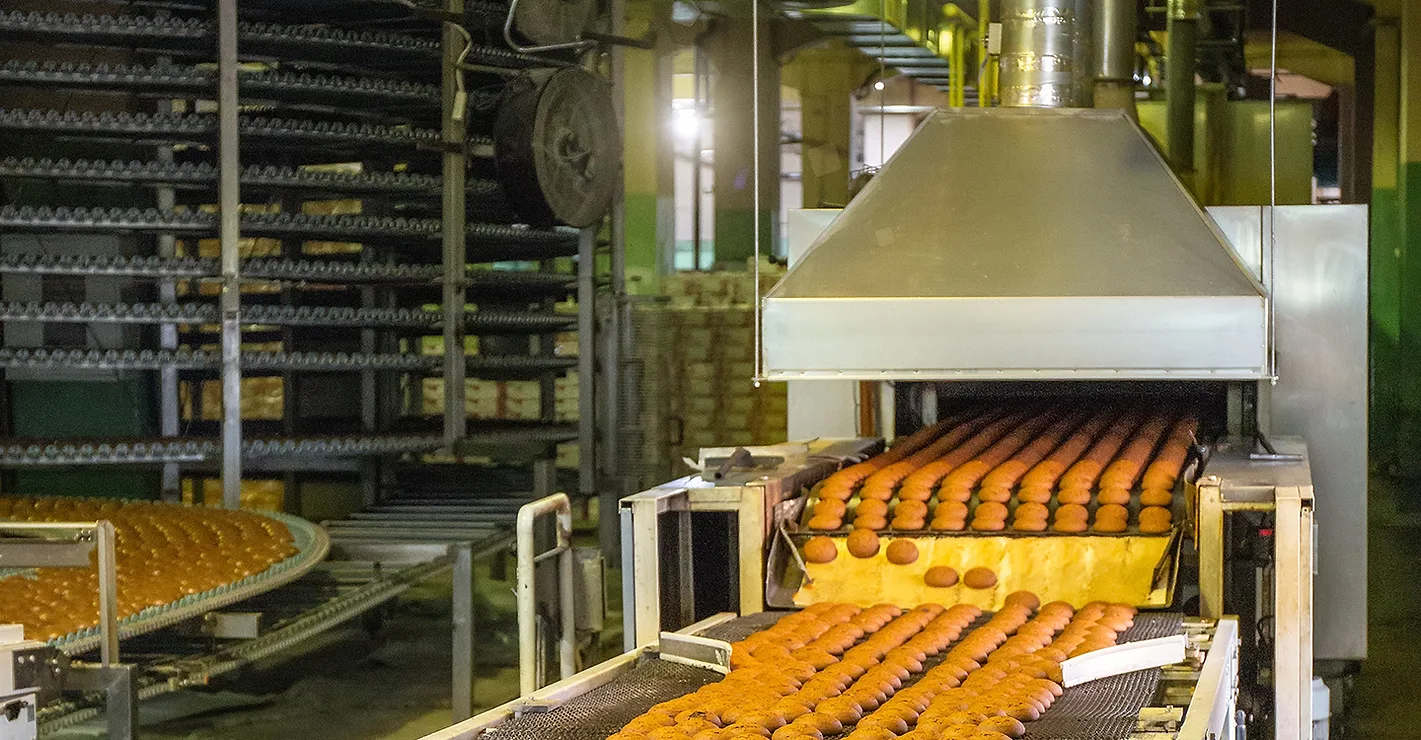
In the baking and pastry industry, carbon dioxide is produced to help dough rise, resulting in baked goods like bread, cakes and pastries with a light, airy texture.
Food-grade CO₂ can be incorporated into food packaging to inhibit the growth of microorganisms. CO₂ is non-toxic, has a natural bacteriostatic power, and is a sustainable and eco-friendly solution to traditional preservation methods.
Beverage Production
Spirits Distilling
Fermentation creates CO₂. Rather than releasing it into the atmosphere, distillers can capture carbon dioxide as a byproduct, which can be sold on the market to soda or beer producers for carbonation, or to greenhouses to grow plants that will, in turn, sequester more carbon and store it as soil organic carbon (SOC).
Brewing
All beer leaves the brewer carbonated. This is accomplished in one of two ways – natural and forced carbonation. In both cases, beer and carbon dioxide are sealed in a container under pressure. The beer absorbs the CO₂, giving the beer its fizz.
One of the main ways breweries can control CO₂ emissions is to capture and reuse the gas produced during fermentation. During the brewing process, yeast converts sugar into alcohol and carbon dioxide. Capturing and reusing this carbon dioxide allows breweries to reuse the gas at various stages of production and for cleaning process equipment. By integrating such a closed-loop system, breweries can more efficiently utilize their resources while reducing CO₂ emissions.
Soft Drinks
Compressed CO₂ is used to carbonate soft drinks and add flavor, but it is also used to fill the packaging of the drinks to maintain the proper pressure and environment for the carbon dioxide to remain in the soda. The CO₂ used to carbonate soft drinks can come from a variety of industry sources.
Decaffeination of Coffee and Tea
Liquefied CO₂ has increasingly become an important commercial solvent due to its role in chemical extraction, in addition to its relatively low toxicity and environmental impact. It is used as a method to remove caffeine from coffee and tea. This process is chemical-free and natural, which does not damage the cell structure or components responsible for the aroma and taste.
The relatively low temperature of the process and the stability of CO₂ also allows compounds to be extracted with little damage or denaturing. The solubility of many extracted compounds in CO₂ varies with pressure, permitting selective extractions.
CO₂ Liquefaction Processes
Although variations exist in CO₂ liquefaction process technologies, one that stands out with high performance is the latest-generation technology from Hypro Engineers Pvt Ltd. (Hypro) in collaboration with Kanadevia Inova USA, LLC. The two companies have an exclusive agreement on providing their solutions to the American CO2 markets.
Kanadevia Inova and Hypro offer integrated and standalone solutions, tailored for the respective industries, and ensuring the levels of CO₂ purity required by the food and beverage industry.
The fundamental process steps for CO₂ liquefaction with plants designed and manufactured by Hypro for Kanadevia Inova include the following:
- Scrubbing: The CO2 gas is fed into a scrubber unit to wash and cool down the gas.
- CO2 intermediate storage: The carbon dioxide is being stored in a balloon after some trace contaminants are removed.
- Cooling and two-stage compression with drying: This process cools down the water-saturated feed gas, then separates the bulk water. The cooled gas is sent to a CO2 compressor which increases the pressure to meet operating conditions.
- Drying and absorption: The remaining water and traces and other chemical components are removed from the CO₂ gas stream with interchangeable dryers. Depending on requirements, various absorbers and filters are installed downstream to remove further components.
- Liquefaction: The liquefaction process occurs through the condenser whereby the liquid CO2 is cooled down to temperatures below -13°F (-25°C).
- Optional rectifier and reboiler: The dry CO₂ liquid passes through the rectifier and a reboiler,allowing for the non-condensable impurities to be passed through the vent stack and the liquid to be sent to storage tanks. A portion of the liquid CO₂ is then sent back to the condenser, improving the product quality as a part of a feedback loop.
- Storage and loading for transport: The liquefied CO₂ is stored in pressurized tanks for offtake and/or on-site applications. The CO₂ is then potentially further pressurized by means of additional compression and transformed into a supercritical state, then transported via a pipeline network. Another option is that the CO₂ from the storage tanks is transported via trucks, railway cars, or ships for non-sequestration use, typically food and beverage-production applications.
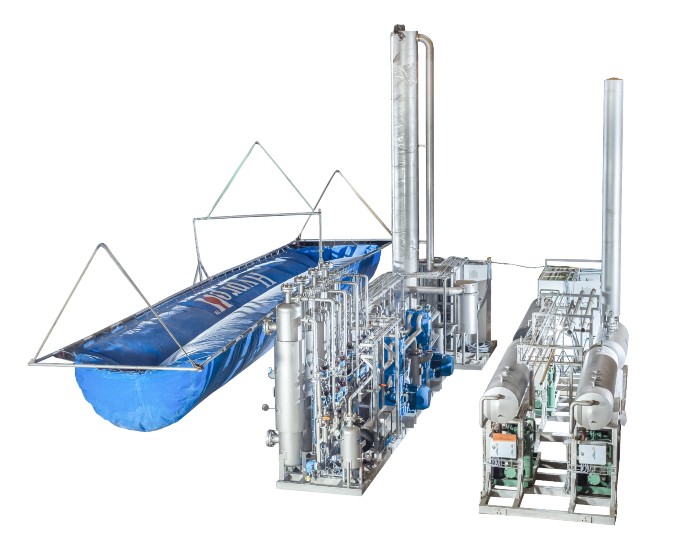
Hypro Engineers and Kanadevia Inova's CO₂ liquefaction process. Image courtesy of Kanadevia Inova USA, LLC.
Kanadevia Inova’s automated operations and controls dynamically adjust the processes to meet changes in feed gas composition and plant loads, achieving an output quality of 99.99% pure liquified CO₂. This supports maximized revenue return and heightened sustainability profiles for operations in multiple industries such as food production and preservation, spirits distilling and brewing.
Economic Advantages of CO₂ Liquefaction
In addition to the reduction of greenhouse gases released into the environment, CO₂ liquefaction pays off monetarily by providing additional revenue streams with the sale of CO₂ to other sectors of industry, or OPEX reduction by recirculating the captured and liquefied CO2 into the production process, hence making the system more self-sufficient.
Data from different industries vary and indicate that CO2 can be captured on a larger scale with a capacity range of medium size systems producing 11,000-12,125 short tons or 10,000-30,000 metric tons per year, respectively, to even larger scale production facility that produce 82,650 to 165,350 short tons (75,000-150,000 metric tons) per annum. The value of the capture, and ultimately, liquefied CO2 is contingent on whether it is sequestered, diverted into a depleted oil field (EOR – Enhanced Oil Recovery), sold directly into the food and beverage industry, or recirculated into the production process to minimize or completely remove the LCO2 (liquified CO2) transportation costs from the cost equation.
Additionally, the carbon credits from CO₂ liquefaction can be traded on the voluntary carbon market (VCM), both nationally and globally. For food and beverage manufacturers, CO₂ liquefaction presents a viable addition to further diversify a company’s income portfolio.
Looking for a reprint of this article?
From high-res PDFs to custom plaques, order your copy today!