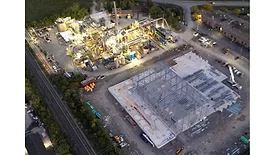
An increasing number of North American food and beverage producers are focusing on the capture and liquefaction of carbon dioxide from their waste processes to reduce costs, generate additional revenue and reduce greenhouse gas emissions.
Companies delivering climate solutions have a vital role in enabling emissions reduction across the economy. But current frameworks don’t always reflect this, and if we fail to account for their positive impact, we risk slowing down the very progress we need to accelerate.
Since electrification of trucking is a long way from becoming a reality, companies need to focus on quicker ways to reduce carbon emissions in the transportation industry.
The proposed project would cut 14,000 metric tons of carbon emissions per year for the factories that produce Ben & Jerry’s, Talenti, Magnum, Breyers and other brands.
The German Packaging Award’s jury honored the film manufacturer with a recyclable bag for cheese ripening in the “new material” category and a recyclable film concept for blister packaging for solid applications in the “sustainability/recyclability” category.
Setting an achievable ‘net-zero’ emissions goal is possible, however, it may require companies to lean less on renewables and more on a facility’s waste heat to make up the difference.
By now it’s clear that the major industries of the world must make radical changes to minimize the effects of climate change, and that includes revamping the thermal utilities that power our global food systems, which account for more than 34% of global greenhouse gas (GHG) emissions.